
UniqueUrn
The Immortal Mosaic: From Wat Arun’s Porcelain Legacy To Eternal Remembrance Art
Mar
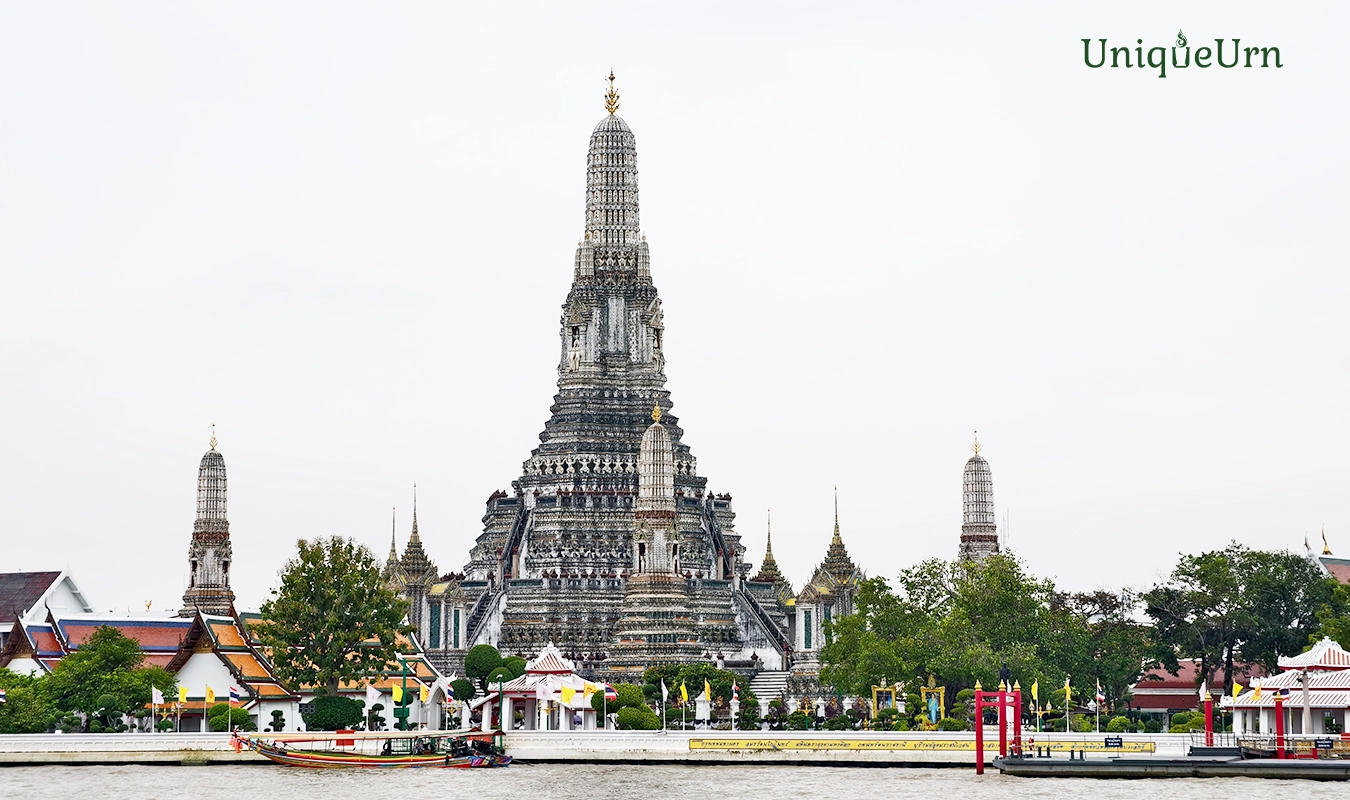
As the first light of dawn brushes across the Chao Phraya River, the silhouette of the Great Prang of Wat Arun emerges—not merely as a landmark of Thailand, but as a spiritual awakening of aesthetics that travelers worldwide yearn to witness. Within this destination, currently ascending to UNESCO World Heritage status, lies a secret beneath its shimmering facade: a masterpiece born from the “resurrection” of porcelain shards once deemed worthless, transformed into a timeless legacy of hand-painted porcelain urns.
A Vision of the Cosmos: The Living Outdoor Museum
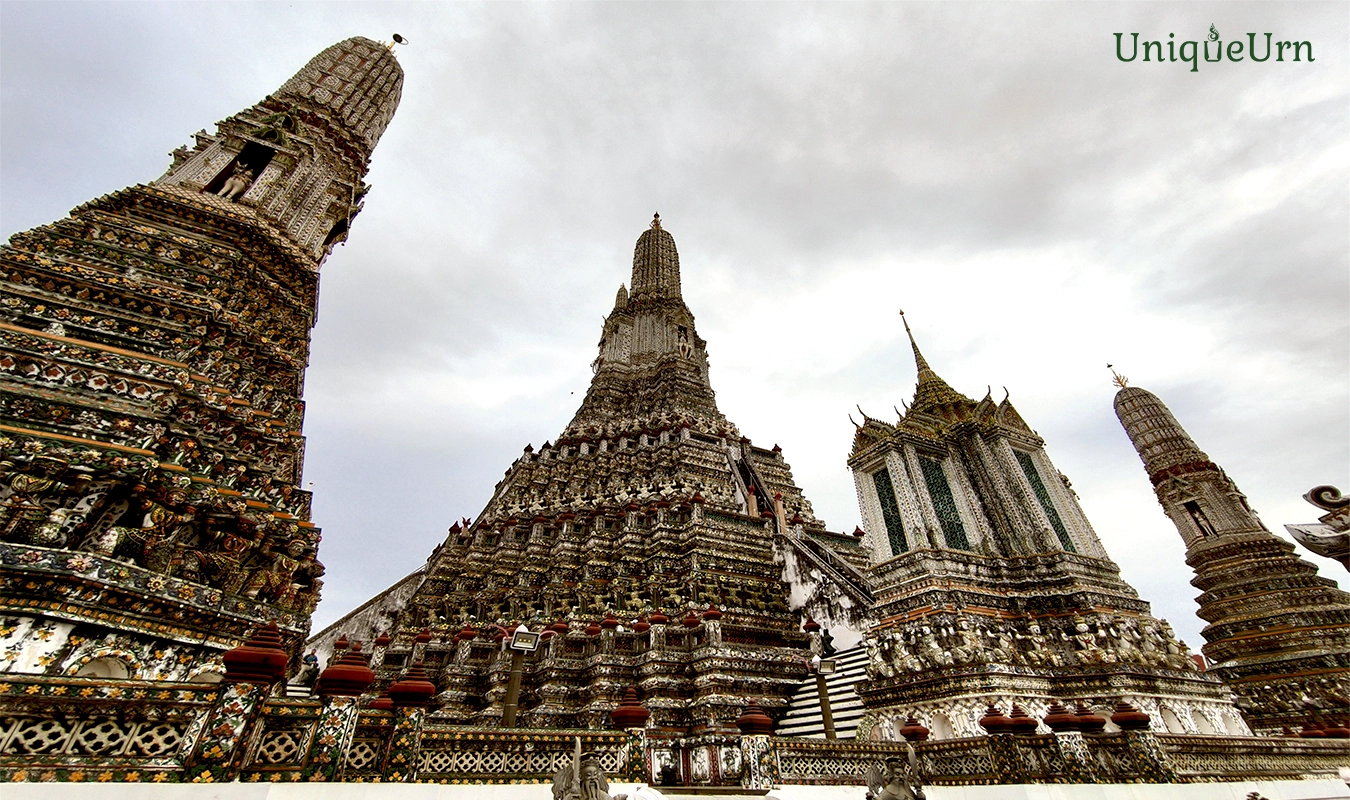
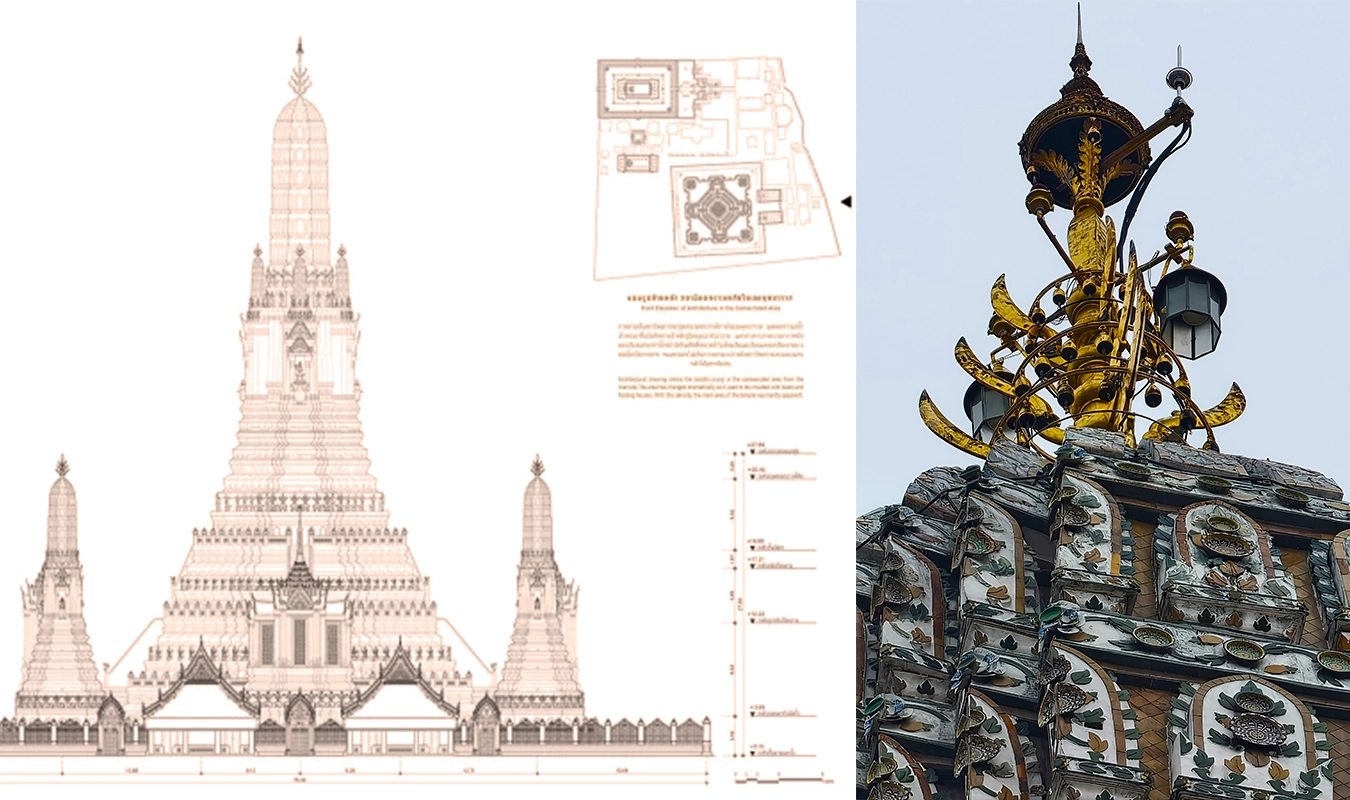
Wat Arun Ratchawararam Ratchaworamahawihan (The Temple of Dawn) was designed far beyond mere structural grandeur; it is a physical manifestation of Hindu-Buddhist cosmology. The central Prang represents Mount Meru, the center of the universe, where the human and divine realms converge. Surrounded by four smaller Prangs (tall towers representing the four continents) and four Mondops (traditional buildings honoring the four key stages of the Buddha’s life), this site stands as Bangkok’s largest “outdoor museum.” It is a sacred space where time does not diminish faith but enhances the dignity of a spiritual sanctuary that welcomes over two million souls annually.
Flipping History: From Global Trade Shards to Sacred Art
The foundations of Wat Arun date back to the Ayutthaya period (1350–1767), but its golden era of restoration flourished under King Rama II (1809–1824) and continued through King Rama III (1824–1851)—a time when maritime trade with China reached its zenith.
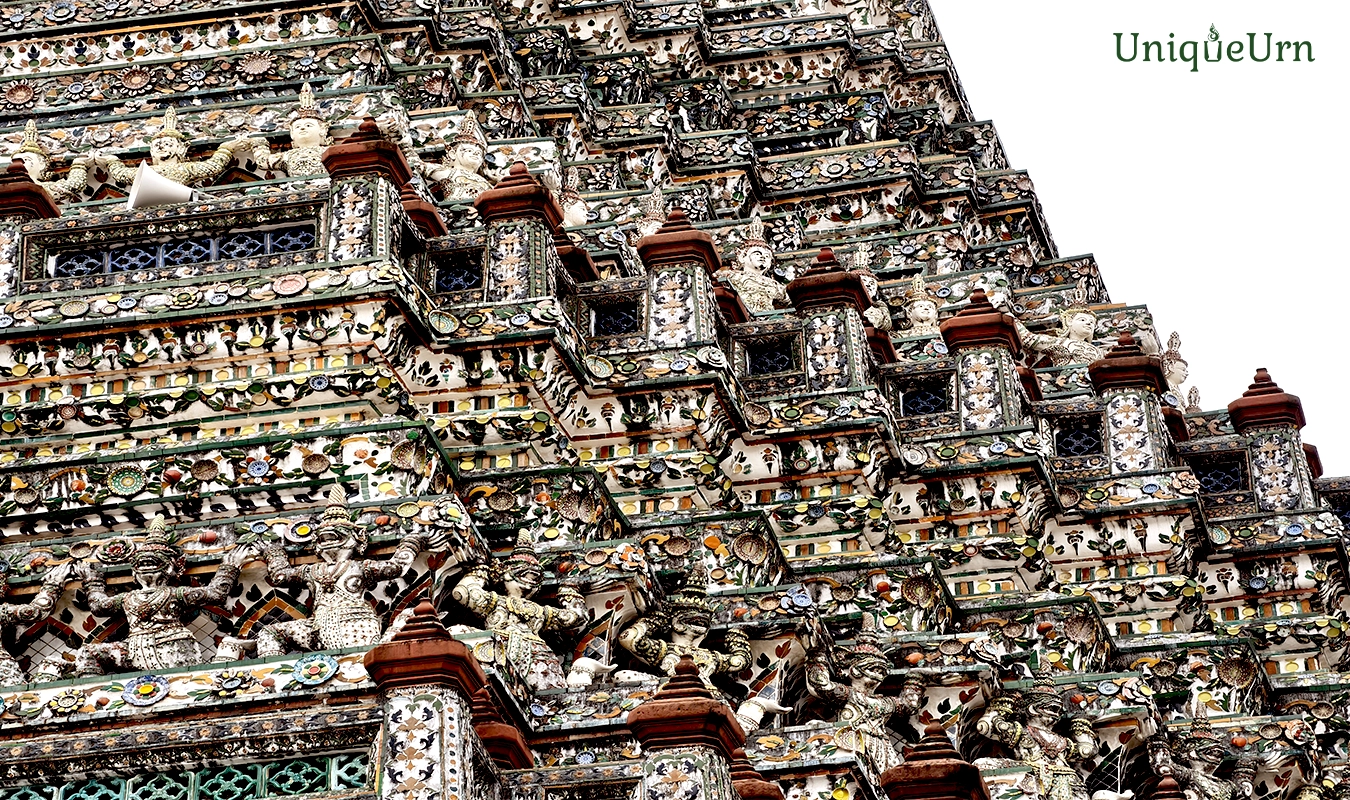
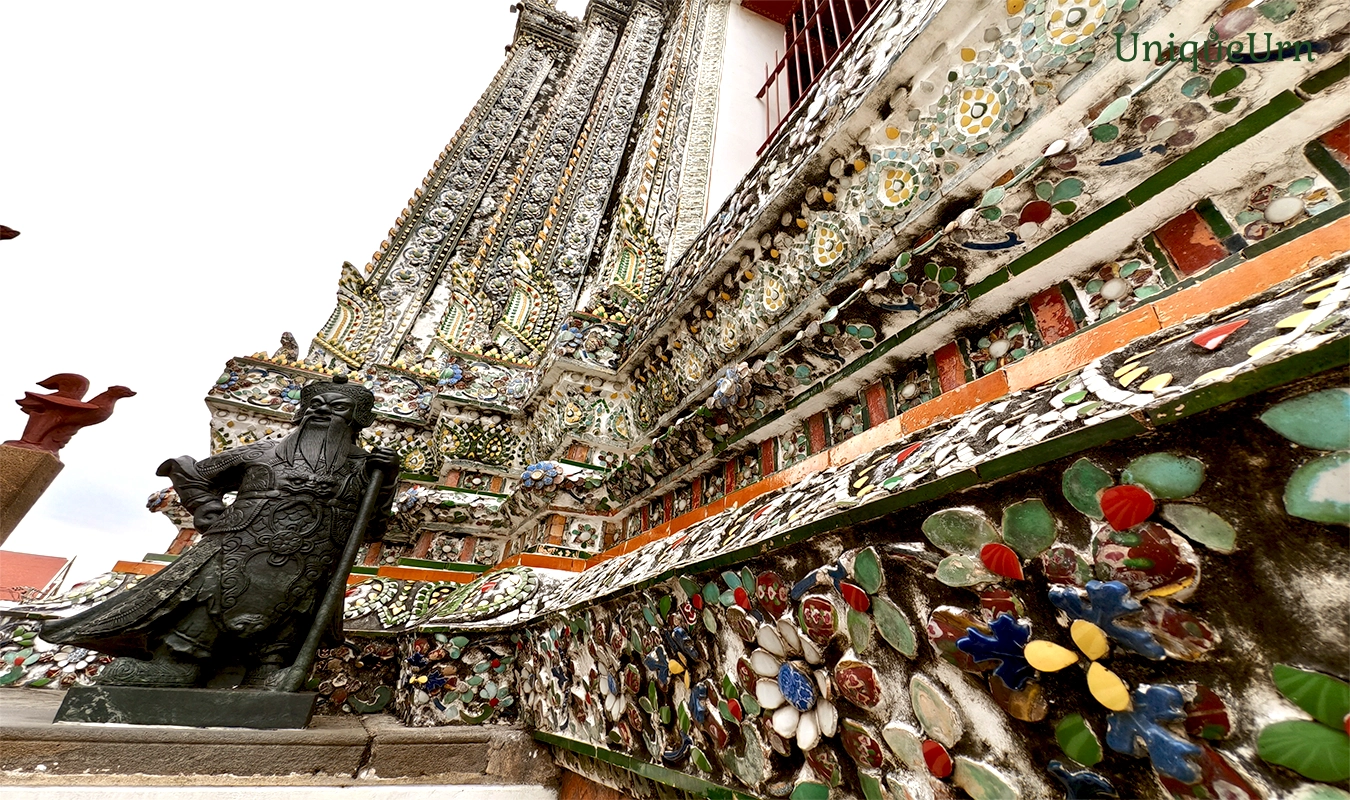
The most captivating detail is the technique known today as Upcycling. Royal artisans of that era repurposed Ab-Chao (ballast objects)—porcelain fragments and ceramic wares from exports and imports that were damaged or left over from sunken junks. These shards were meticulously hand-cut and rearranged into millions of mosaic pieces depicting the Ramakien (the Thai Ramayana), celestial beings, and floral patterns. This was more than recycling; it was the creation of Bun-Kuson (merit-making), transforming remnants of globalization into an eternal monument of memorial art urns to honor the highest spirits.
The Mastery of Jian Tie and Tessellation: Legacy over Landfill
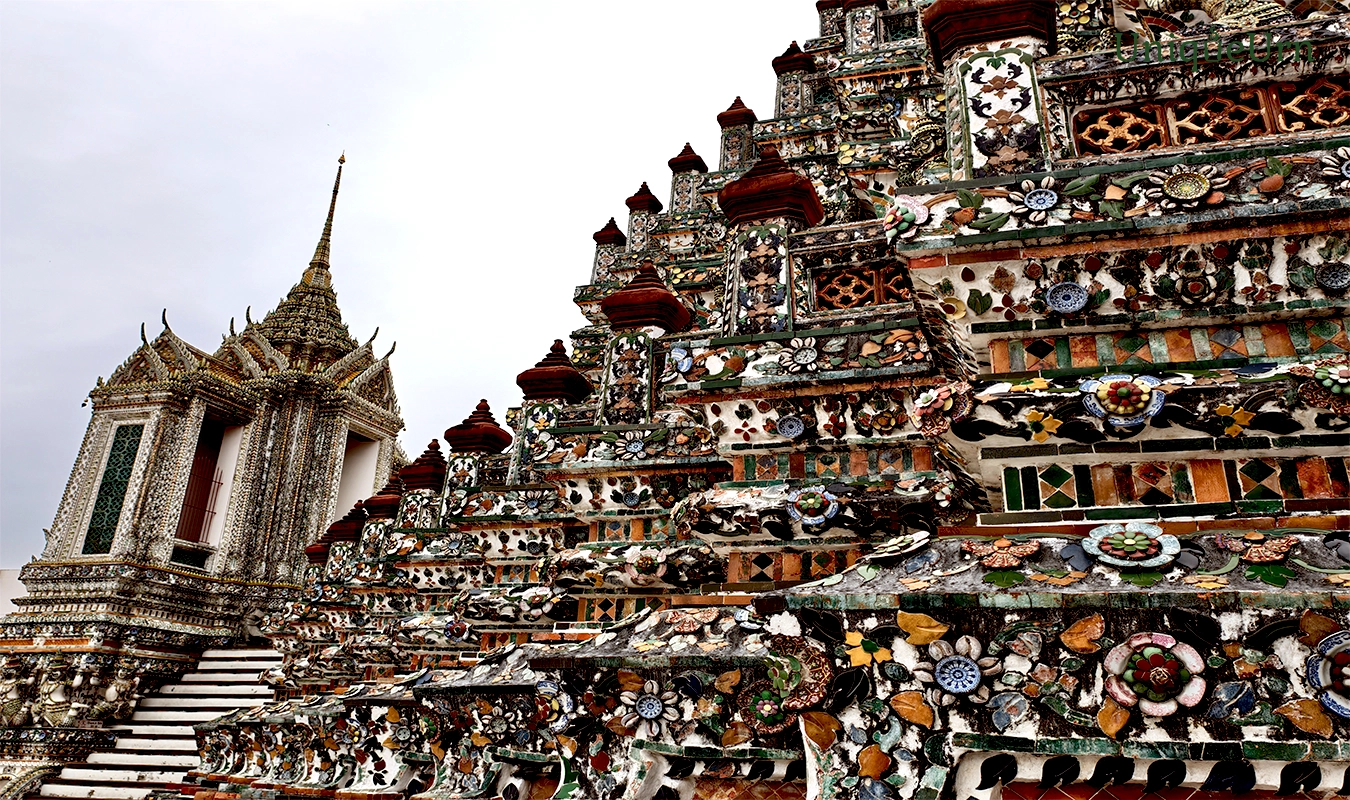
The true luxury of Wat Arun lies in its systematic curation of materials to create a symphony of light and shadow through the Jian Tie technique (剪贴) (cutting out; to clip and paste in a scrapbook or on cards)—a traditional Hokkien and Teochew art form that uses porcelain shards and lime mortar instead of paper and glue, and Tessellation technique—The precise laying of flat, geometric tiles to cover surfaces without gaps or overlaps, creating a seamless background lattice that supports the floral motifs:
- Thai Bencharong: Benjarong Ware Intricate stem plates and bowls featuring patterns like Phum Khao Bin (Rice-bush motif) and Karn Tor Dok (Continuous floral vines) were used as focal points to enhance the prestige and craftsmanship of the decoration structure.
- Ceramic Shards: Thousands of shards were hand-cut into delicate flora petals and foliage that bloom across the lime plaster.
- Molded Tiles & Shells: These were used to create a brilliant luster that reflects the sunlight, resulting in high-relief textures capable of withstanding the humid riverside climate for centuries.
UniqueUrn: Continuing the Legacy for the Final Sanctuary
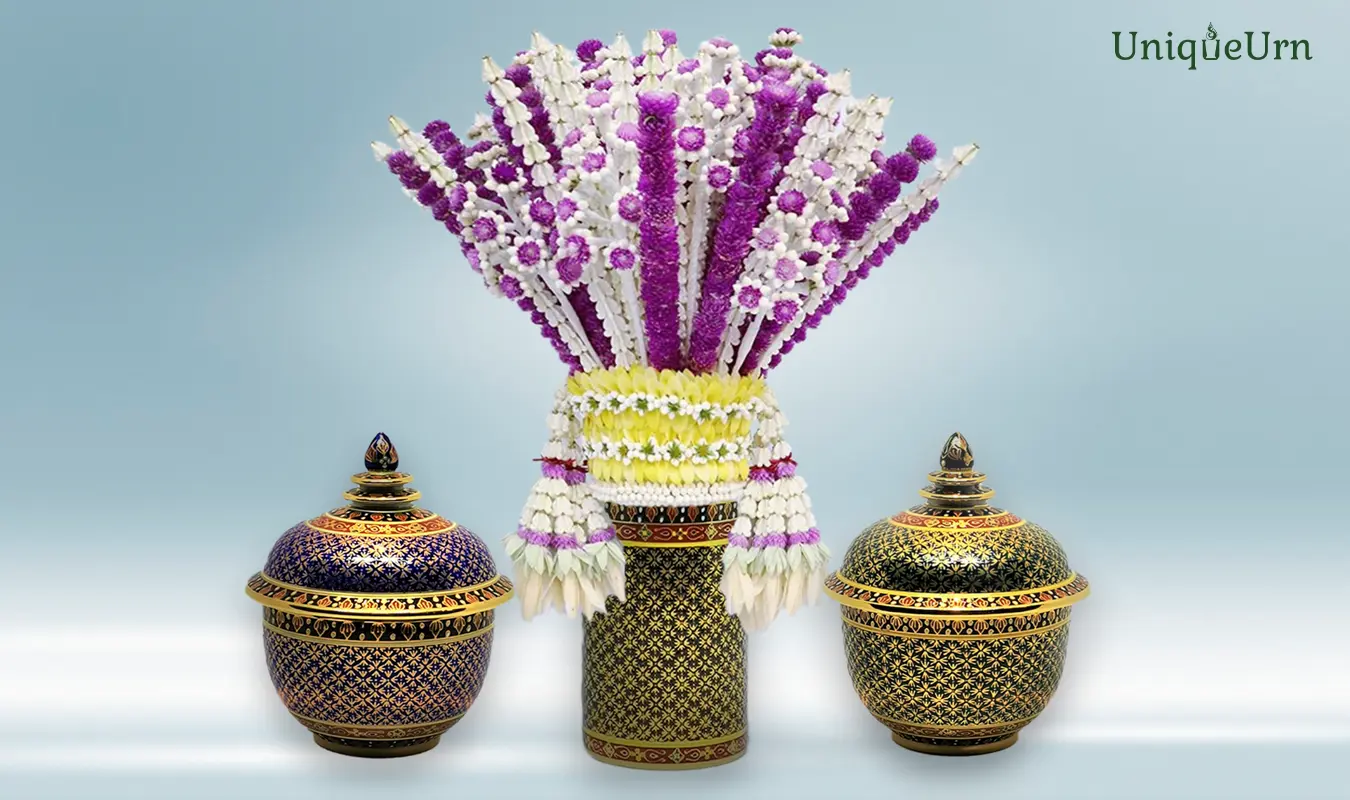
At UniqueUrn, we learn from the spirit of ancient masters who sought to build for eternity. We utilize the wisdom of high-fire porcelain—valued for its non-porous properties—as the foundation for our handcrafted cremation urns. Just as the porcelain atop the Great Prang has endured sun, rain, and river mist for over a century, our unique Bencharong urns are crafted to ensure that our loved ones’ memories are preserved in the most pristine state.
Beyond durability, we incorporate the “Liquid Gold” hand-painting technique to bestow a value reminiscent of the “Golden Great Crown” atop the Prang. This crown was the actual personal crown of King Rama IV (1851-1868), placed there by King Rama III as a royal sign of succession. For us, crafting custom artisan urns is about bestowing that same level of honor and celebrating a masterful life that will be loved forever.
Conclusion: Beauty that Embraces the Heart
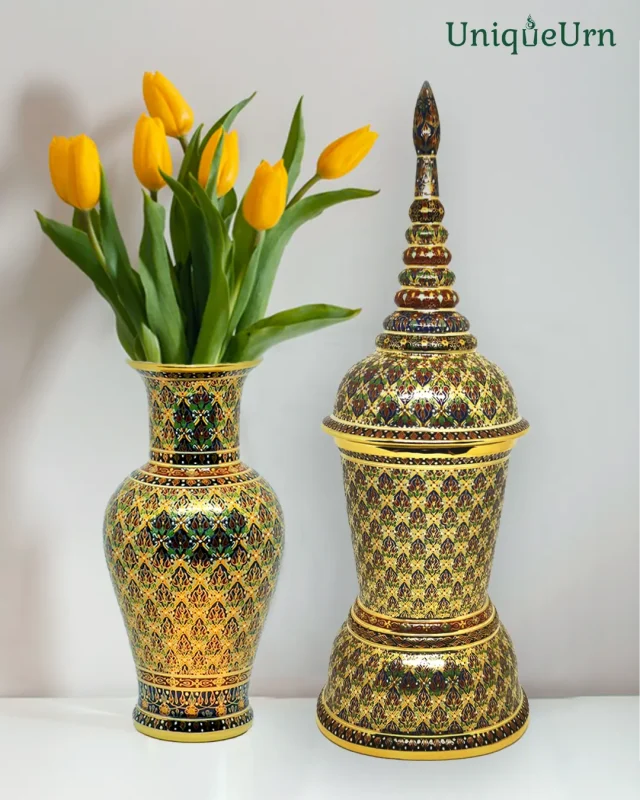
Choosing a final resting place is about selecting an art piece that will tell a story and heal the hearts of those who remain. When world heritage aesthetics are distilled into these artistic urns, they become more than mere vessels. They are the “Final Sanctuaries“—radiant, dignified, and a testament to a love that will never break under the weight of time.
“Take the Next Step Toward a Perfect Tribute: Explore the soul of world-class porcelain artistry in our feature: » Porcelain Masterpieces: Where Thai Craft Meets World Heritage.”