
UniqueUrn
Maha Songkran: The Soul Beneath The World’s Greatest Water Festival
Apr
To the world, “Songkran” is a vibrant explosion of joy—the world’s biggest water fight. But beneath the splashing and laughter, there is a “Sacred Inner Layer.” Think of Songkran as a cake: while the colorful icing represents the street parties and fun, the rich, meaningful sponge represents the values of humility, gratitude, and the unbreakable bonds of family.
Recognized by UNESCO as an Intangible Cultural Heritage of Humanity, Maha Songkran is more than a festival; it is a profound journey back to one’s roots.
1. A Celestial Shift: The Meaning of Saṃkrānti
The word “Songkran” originates from the Sanskrit “Saṃkrānti,” which translates to “transformation,” “passage,” or “stepping into a new phase.”
In ancient astronomy, this marks the sun’s transition into Aries—the first sign of the zodiac. It is a “Cosmic New Year” that signifies new beginnings. It is the time when nature and humanity bloom together after the harvest season, shedding the old and welcoming the fresh.
2. Lessons from the Inscriptions of Wat Pho: A Myth of Duty
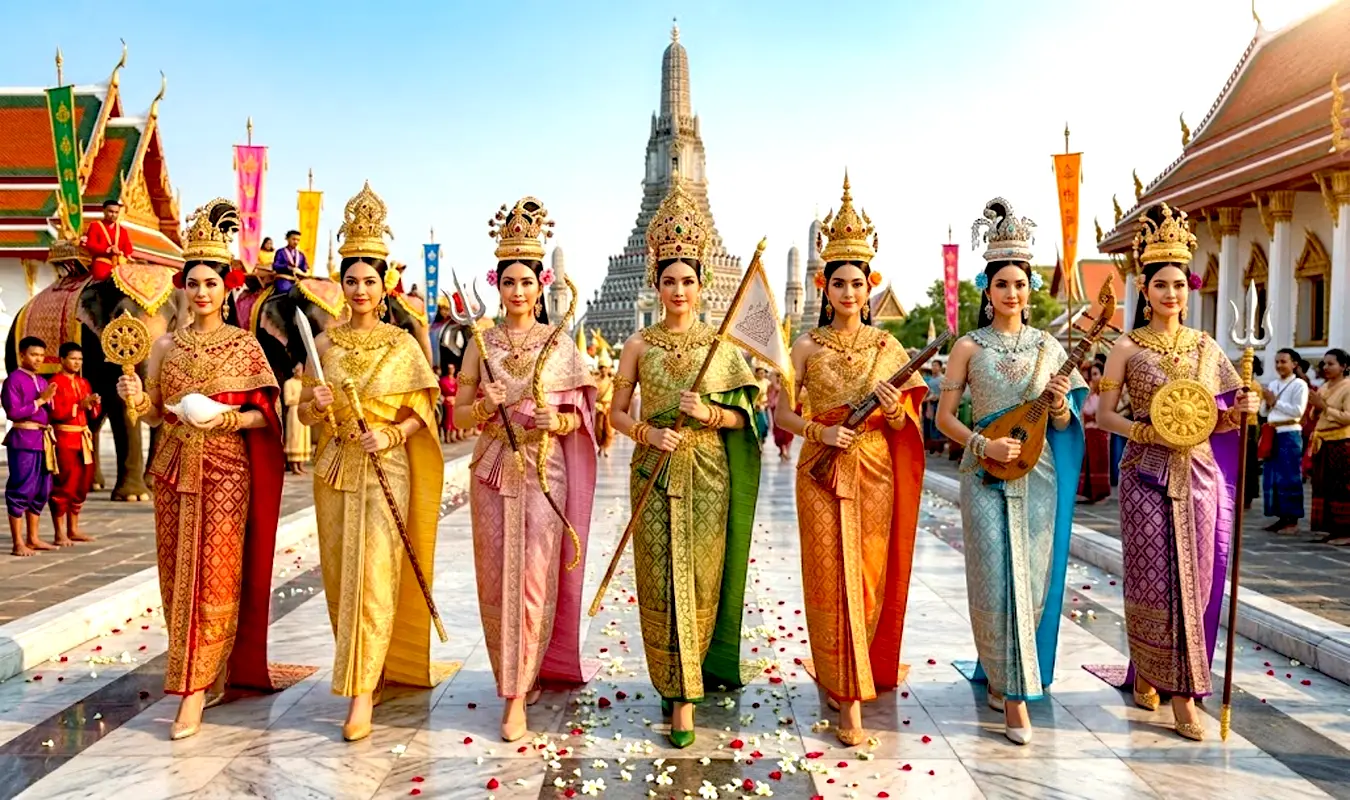
If we visit the majestic grounds of Wat Pho, we will find stone inscriptions telling the Legend of the Songkran Goddesses. This myth is far deeper than a fairytale.
It tells the story of the seven daughters of King Kabila Brahma. When their father passed away, the daughters took turns every year to carry his head in a sacred procession to prevent a global catastrophe. This reflects the core Thai value of Responsibility and Devotion. It teaches that even when our ancestors depart, the duty of the descendants is to guard their honor and memory with the utmost dignity.
3. The Two-Layered Cake: Fun Built on Respect
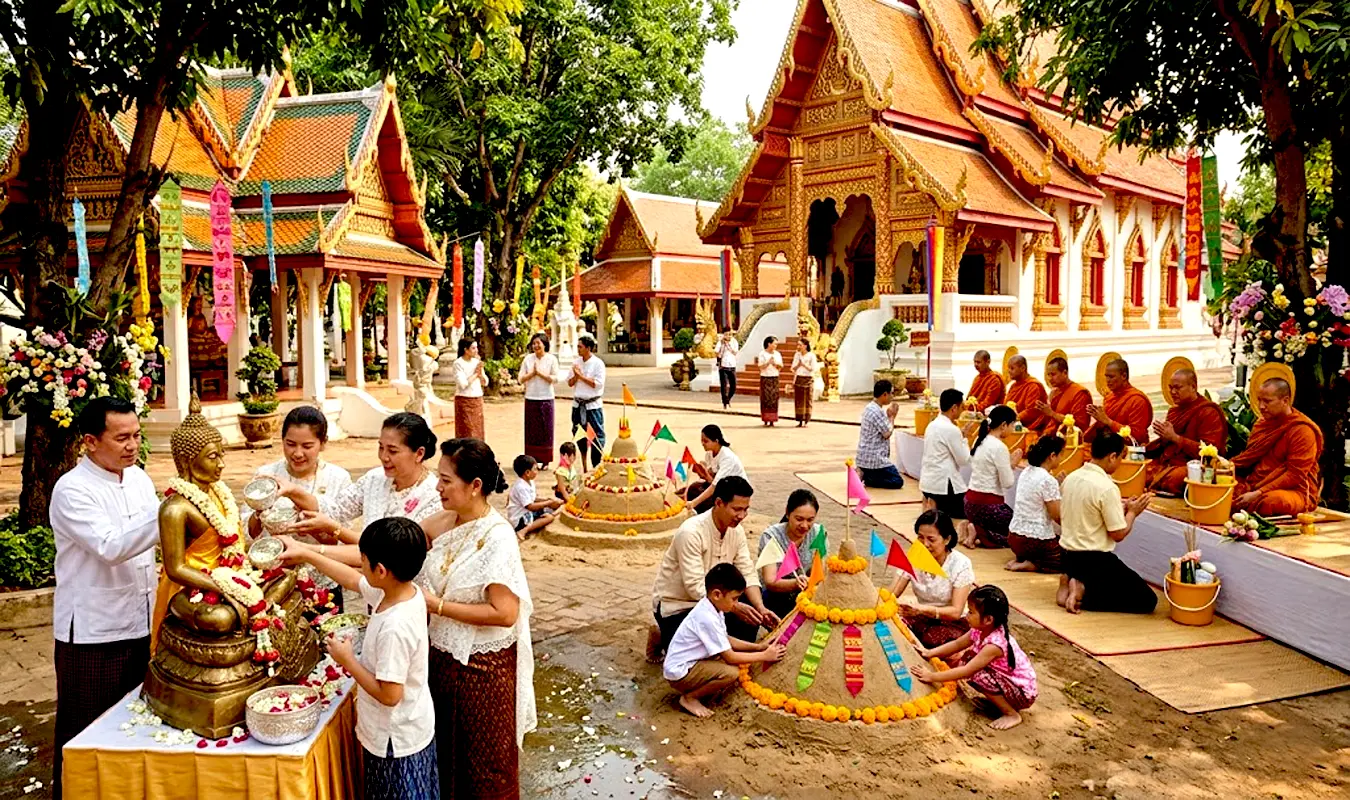
Songkran is a unique phenomenon of Psychological Safety. The Outer Layer: The street parties and high-energy water fights that generate immense positive energy globally.
The Inner Layer: The quiet rituals of respect. When water is splashed with a smile and a blessing, it signals to the brain that this is an act of Sharing Happiness rather than an attack. This balance allows adult to release their stress and return to a state of childlike joy, while the youth learn the art of humility.
4. April 13th & 14th: The Homecoming of the Heart
In the Thai calendar, these dates are the pillars of the festival:
- April 13th – National Elderly Day: A day to honor the “Living Libraries” of our society—our elders who pass down the wisdom of experience and lineage.
- April 14th – Family Day: A time for “Intergenerational Relationship Management,” where families reconnect and create new memories.
This is the season of the Great Homecoming, as millions travel across the country to return to the people they love most.
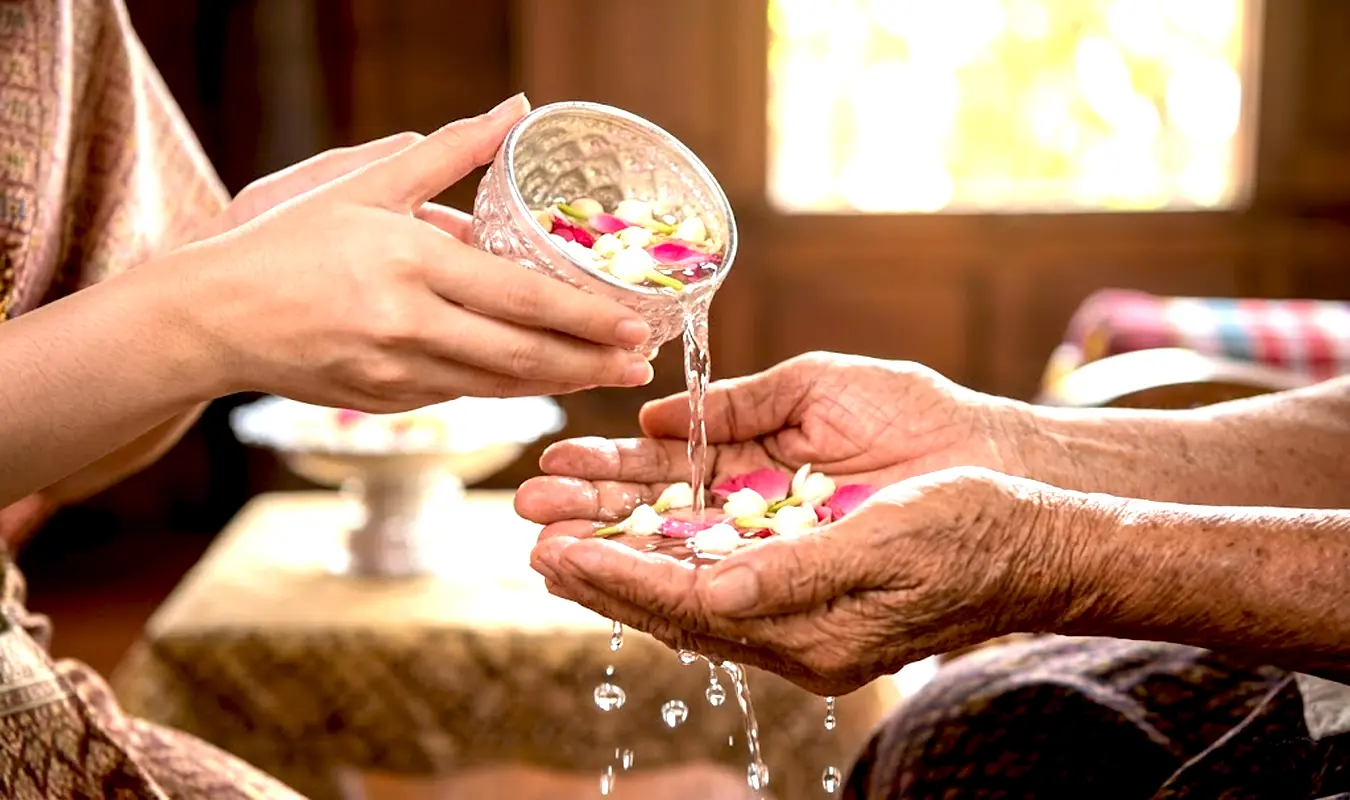
5. Rod Nam Dam Hua: Healing through the Touch of Love
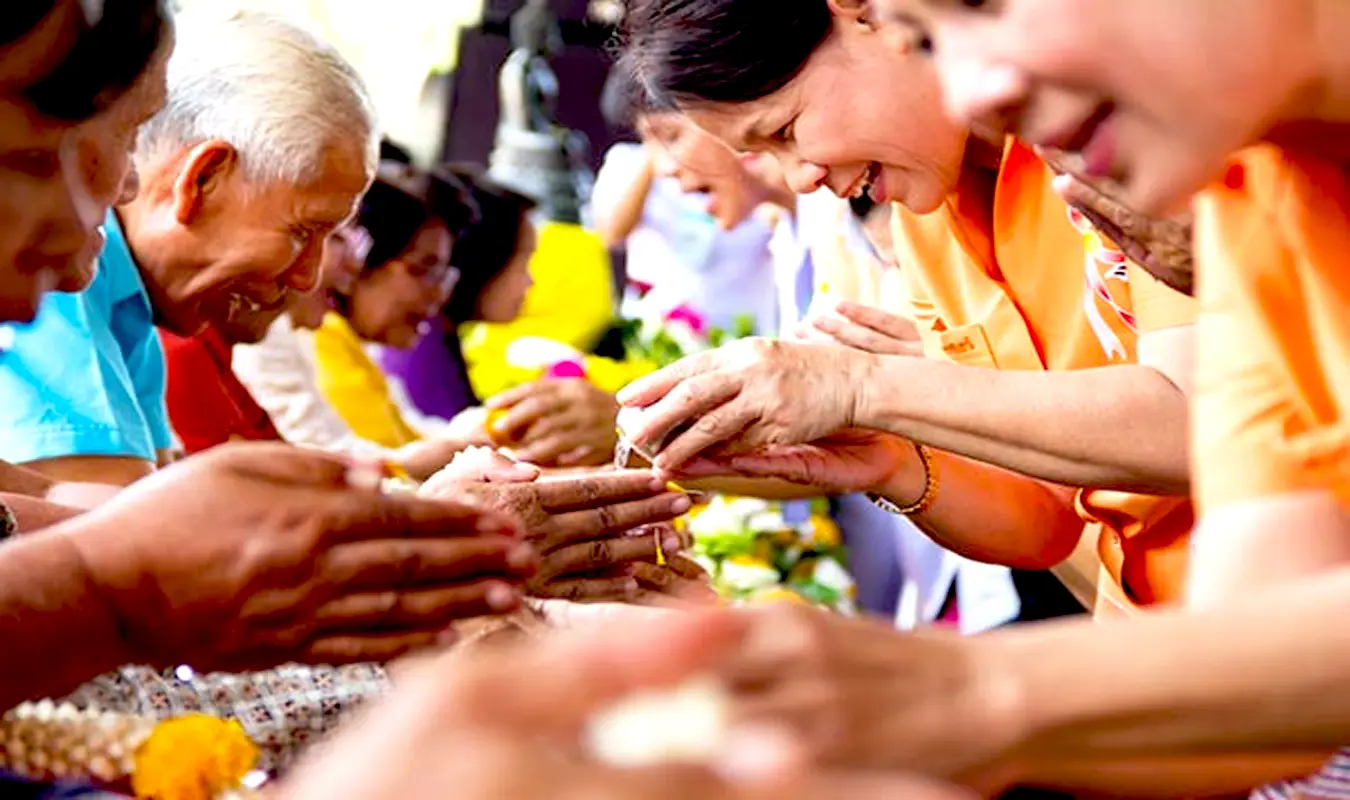
The most touching image of Songkran isn’t a giant water cannon; it’s a small silver bowl of scented water. During the “Rod Nam Dam Hua” ritual, younger members pour water over their elders’ hands.
This is a moment of Apology and Blessing. It bridges the generational gap through a Sense of Touch, creating a safe emotional space where love and forgiveness flow as freely as the water.
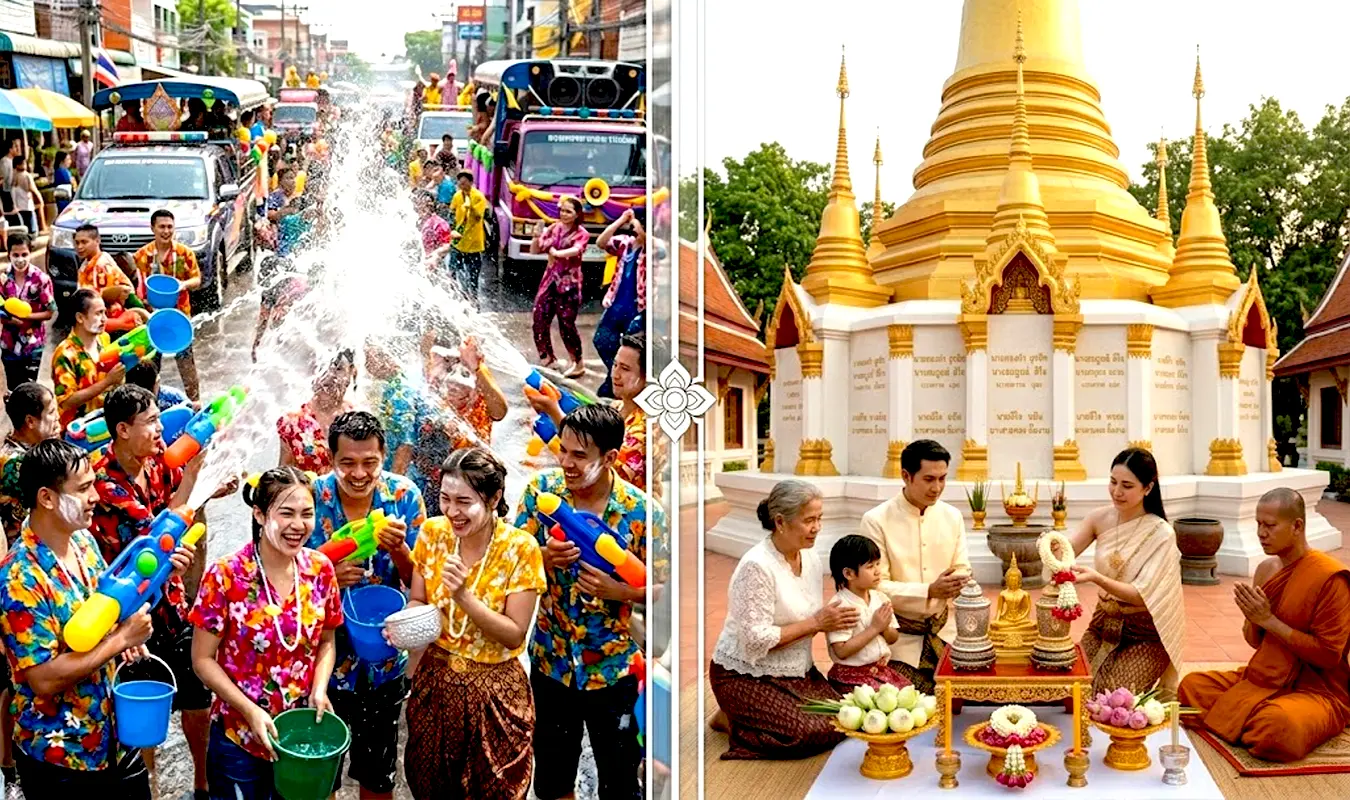
6. The Eternal Connection: Honoring the Ancestors
Songkran’s gratitude extends beyond the living. Families gather at temples for “Bangsukul“—a merit-making ceremony for the ancestors, to clean and decorate their memorial columbarium.
This ritual mirrors a beautiful Thai belief: “Death is not the end of a relationship; it is merely a change in the form of connection.” By beautifying the resting place of our forefathers, we reaffirm that they are still a vital part of our family story.
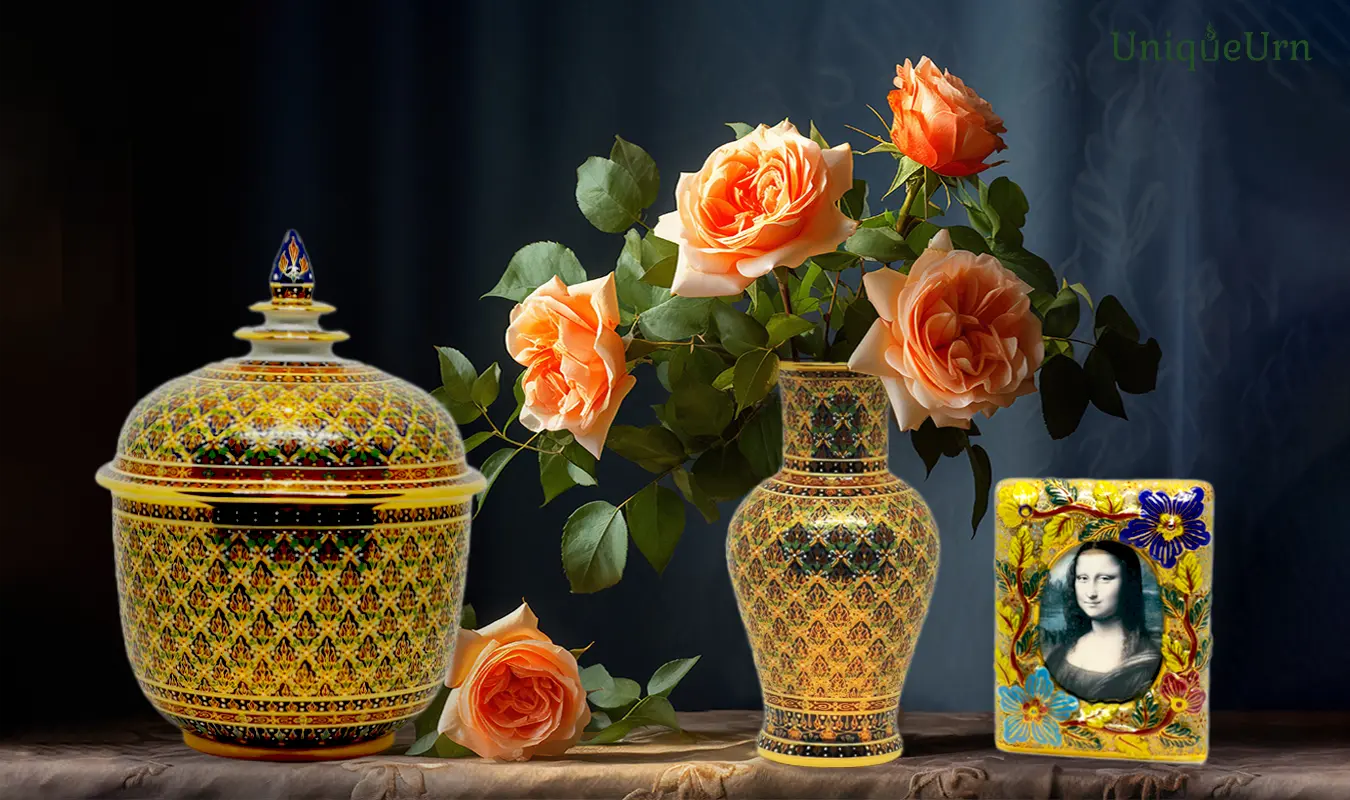
A Sanctuary for Memories
Maha Songkran teaches us that our most precious treasures are the memories we keep. Honoring our elders and remembering our ancestors with grace creates emotional security for the entire family.
At UniqueUrn, we are deeply inspired by this spirit of remembrance. We believe that every story of love and bond deserves a “Place of Honor.” Our mission to create Bencharong memorial art is to ensure that the act of remembering is not just a seasonal event, but a beautiful, enduring presence in your home every day—preserving the legacy of those you love in the most dignified way possible.
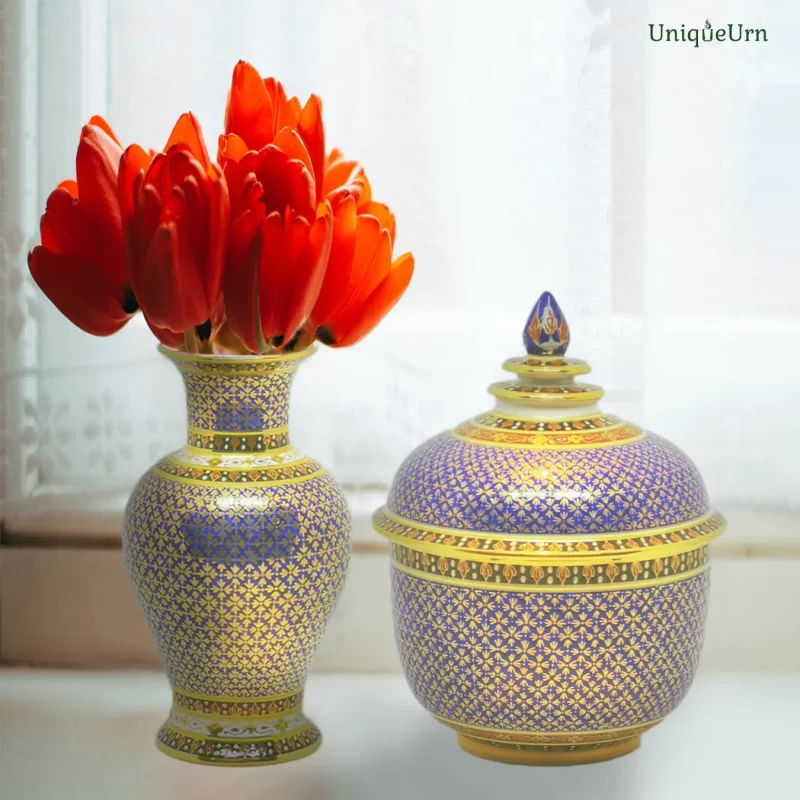
“As Songkran honors the past, discover how physical objects hold the power to heal. Explore our feature: » The Healing Power of Memory Objects: Why a Unique Urn Matters.”