
UniqueUrn
When Pattern Becomes Memory: Thai Geometry, Sacred Form, & The Art Of Remembrance
Nov
The Language of Form
In the worlds of philosophy and spirituality, geometric form is never just a matter of measurement. It is a language of order—an elegant script through which the universe seems to record its own laws.
Sacred geometry gives abstract ideas a visible shape. It speaks through two enduring principles: continuity, which suggests energy moving without end, and return to center, which suggests the inward journey toward stillness, unity, and peace.
Seen this way, form is never only about appearance. It is about relationship: between body, mind, and spirit; between past, present, and future; between birth, life, and death. Geometry becomes a bridge between thought and meditation, helping us sense the balance of opposites that shape existence itself.
This way of seeing also resonates deeply with Thai traditional art. Thai craftsmen and artists did not create beauty for the surface alone. They translated Buddhist and Brahmanic-Hindu thought into visual form through lotus motifs, Prachamyam patterns, Kranok ornament, and sacred inscriptions. These are not merely decorative details. They are spiritual codes—inviting the viewer back toward inner calm.
Key Takeaways: Sacred Form and the Art of Remembrance
- The Spiritual Language of Order: Sacred geometry is the silent language of the universe. From the infinite flow of the Torus to the grounded balance of the Reuleaux triangle, these universal forms remind us that beneath grief and change, there is profound, cosmic harmony.
- Thai Patterns as a Healing Compass: Traditional Thai pattern art, such as the symmetrical Prachamyam and the flowing Kranok, translates these geometric truths into cultural grace. Gazing at these centered motifs acts as a calming visual meditation, gently guiding a scattered heart back to inner stillness.
- A Tangible Bridge of Love: We do not simply say goodbye; we preserve our connections. By intertwining these ancient principles into custom artisan urns, we create a physical sanctuary that beautifully supports the enduring practice of Continuing Bonds.
- Graceful Memorial Design: When master craftsmanship meets deep spiritual symbolism, an urn transcends its function. Our unique Bencharong urns and handcrafted cremation urns become a lasting celebration of life, offering a majestic place of honor that holds your memories with timeless dignity.
The Number Three
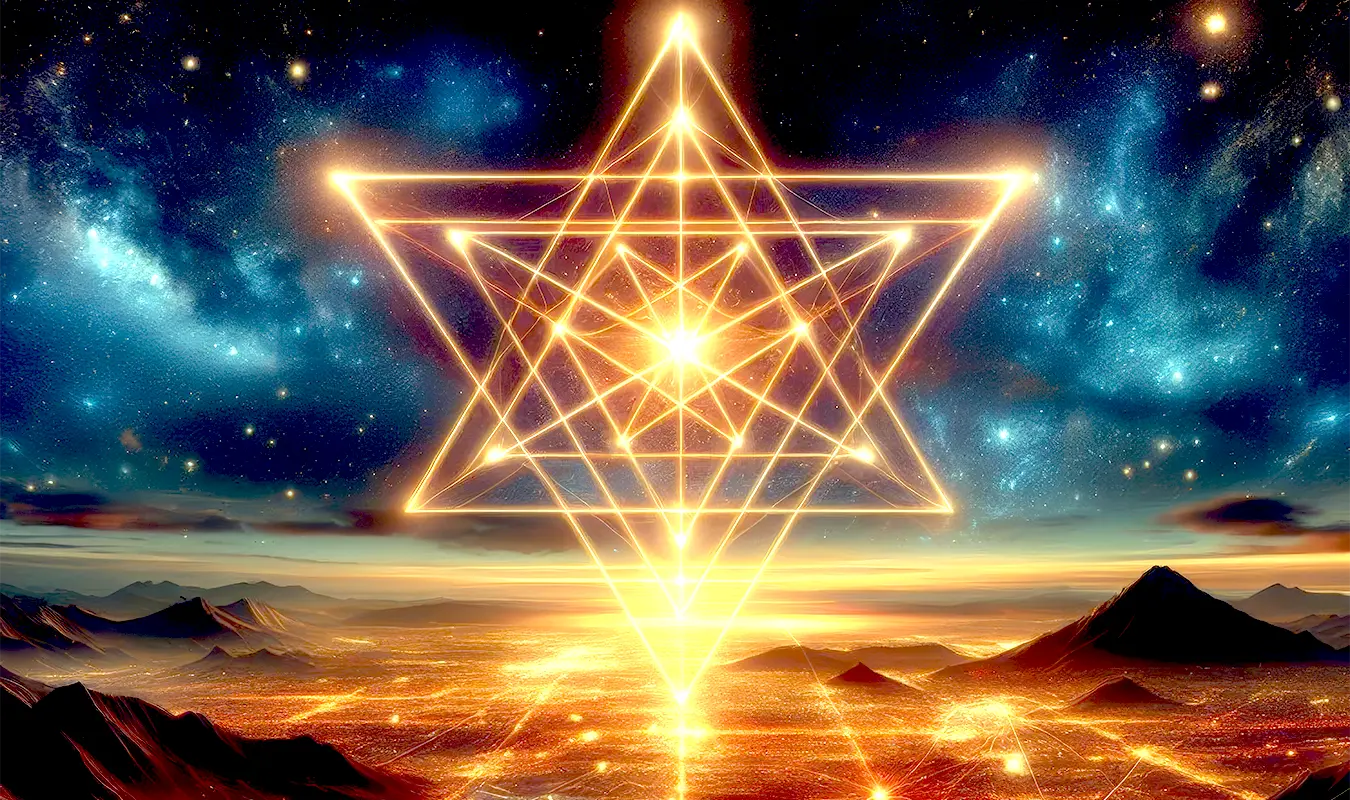
In Sacred geometry, the universe begins with relationship. A single point has no dimension. Two points create a line. A third point creates space.
Triquetra: Balance in Threeness
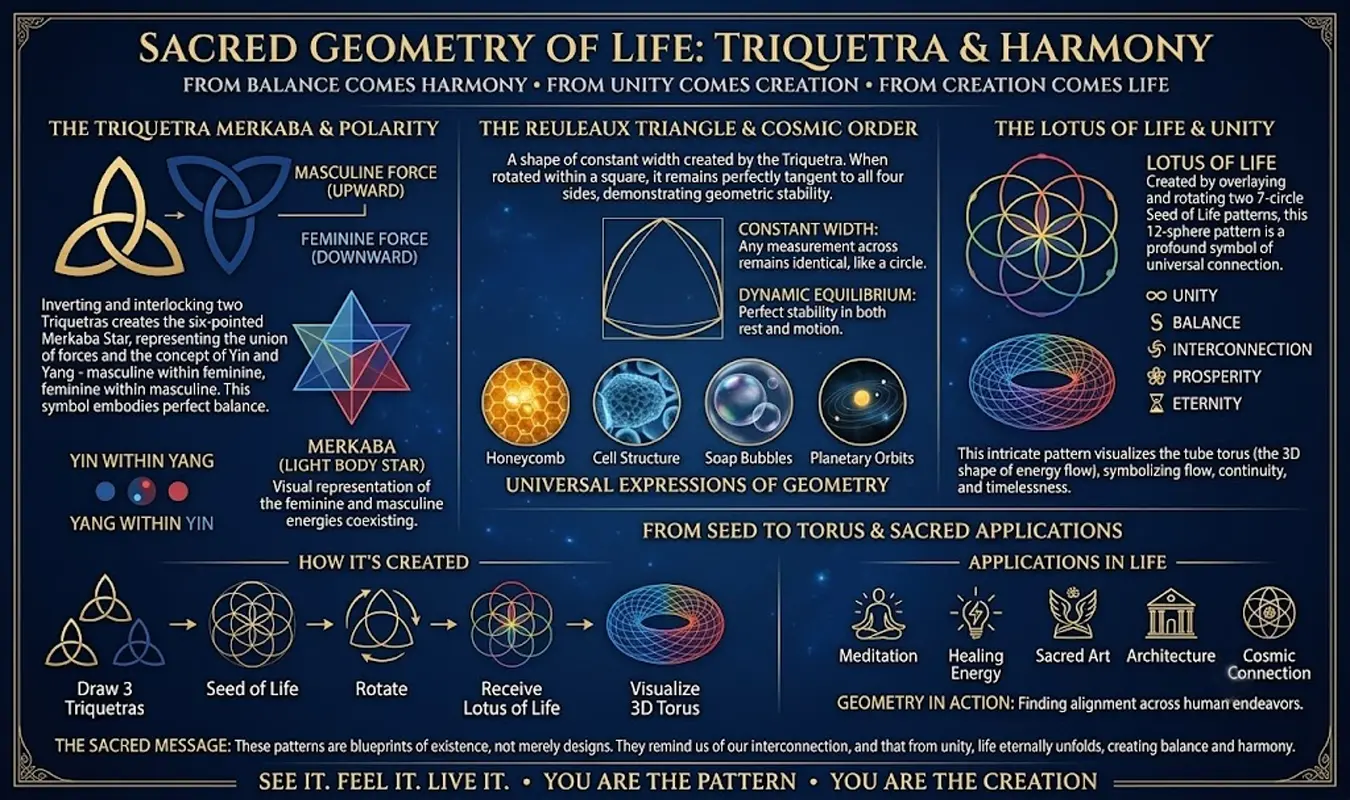
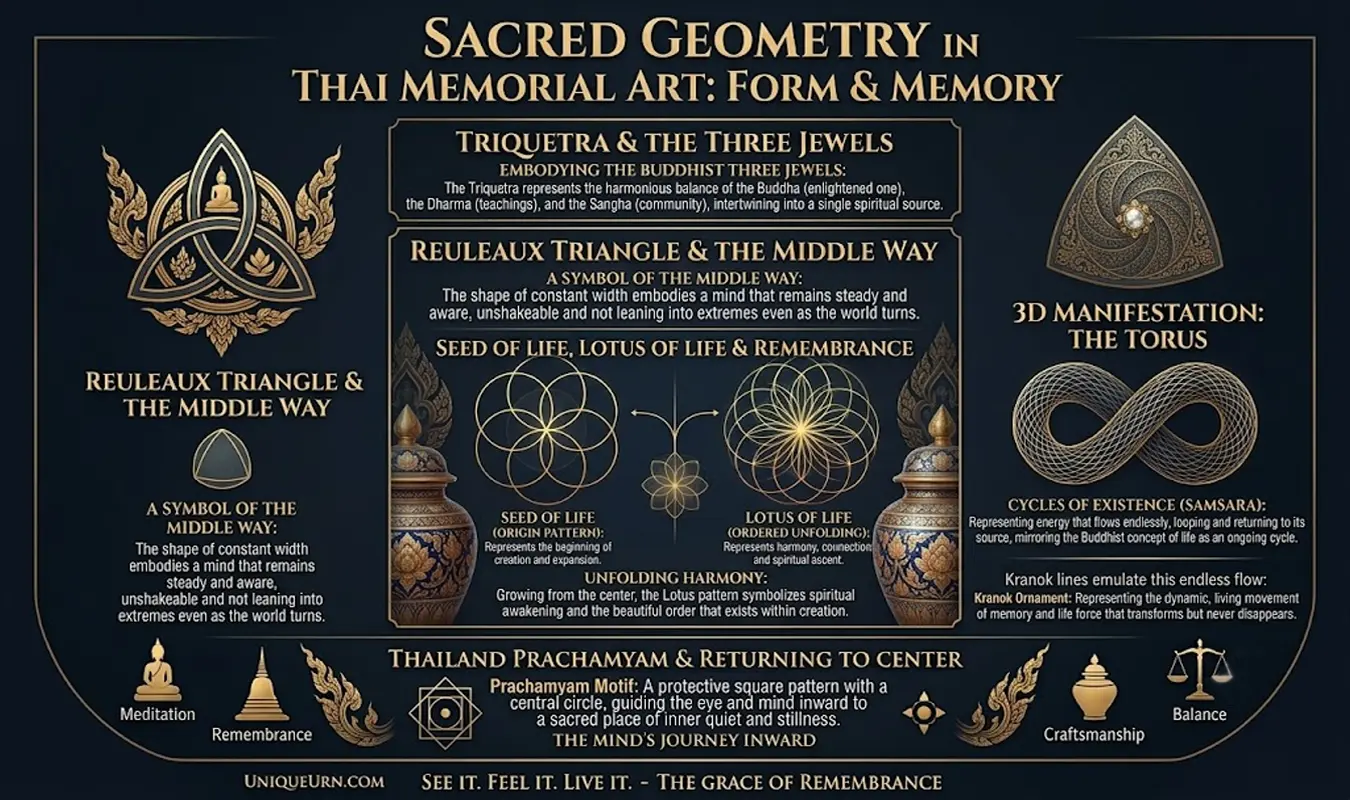
The Triquetra has long been understood as one of humanity’s most enduring symbols of threefold unity. It speaks across cultures: body, mind, and spirit; past, present, and future; birth, life, and death. In Buddhist thought, it can also echo the Three Jewels: the Buddha, the Dharma, and the Sangha.
When its loops turn and intertwine, the Triquetra suggests that opposing forces need not cancel one another. They may coexist, support one another, and create balance together.
Reuleaux Triangle: The Middle Way in Shape
The Reuleaux triangle carries a similar wisdom in a different form. It is a shape of constant width, meaning its span remains unchanged as it turns. That quality gives it a rare kind of stability within movement.
It becomes an elegant metaphor for the Buddhist Middle Way. A well-trained mind, like this shape, does not lean into extremes. It stays steady, aware, and unshaken even as the world continues to turn.
Why the Growth from the Center?
Sacred geometry unfolds as a sequence of becoming. It grows outward from the center, just as nature does.
Seed of Life: The Beginning of Creation
From the basic structure of three related forms comes the Seed of Life, often seen as a starting point of creation. Its central circle acts as the source, while the surrounding circles suggest life expanding outward and linking all things together.
Lotus of Life: Order in Expansion
When that form develops further, it becomes the Lotus of Life—a pattern of unfolding, harmony, and elegant connection radiating from a single center. Its beauty lies in precision as much as grace.
In Thai sacred art, this idea appears most naturally in the lotus itself. The lotus rises from the mud but opens toward light. It has long symbolized purity, awakening, and spiritual ascent. Thai artists often used this centered symmetry in bases for Buddha images, stupas, and sacred architecture to create an atmosphere of stillness and reverence.
Energy in Motion
Torus: The Form of Endless Flow
If a two-dimensional pattern is lifted into the third dimension, one encounters the Torus—a ring-like form in which energy appears to circulate endlessly, returning to its own source.
In spiritual symbolism, the torus often suggests life force, breath, continuity, and the motion of energy through an infinite loop. It also resonates with the Buddhist understanding of samsara: existence as a cycle shaped by causes and conditions rather than a straight line.
Kranok: Motion Made Visible
In Thai art, this same sense of motion appears in the Kranok and Hanglai motifs. Their lines curl, rise, and extend with a sense of living movement. They resemble flame, water, and wind in constant transformation.
These patterns are not simply ornamental. They are visual expressions of becoming. And when viewed through the lens of remembrance, that endless return becomes deeply meaningful. Love does not disappear; it changes form and continues to move in another register.
That is why such art feels so natural in memorial design. It speaks gently of separation without rupture, and of memory without ending.
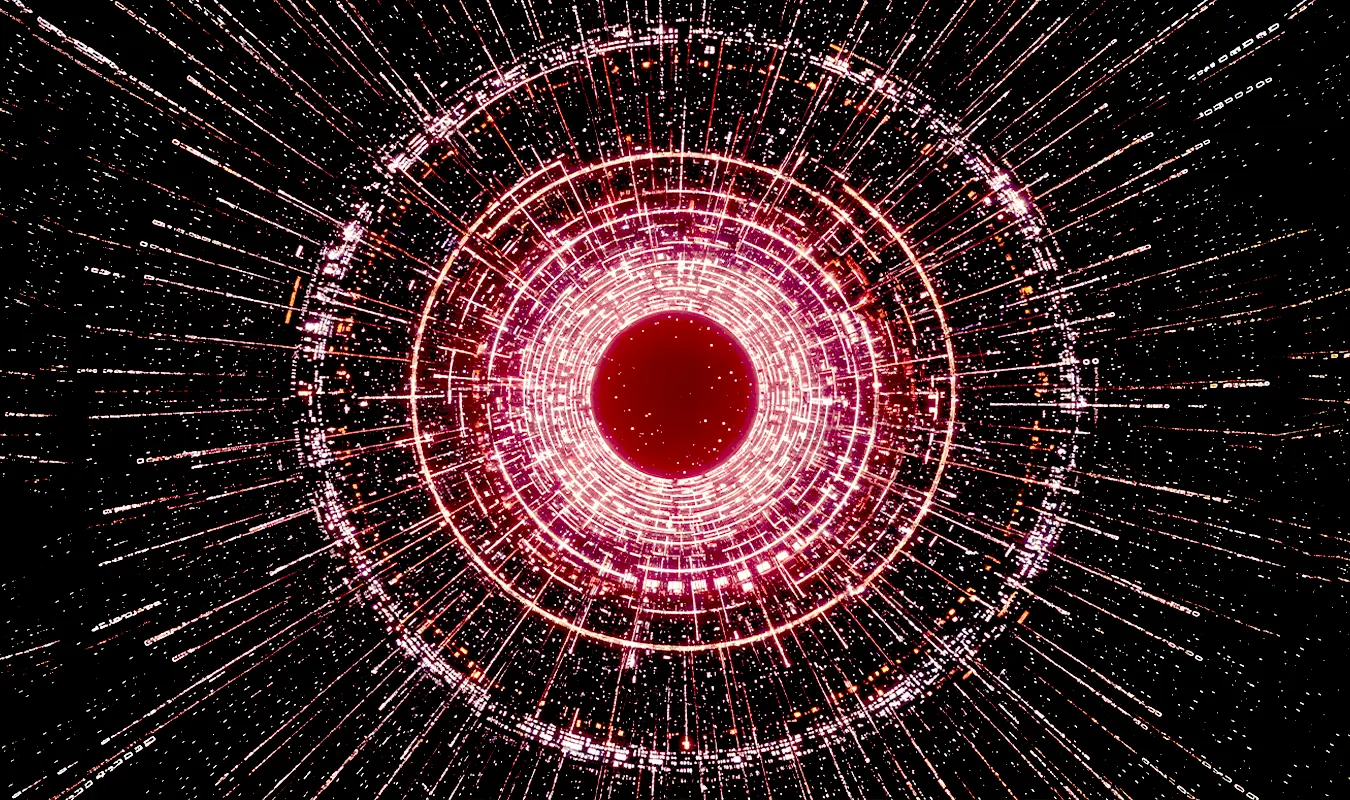
Why Returning to the Center?
Prachamyam: Guarding Sacred Space
Among Thai traditional motifs, Prachamyam stands out for its clear geometric order. It is built from an outer square, four directional petals, and a still circular center. Together, these elements create a sense of sacred containment.
This is why Prachamyam appears so often on temple columns, doorframes, windows, and important architectural surfaces. It is not there only to beautify a space. It is believed to be a guard, to protect, and to direct the eye back toward its center.
From Vision to Inner Quiet
As the eye moves outward and then returns to the center, the mind is gently drawn inward as well. That quiet return is one of the oldest purposes of sacred design: to create a visual path that leads not only the gaze, but the spirit, back to stillness.
At a larger scale, this principle appears in Mandala art-like architecture across Thai sacred spaces—temples, stupas, prangs, and ritual landscapes arranged around a meaningful center. To walk around such a space is not merely to move physically. It is to rehearse a form of letting go, so the self may become less rigid and more open to peace.
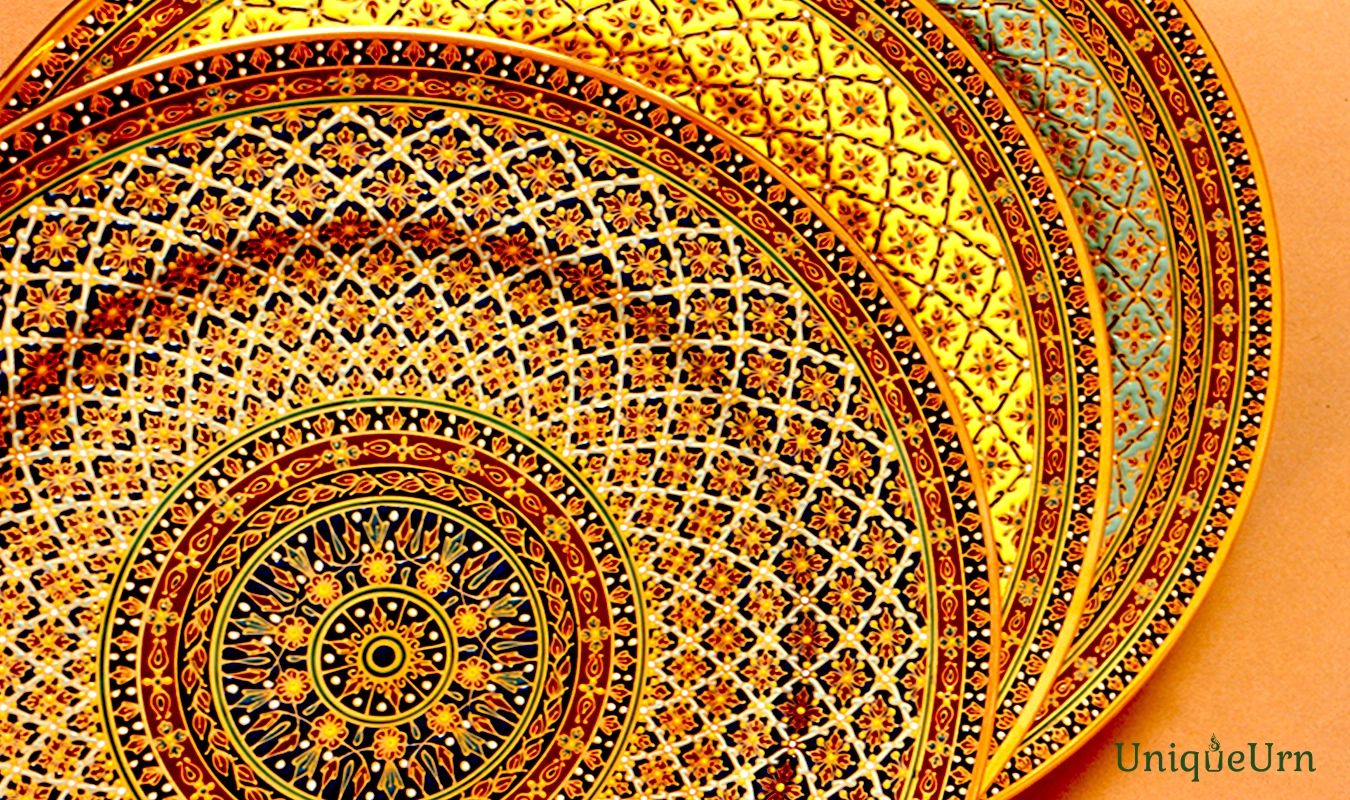
Form, Memory, and Dignity
The deeper one looks, the clearer it becomes: sacred geometry and Thai traditional art are not separate worlds. They are different languages expressing the same truths.
The Triquetra, Reuleaux triangle, Seed of Life, Lotus of Life, and Torus all speak of growth, balance, and return. Thai motifs such as Prachamyam, Kranok, lotus forms, and mandala-inspired layouts say the same thing in another voice—one shaped by Thai culture, ritual, and devotion.
This matters profoundly in memorial art. When beauty has structure and meaning, it becomes more than something to admire. It becomes a vessel that can hold love, reverence, and remembrance with dignity.
That is where UniqueUrn stands: at the meeting point of heritage, craftsmanship, and memory. The brand does not treat Thai pattern art as surface decoration. It treats it as a way of designing grace into remembrance, preserving meaning in forms that feel both timeless and deeply human.
You can explore this further in Thai Pattern Art, the meaning of each Bencharong design, What Is Bencharong?, and How To Make Bencharong Urns?. Each of these pages adds another layer to the same visual and cultural language.
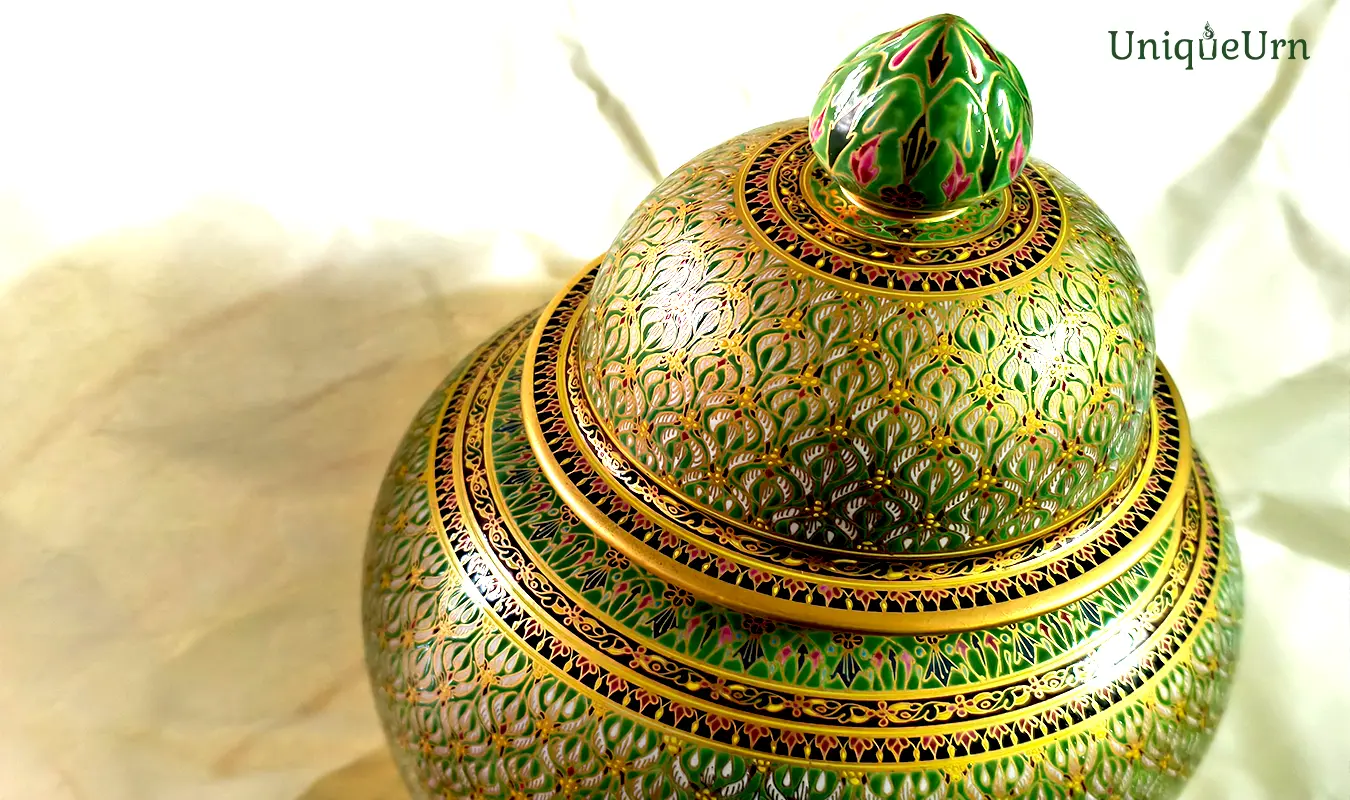
The Grace of Remembrance
In the end, the highest work of art may not be to dazzle us for a moment, but to return us to what matters most.
When form can hold meaning, when line can carry feeling, and when pattern can guide the heart back to center, beauty becomes something more than visual pleasure. It becomes a way of remembering. It becomes a way of honoring. It becomes a way of living with love that still remains.
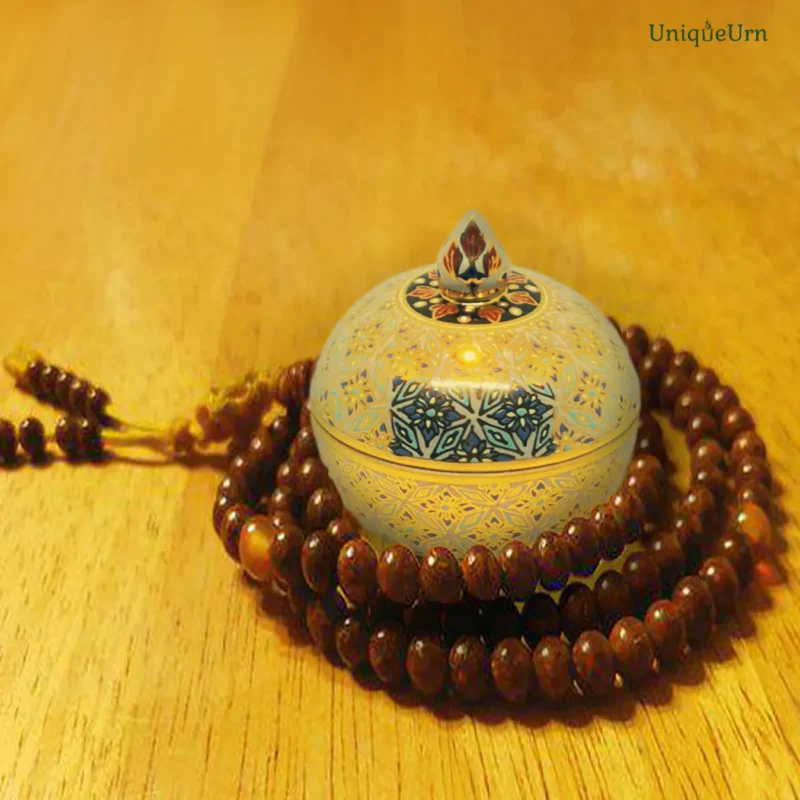
Frequently Asked Questions
How does sacred geometry connect with traditional Thai pattern art in memorial design?
Both sacred geometry and Thai pattern art translate universal laws of balance, flow, and cosmic order into physical structures. Motifs like the Thai Prachamyam and the universal Torus share principles of continuous energy and radial symmetry, transforming cremation urns into spiritual instruments of inner calm.
What does the Prachamyam pattern symbolize on a UniqueUrn memorial vessel?
The Prachamyam motif features a central circle bordered by four cardinal petals. Traditionally used on Thai temple thresholds to guard sacred spaces, it acts as a contemplative anchor that draws the viewer’s gaze back toward an inner center of stillness, peace, and reverent memory.
How do geometric motifs like the Triquetra and Reuleaux Triangle reflect Buddhist philosophy?
The Triquetra embodies threefold unity, echoing the Three Jewels (Buddha, Dharma, Sangha) and the harmony of body, mind, and spirit. The Reuleaux triangle maintains a constant width during rotation, serving as a geometric representation of the Middle Way—unshakable balance without leaning into extremes.
“For a deeper look at how color also shapes meaning in Thai memorial expression, see » Thai color symbolism. Color, pattern, and form together create a more complete language of honor.”