
UniqueUrn
The Architecture Of Light: How Western Stained Glass & Wat Phra Kaew’s Mirror Glass Inspire Eternal Memorial Art
Nov
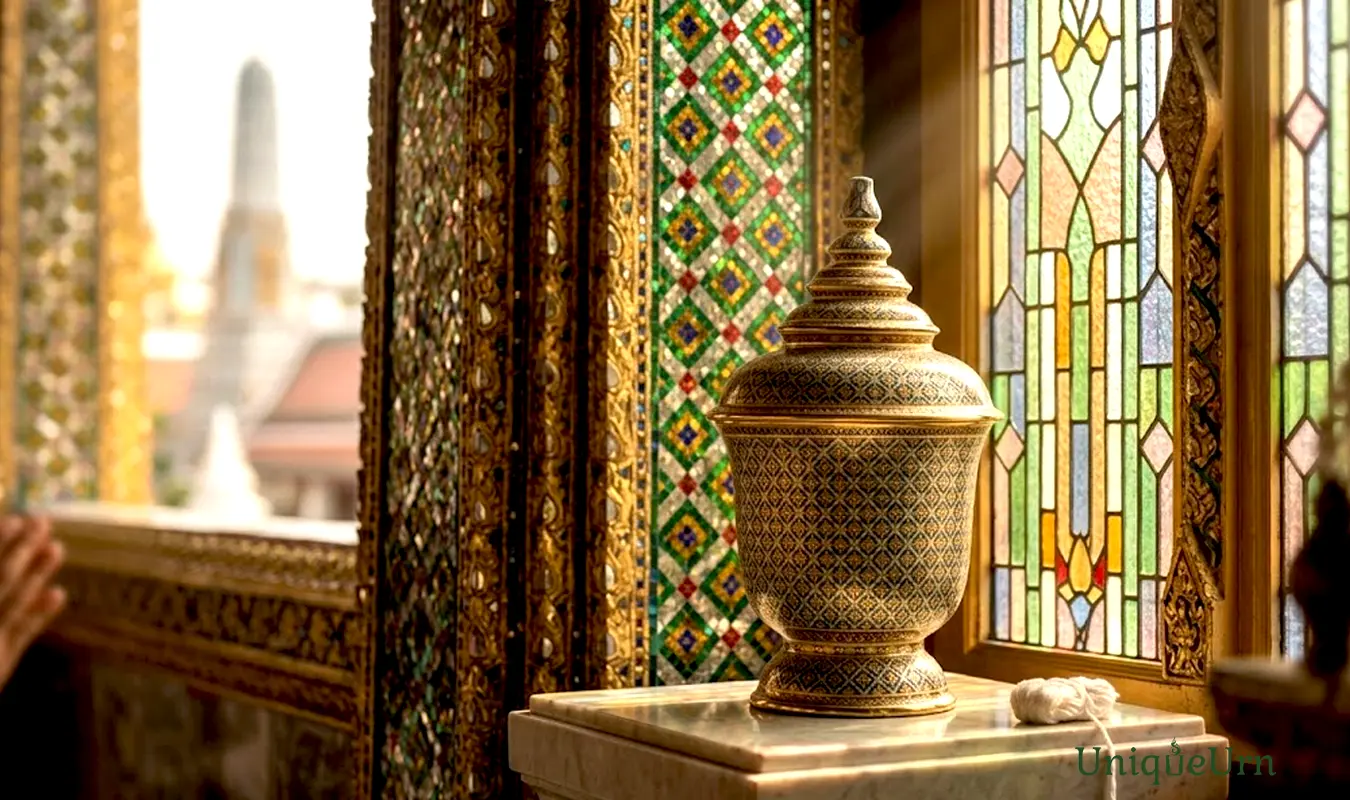
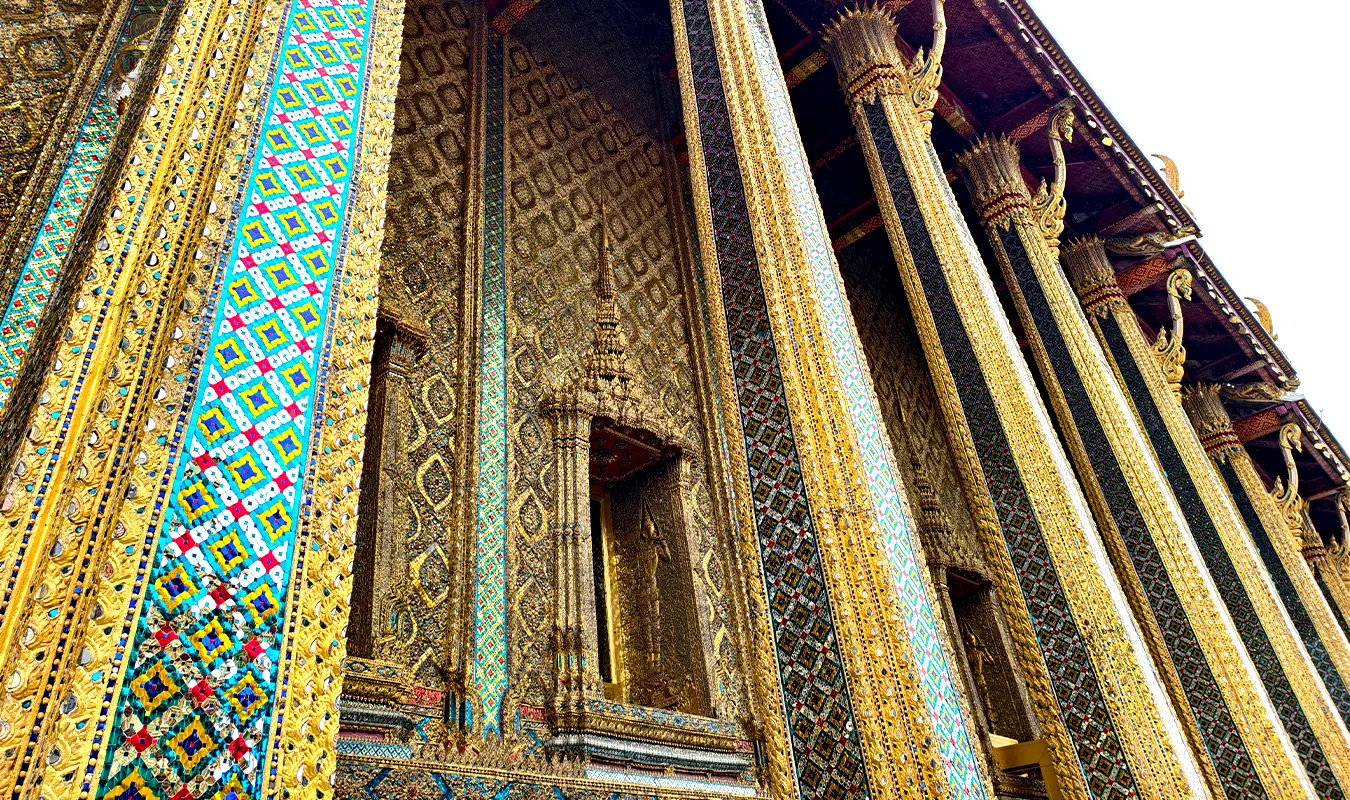
Light has long served as a sacred bridge connecting physical beauty with transcendent spiritual realms. When words fail during moments of profound loss, we often turn to light and art for comfort. Across world civilizations, humanity harnessed light to envision heavenly sanctuaries and celebrate eternal life. In medieval Europe, Gothic cathedrals captured natural sunlight through radiant stained glass windows. At the same time, Siamese royal master artisans created Krajok Kriab (mirror glass mosaic) to adorn Wat Phra Kaew, the grand royal temple of the Emerald Buddha.
Key Takeaways: As light captivates the eyes, it awakens profound beauty deep within the soul.
- Sacred Architecture of Light: Discover how Western stained glass and Wat Phra Kaew’s mirror mosaic (Krajok Kriab) use light to bridge physical beauty and spiritual realms.
- Optical & Material Science: Understand the distinct architectural techniques of internal light transmission (Lux Nova) versus external light reflection.
- Heritage Preservation: Learn how modern Synchrotron X-ray technology resurrects ancient Thai glass-making formulas for future generations.
- Timeless Memorial Art: See how these sacred philosophies inspire UniqueUrn’s museum-quality, handcrafted Bencharong urns.
While these two master crafts draw on distinct material science and optics, both share a profound architectural purpose. They transform earthly structures into monuments of honor, spirituality, and timeless reverence. Creating lasting life value and meaning enables us to transform grief into enduring pride. UniqueUrn warmly invites you to explore how the heritage of sacred light inspires museum-quality memorial art.
Sacred Philosophy: Siamese Indra Cosmology Meets Christian Lux Nova
The architectural use of colored glass across cultures stems from deep theological and philosophical worldviews. Both Eastern and Western master builders captured spiritual enlightenment through radiant brilliance:
- Western Stained Glass (Lux Nova): In the 12th century, Abbot Suger of Saint-Denis developed the theology of Lux Nova (New Light) stained glass. This doctrine viewed pure light as the direct manifestation of the divine. Sunlight passing through saturated colored glass illuminated the stone cathedral interior while elevating the worshiper’s soul. Furthermore, these narrative windows served as Biblia pauperum (the Bible of the poor) for illiterate congregations.
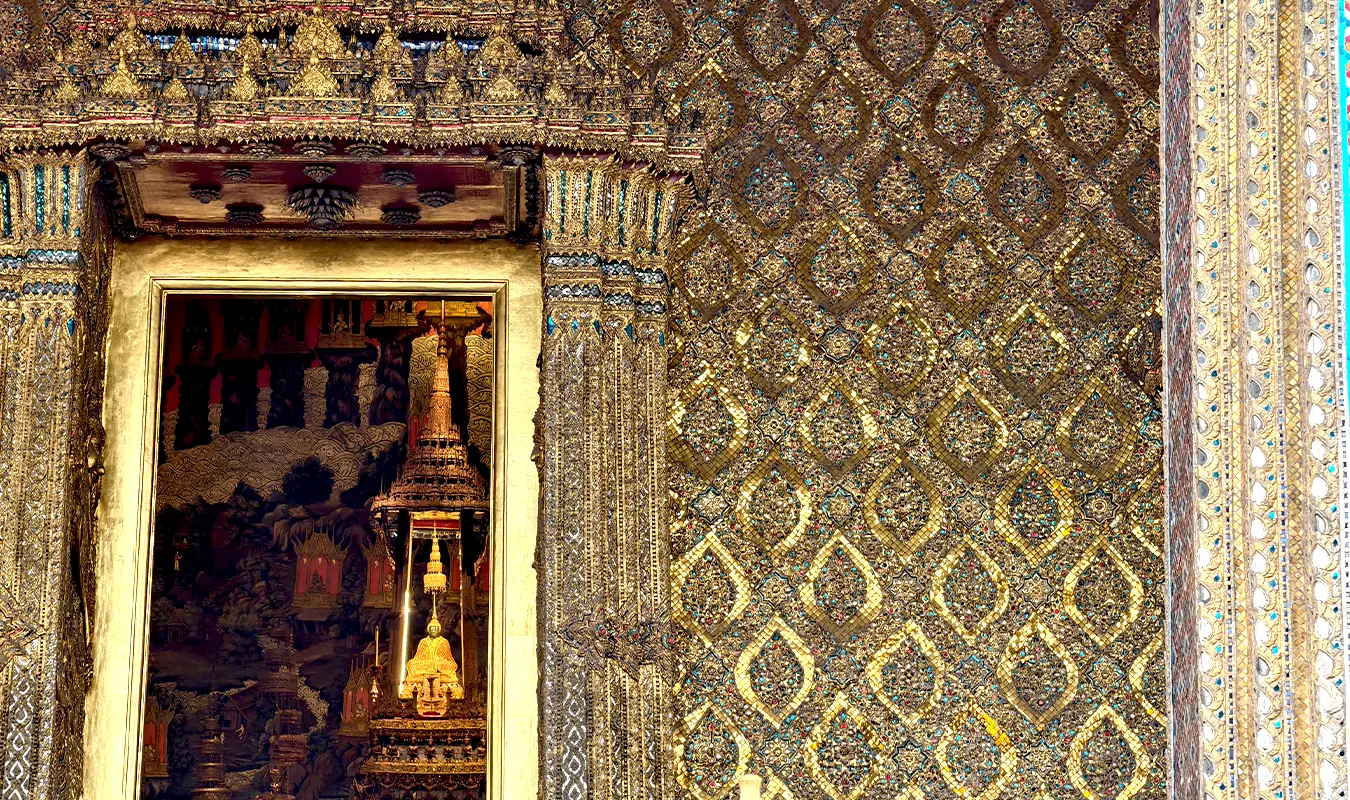
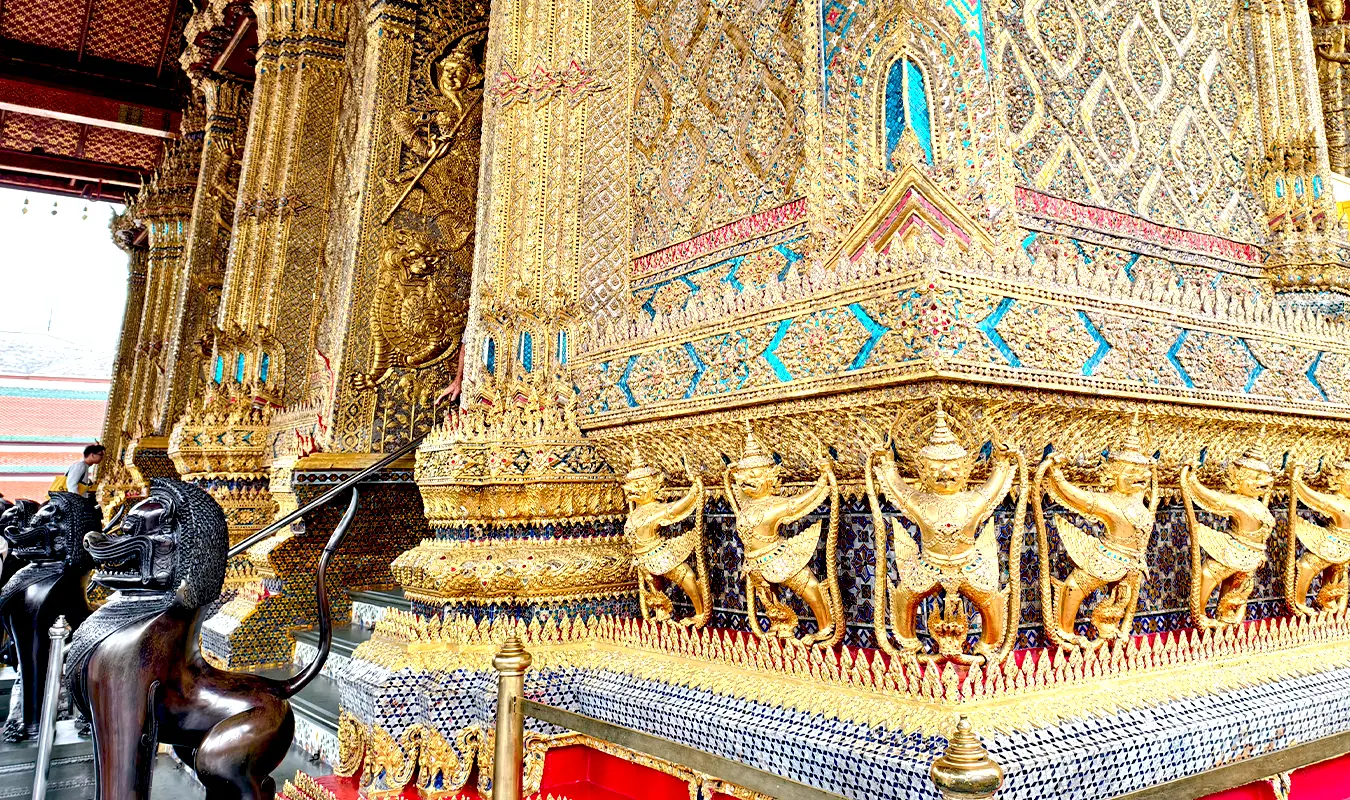
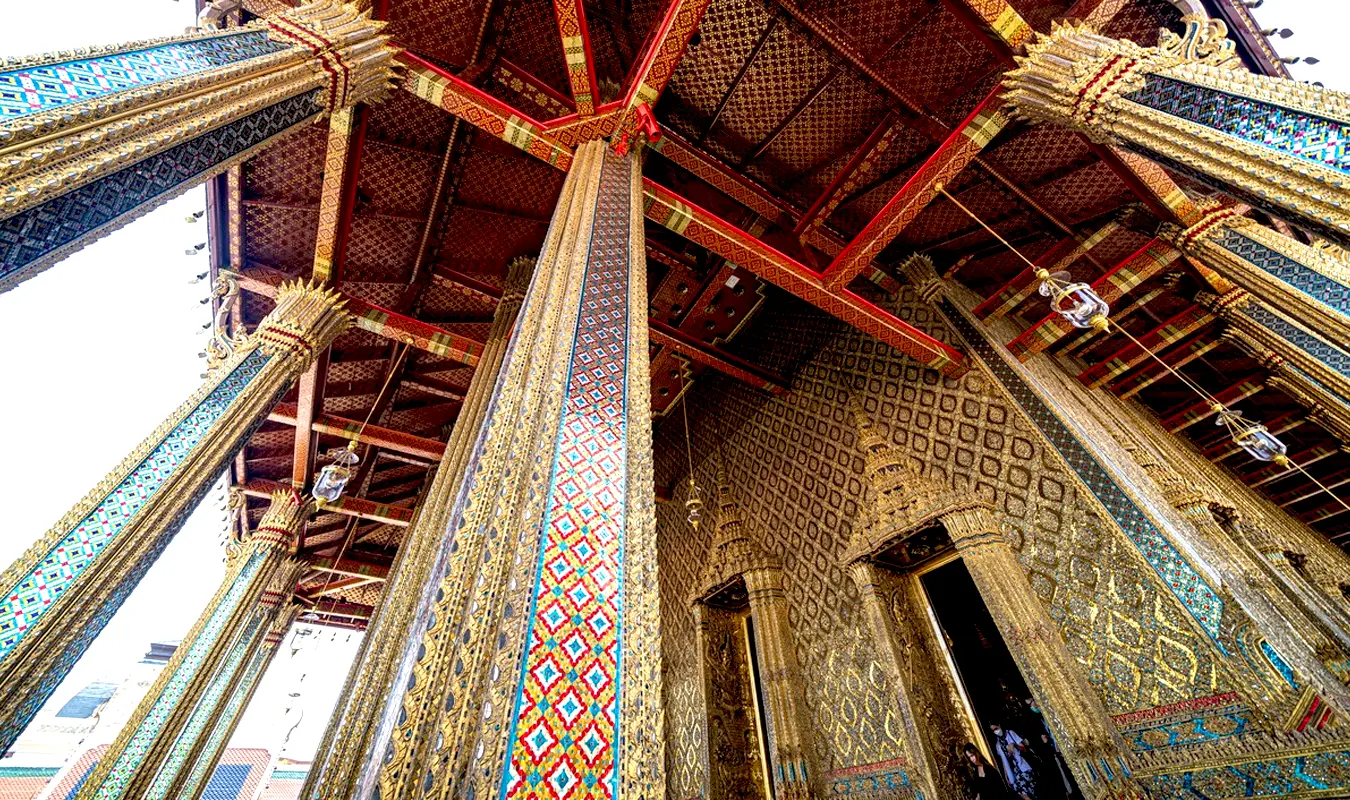
- Siamese Krajok Kriab (Indra’s Heavenly Abode): The architectural ornamentation at Wat Phra Kaew reflects Buddhist Traibhumi cosmology and Indra beliefs. According to sacred texts, Lord Indra’s heavenly palace on Mount Sumeru sparkles with seven celestial gems. Siamese artisans developed mirrored glass mosaic to replicate this floating heavenly palace on earth. The brilliant, shimmering reflection served as a sacred offering echoing the Buddha’s radiant aura (Chabbannarangsi).
How Do Optical Interactions Differ Between Reflection and Transmission?
Regional climates directly dictated how artisans engineered glass chemistry and architectural integration. These distinct approaches created two entirely unique visual experiences:
|
Architectural Dimension |
Siamese Krajok Kriab (Wat Phra Kaew) |
Western Stained Glass (Gothic Cathedrals) |
|
Primary Technique |
Hand-cut glass mosaic mounted onto solid structural surfaces. |
Colored glass sheets joined with channeled lead cames. |
|
Architectural Placement |
Exterior pillars, pediments, base moldings, and sacred spires. |
Window openings, clerestories, and rose window facades. |
|
Optical Interaction |
External light reflection producing a soft, non-glare shimmer. |
Internal light transmission and colorful atmospheric refraction. |
|
Chemical Composition |
Soft lead-silicate glass blended with white kaolin clay. |
Hard soda-lime-silicate glass melted with metallic oxides. |
|
Glass Thickness |
Ultra-thin (approx. 0.5 mm), cut precisely with shears. |
Structural thickness (2.0 to 5.0 mm), cut with specialized irons. |
|
Bonding Mechanism |
Natural Samuk lacquer paste (raw sap, charcoal, fine ash). |
H-shaped lead-came networks sealed with linseed putty. |
Thailand’s intense tropical sunlight led master builders to deflect harsh external heat while maximizing shimmering reflections. The gently uneven surface of handmade Krajok Kriab created a soft, celestial luster visible from afar. Conversely, under overcast European skies, Gothic architects channeled limited ambient daylight to project vibrant biblical visions inside. In summary, Thai glass mosaic makes exterior architectural surfaces radiant, while Western stained glass transforms light into sacred imagery.
Synchrotron Conservation: Resurrecting Lost Heritage Through Modern Science
Centuries of environmental exposure naturally cause ancient decorative glass to degrade. Continuing maintenance and awareness, advanced material conservation bridges ancient craftsmanship with cutting-edge analytical science:
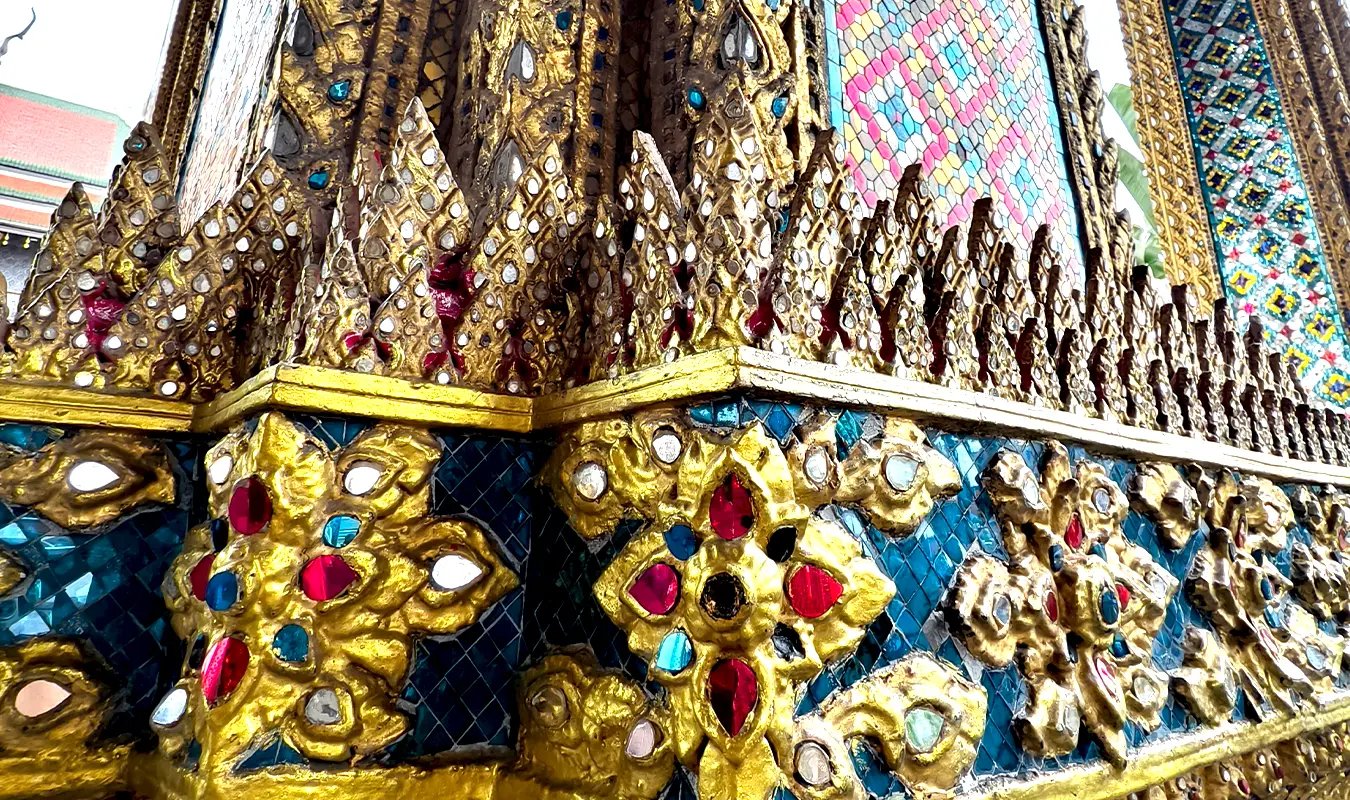
The traditional formula for Siamese Krajok Kriab was completely lost during the early 20th century. Modern industrial mirror replacements proved too thick and chemically incompatible with historical natural lacquer adhesives. Recently, scientists at the Synchrotron Light Research Institute analyzed archaeological glass fragments from Wat Phra Kaew. Using X-ray Absorption Spectroscopy, researchers decoded the precise atomic structure and lead-cobalt ratios of historical glass.
This breakthrough allowed heritage artisans to successfully reproduce authentic Krajok Kriab. These newly smelted glass tiles seamlessly bond with traditional Samuk lacquer, preserving royal chariots and temple colonnades. Similarly, European conservators utilize Isothermal Protective Glazing systems. This dual-layer shielding regulates surface condensation, protecting priceless medieval stained glass for centuries to come.
How Can We Transform Matter into a Sacred Sanctuary of Remembrance?
Architectural glass ornamentation demonstrates how dedicated craftsmanship elevates physical materials into eternal monuments. Traditional Thai motifs change character dynamically as ambient sunlight shifts throughout the day. These decorative surfaces are never merely ornamental. Instead, they apply the psychology of aesthetics to establish sacred sanctuaries of connection.
Meticulously arranging thousands of miniature glass facets demanded extraordinary patience from ancestral craftsmen. This creative devotion proved that human memories and spiritual legacies deserve timeless preservation.
The UniqueUrn Commitment: Honoring Cherished Legacies with Museum-Grade Art
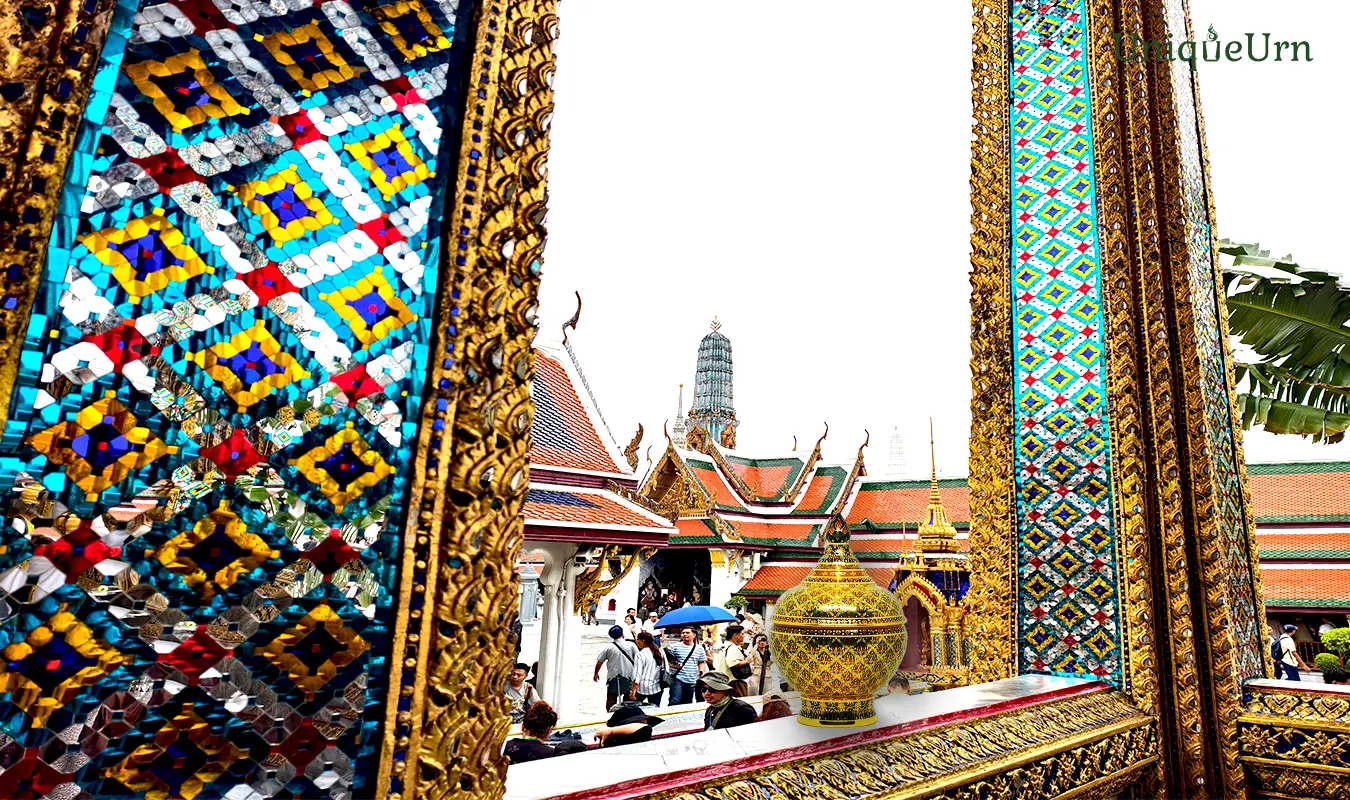
Just as Wat Phra Kaew’s mirror glass reflects eternal light, UniqueUrn preserves this royal artistic tradition to illuminate contemporary memorials. We channel centuries of historic devotion into our handcrafted, museum-quality Thai Bencharong cremation urns.
By combining ancient porcelain firing techniques with authentic 18k gold detailing, our master artisans create far more than a simple vessel; they forge a sacred, architectural place of honor for your home.
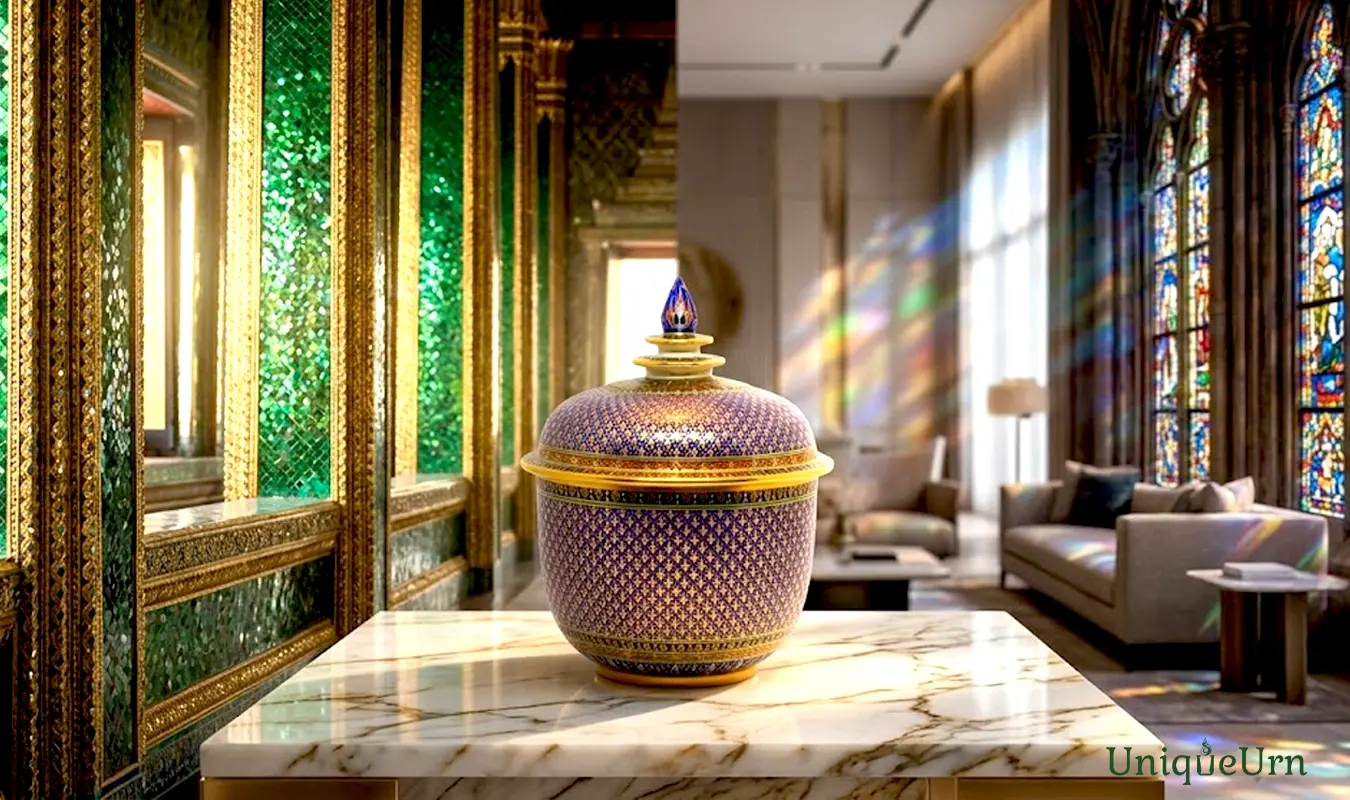
Each intricately hand-painted motif serves as a tactile compass, gently grounding the bereaved heart in beauty, peace, and enduring love. Ultimately, we ensure that your loved one’s radiant legacy continues to shine brilliantly across generations.
Frequently Asked Questions
How do Western Gothic stained glass and Siamese Krajok Kriab differ in architectural purpose?
Western stained glass uses light transmission through thick soda-lime glass to illuminate cathedral interiors with biblical stories (Lux Nova). Siamese Krajok Kriab uses light reflection via ultra-thin (0.5 mm) mirrored glass on building exteriors, deflecting tropical heat while mimicking Lord Indra’s jewel-encrusted heavenly palace on Mount Sumeru.
What scientific breakthrough helped restore the mirror glass at Wat Phra Kaew?
Scientists at the Synchrotron Light Research Institute used X-ray Absorption Spectroscopy on ancient glass fragments. This revealed the historical lead-silicate and cobalt formulations, enabling artisans to recreate authentic, lightweight Krajok Kriab compatible with traditional organic Samuk lacquer.
How does UniqueUrn translate the sacred architecture of light into handcrafted memorial urns?
UniqueUrn applies the aesthetic principles of sacred light through royal Thai Bencharong craftsmanship. Master artisans paint intricate geometric patterns using genuine 18k gold relief on high-fired porcelain urns. These museum-quality vessels catch and reflect ambient light, turning each elegant memorial into a radiant place of honor at home.
“Beyond the mirror glass of Wat Phra Kaew, we invite you to explore » the porcelain mosaic stupas of Wat Pho and » the royal Bencharong architectural tiles of Wat Rajabophit.”