
UniqueUrn
When Life Ends For Expats In Thailand: Cremation, Urns, Repatriation Or Bringing Ashes Home

Oct
One quiet evening in Chiang Mai, a 72-year-old British woman sat looking at old photographs of a family thousands of miles away. She had chosen Thailand as her second home for its warm climate, its gentle cost of living, and a peace she could not find in the great cities of Europe.
What she had not thought about was the question everyone avoids—if her husband were to pass before her here, how would she and their children back home care for his body and his memory?
This question is not hers alone. It belongs to the many Western couples who have chosen Thailand as home in retirement.
Key Takeaways: Bringing Ashes Home & Expat Memorials
- Compassionate Expat Aftercare: Navigating the loss of a loved one in a foreign land can be emotionally overwhelming. Choosing local cremation in Thailand offers families a dignified, affordable, and highly practical alternative to the stressful complexities of international body repatriation.
- A Seamless Journey Home: When returning to your home country, traveling with cremated remains requires specific documentation and a secure, non-metal vessel. Our handcrafted cremation urns ensure a smooth airport security transit while gently protecting our loved one’s essence.
- An Eternal Home Sanctuary: Whether you choose to lay them to rest in Thailand or travel across the world, preserving their memory within unique Bencharong urns or luxury memorial urns beautifully transforms a heartbreaking farewell into a timeless celebration of life.

Why Many Westerners Are Choosing Thailand as Home
The number of long-term foreign residents in Thailand is estimated at 900,000 to 1.1 million people, and the number of retirement visa holders has grown steadily—from around 10,700 people in 2005 to more than 52,000 in 2021 (iges.or)
What draws them to Thailand is a combination of:
- A warm climate and beautiful nature
- A cost of living gentler than in the West
- Safety and a sense of peace with hospitable Thais
- Accessible healthcare
- A warm community of fellow expatriates
But as life moves toward its later chapters, the question of farewell becomes unavoidable. And for those living far from their homeland, managing that farewell can be more complex than expected.
When the Unthinkable Happens
Losing a loved one is painful enough. Facing that loss in a foreign land adds layers of complexity—both emotional and practical. Families must navigate unfamiliar regulations, language, paperwork, and costs they may not have anticipated.
♦ For the emotional and spiritual journey of loss abroad, read our guide » Navigating Loss Far From Home
The First Steps: What Happens After Death in Thailand
When a foreigner passes away in Thailand, there are important steps to follow in order:
- Register the death at the district office (amphur) where the death occurred to obtain a death certificate
- Notify the embassy or consulate of the home country to request documentation confirming the death
- Decide whether to cremate in Thailand or repatriate the body (Chiang Mai Ambassador)
The death certificate is issued in Thai and must be translated and certified for use in the home country.
♦ For the full legal process, see » Navigating Loss Far From Home
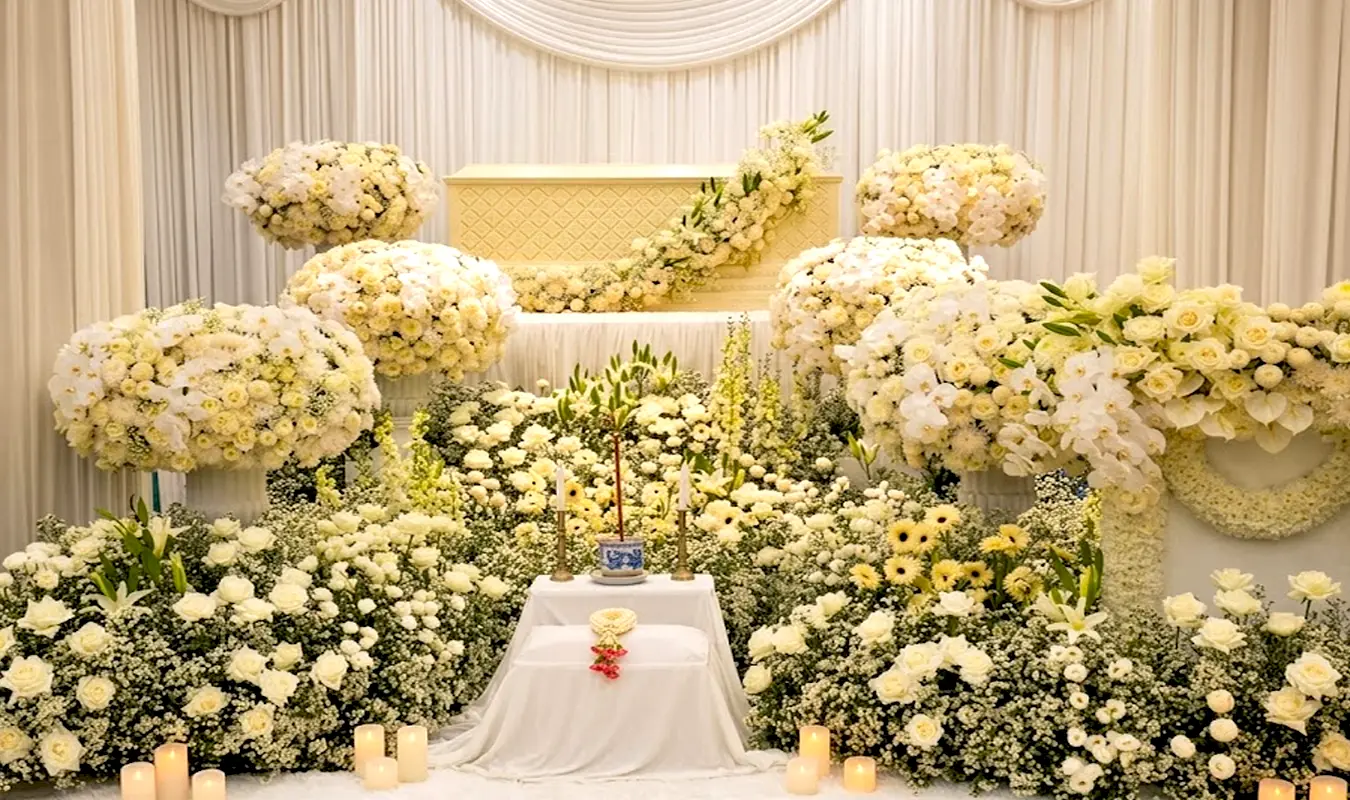
Cremation in Thailand: A Practical and Affordable Choice
For Western families, cremation in Thailand is a suitable choice for several reasons.
The Costs
The cost of cremation in Thailand varies by province, temple, and the details of the ceremony:
- A three-day funeral in Thailand: approximately 40,000 – 60,000 baht
- Cremation overall: approximately 30,000 – 100,000 baht (Bangkok Knowledge)
- An example from Pattaya: cremation costs around 70,000 baht (~US$2,000)
Compared with the cost of repatriating a body—which can reach 150,000 – 400,000+ baht —cremation in Thailand is clearly the more economical option.
The Benefits of Cremation in Thailand
- More affordable than repatriating the body
- More convenient—no need to wait for international body transport
- Flexible in terms of timing and location
- Ideal for bringing ashes home, since ashes are far easier to transport than a body
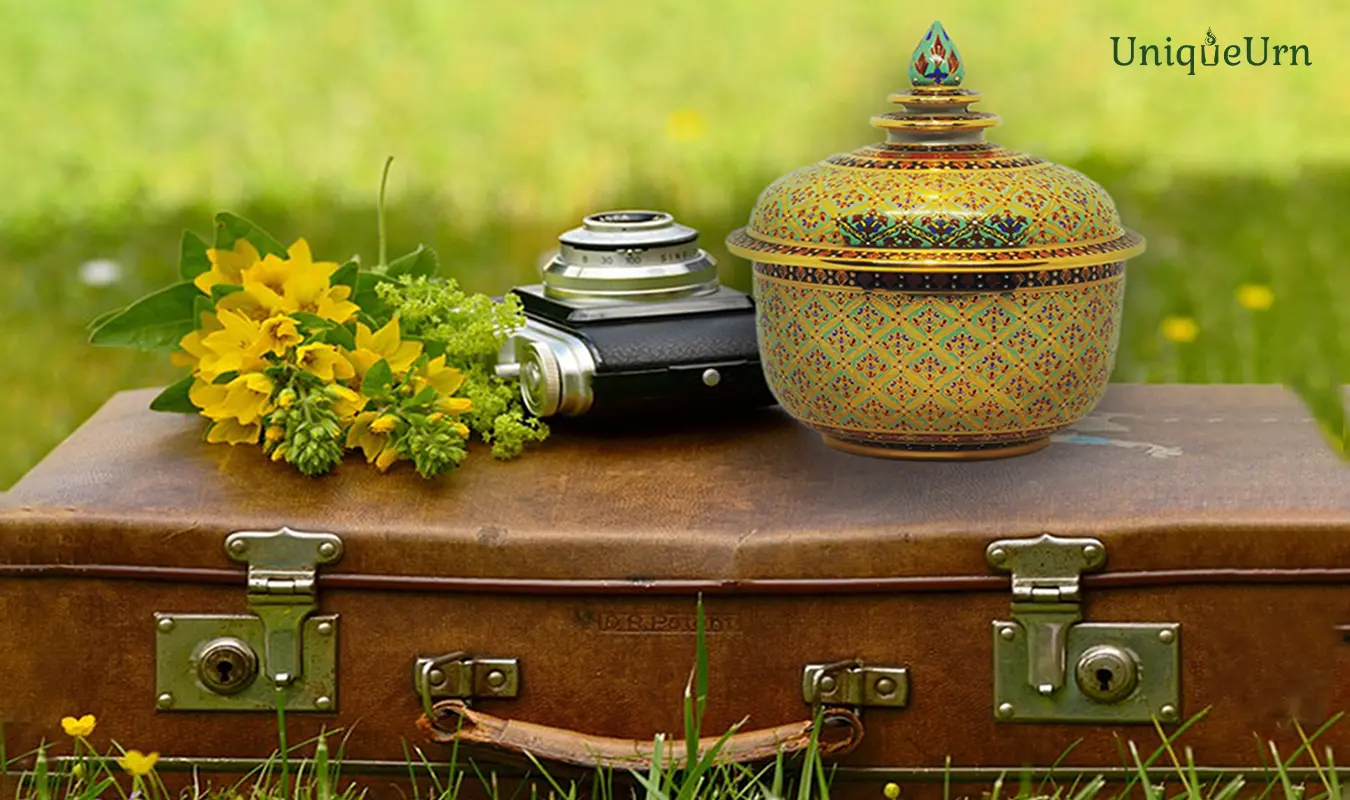
Choosing an Urn: A Vessel That Travels with You
Once you choose cremation in Thailand, selecting the right urn becomes important—especially if the family may wish to bring the cremains home in the future.
An urn suited for travel should:
- Not be made of metal, so it passes easily through security scanners
- Be durable and sealable, protecting the cremains from moisture
- Be beautiful and meaningful as a memorial for the family
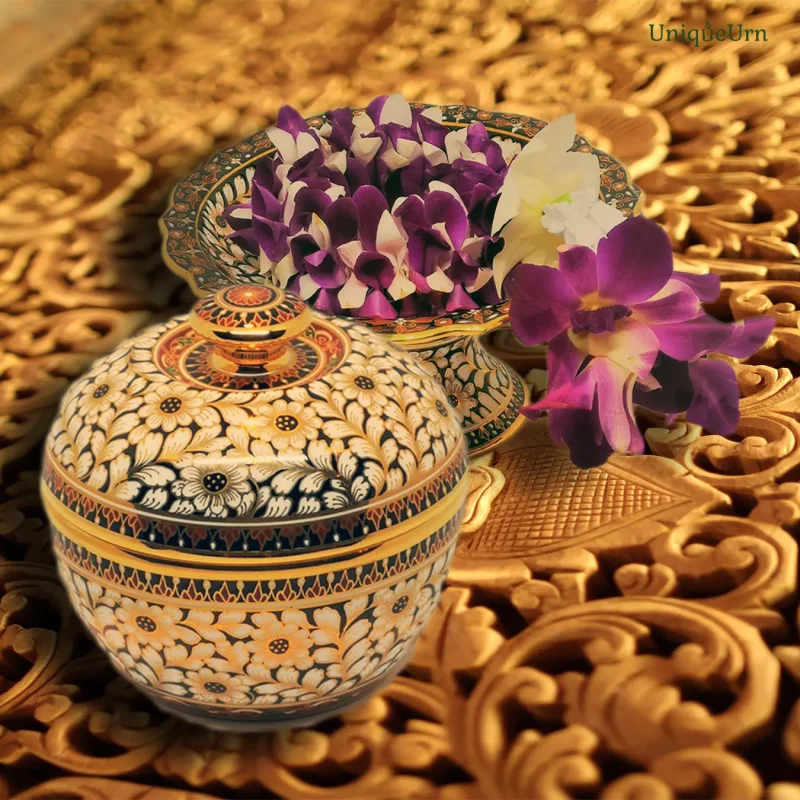
UniqueUrn‘s Bencharong art urns for ashes answer both practical and aesthetic needs. Made of porcelain (not metal), they are durable, moisture-resistant, and works of art from Thailand that reflect love and memory. While porcelain can break if dropped, the care that naturally surrounds a loved one’s remains tends to be far greater than usual.
♦ Explore more considerations » Choosing The Right Urn For The Loved One, and » Choosing Urn Materials
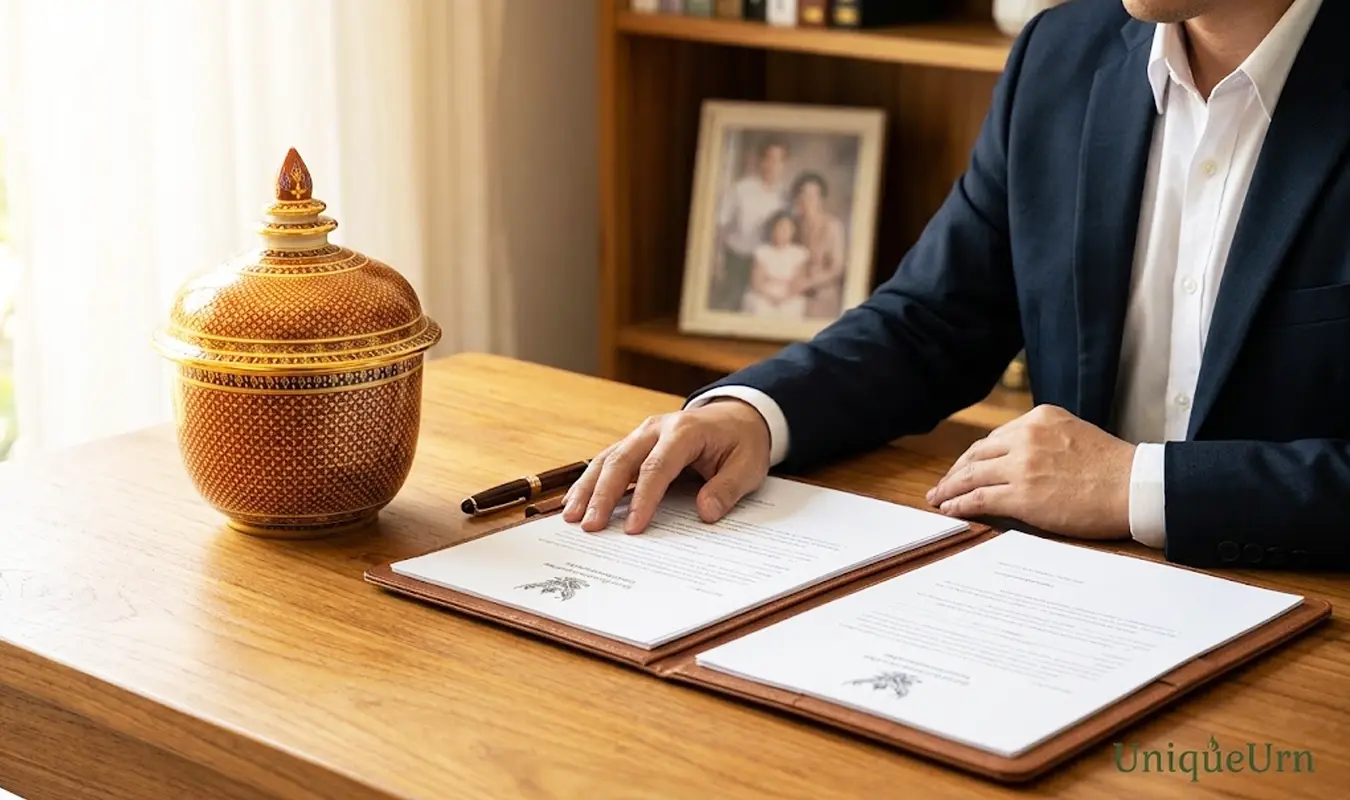
Bringing Ashes Home: What You Need to Know
Bringing cremated remains home is a more economical and convenient choice than repatriating a body, but the documents must be in order.
Required Documents
- Death certificate — Thai original + certified translation
- Certificate of cremation — issued by the crematorium/temple
- Embassy documents — a letter confirming the death
- Customs forms — required when entering the destination country
Key Information
- Cremated ashes can generally be carried on a plane, either as carry-on or checked luggage, provided the documents are complete
- Check directly with the airline, as policies vary by carrier and destination
- Contact the embassy of the destination country before traveling
Note: Regulations may change. Always consult your embassy, airline, or a professional, and this information is not legal advice.
Repatriation vs. Cremation: Comparing the Costs
Comparing the costs helps families decide more easily:
|
Option |
Approximate Cost |
Convenience |
|
Repatriate the body |
150,000 – 400,000+ baht (ThaiLawOnline) |
Complex; requires zinc coffin, embalming |
|
Cremate in Thailand + bring ashes home |
Far lower (ashes can be carried on board) (Bangkok Knowledge) |
Simpler, more convenient |
Cremating in Thailand and then bringing the cremains home is clearly both more economical and more convenient.

Keeping Ashes in Thailand: Another Option
Not every family wishes to bring cremains home. Some choose to keep them in Thailand for various reasons:
- The departed loved Thailand and wished to rest in peace here
- The family has a home or community in Thailand
- Convenience of visiting
Options for keeping ashes in Thailand:
- A columbarium in a Christian memorial site or a Thai temple
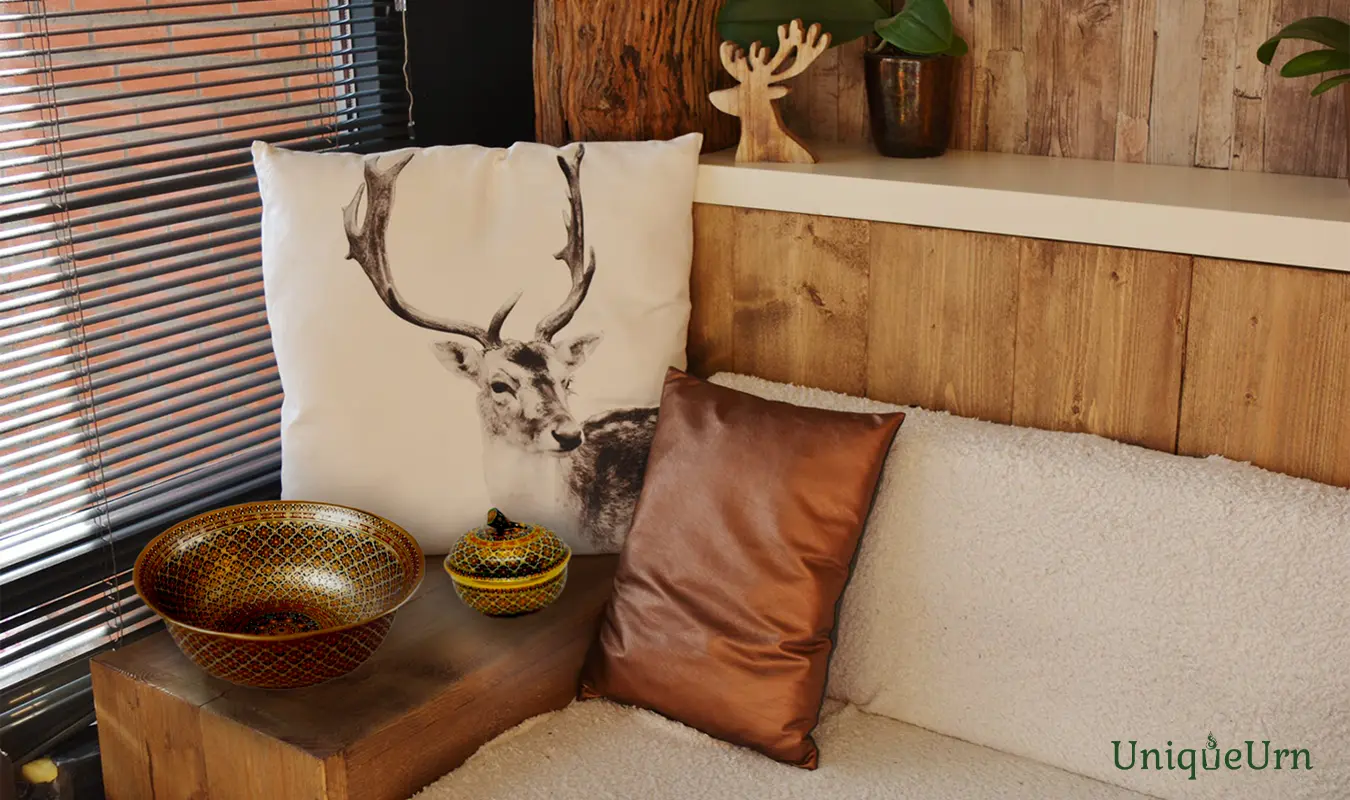
- A home memorial space, with a beautiful and meaningful urn
- Scattering the cremains (Loy Angkhan) in a river or the sea, according to belief
- Combine these options for suitability and respect
Keeping cremains at home in an elegant urn gives the family a space of remembrance and peace every day.
Planning Ahead: Preparing for Peace of Mind
Planning is one of the greatest gifts we can give our families, because it reduces burden and confusion during a difficult time.
What to prepare:
- A will, to name an executor of the estate
- A statement of wishes regarding burial or cremation, and the handling of ashes
- Insurance that covers the costs of repatriation or cremation
- Important documents kept where family can access them
- Open conversations with family about your wishes
Planning ahead does not mean we are obsessed with death. It means we love our family enough to make our farewell not a burden for them.
Conclusion: A Beautiful Farewell in the Land You Loved
The end of life in Thailand does not have to be a source of worry. With good planning and the right choices, a family can turn a farewell into a moment of love and memory.
Whether you choose:
- To cremate in Thailand and keep the cremains here
- To cremate in Thailand and bring the cremains home
- Or to plan ahead and prepare in advance
What matters most is doing it with understanding and love.
An exquisite urn is more than a vessel. It is a sanctuary of memory that helps a family remember the departed with honored love, rather than sorrow.
If you are seeking art that makes remembering a loved one more meaningful, get to know UniqueUrn or browse our collection of Thai Bencharong art urns—crafted by hand and heart, for the person who mattered most to you.
Frequently Asked Questions
What happens when a foreigner dies in Thailand?
The local district office (amphur) registers the death and issues a death certificate, then notifies the embassy or consulate of the home country. You then decide whether to cremate in Thailand or repatriate the body. The death certificate is issued in Thai and must be translated and certified for use abroad.
Is cremation in Thailand affordable for expats?
Yes. Cremation in Thailand generally costs between 30,000 and 100,000 baht, which is far more economical than repatriating a body (150,000–400,000+ baht). This makes cremation followed by bringing ashes home a practical and affordable choice.
Can I bring my loved one’s ashes home from Thailand?
Yes. Cremated remains can usually be carried on a plane, either as carry-on or checked luggage, provided you have the required documents—the death certificate, certificate of cremation, embassy documents, and customs forms. Always check with your airline and the destination embassy in advance.
What kind of urn is best for traveling with ashes?
An urn that is not made of metal is best, as it passes easily through security scanners. It should also be durable, well-sealed to protect against moisture, and meaningful to the family. Bencharong porcelain urns meet these practical needs while offering lasting beauty.
Can I keep the ashes in Thailand instead of bringing them home?
Yes. Many families choose to keep cremation remains in Thailand at a columbarium (in a Christian memorial site or Thai temple), in a home memorial space with a beautiful urn, or by scattering them in a river or the sea. Keeping the elegant urn of a loved one’s ashes at home gives the family a daily space of remembrance.
Should I plan for a death in Thailand?
Yes. Planning—through a will, a statement of wishes, insurance that covers repatriation or cremation, and keeping important documents accessible—is one of the greatest gifts you can give your family. It reduces burden and confusion during a difficult time.
“When you choose cremation, you may also find it helpful to know: How to Place Ashes in an Urn with Care & Remembrance”.