
UniqueUrn
The Secret Palette Of Kings: Decoding Royal Temple Colors For A Sanctuary Of The Soul
Aug
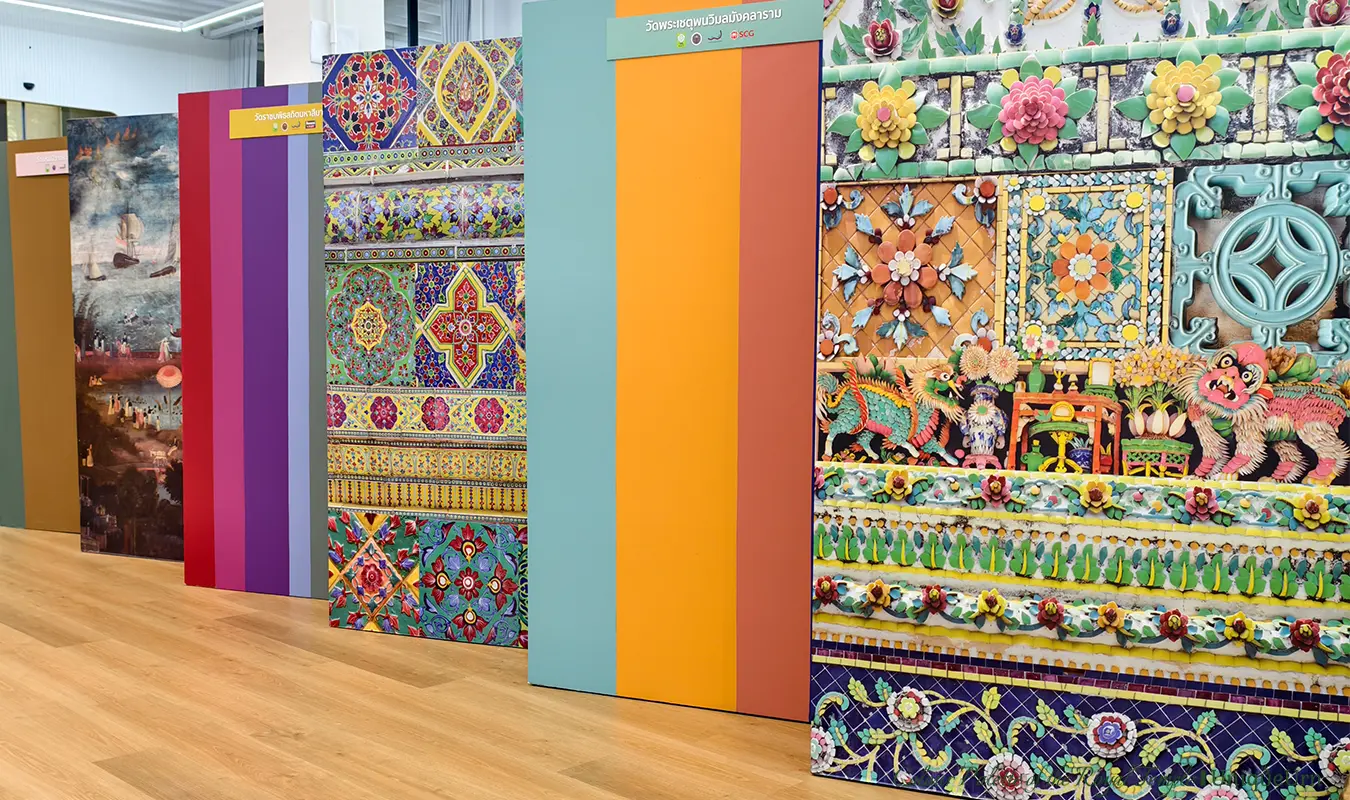
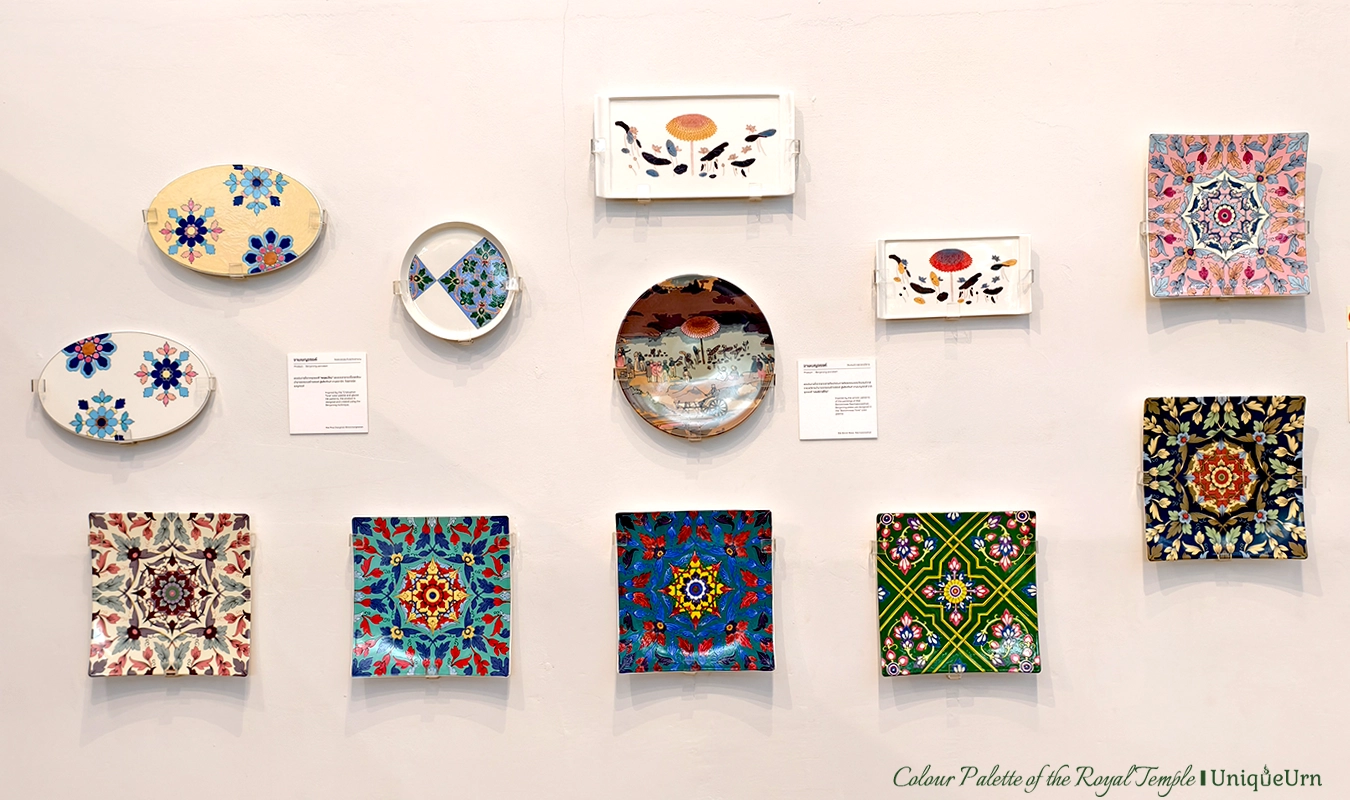
The journey of a color does not begin on a palette; it begins within the cultural roots of a century-old heritage. The exhibition “Colour Palette of the Royal Temple,” a collaborative research endeavor between the National Research Council of Thailand (NRCT) and the Thai Art and Craft Development Association (TACDA), serves as a testament to this truth.
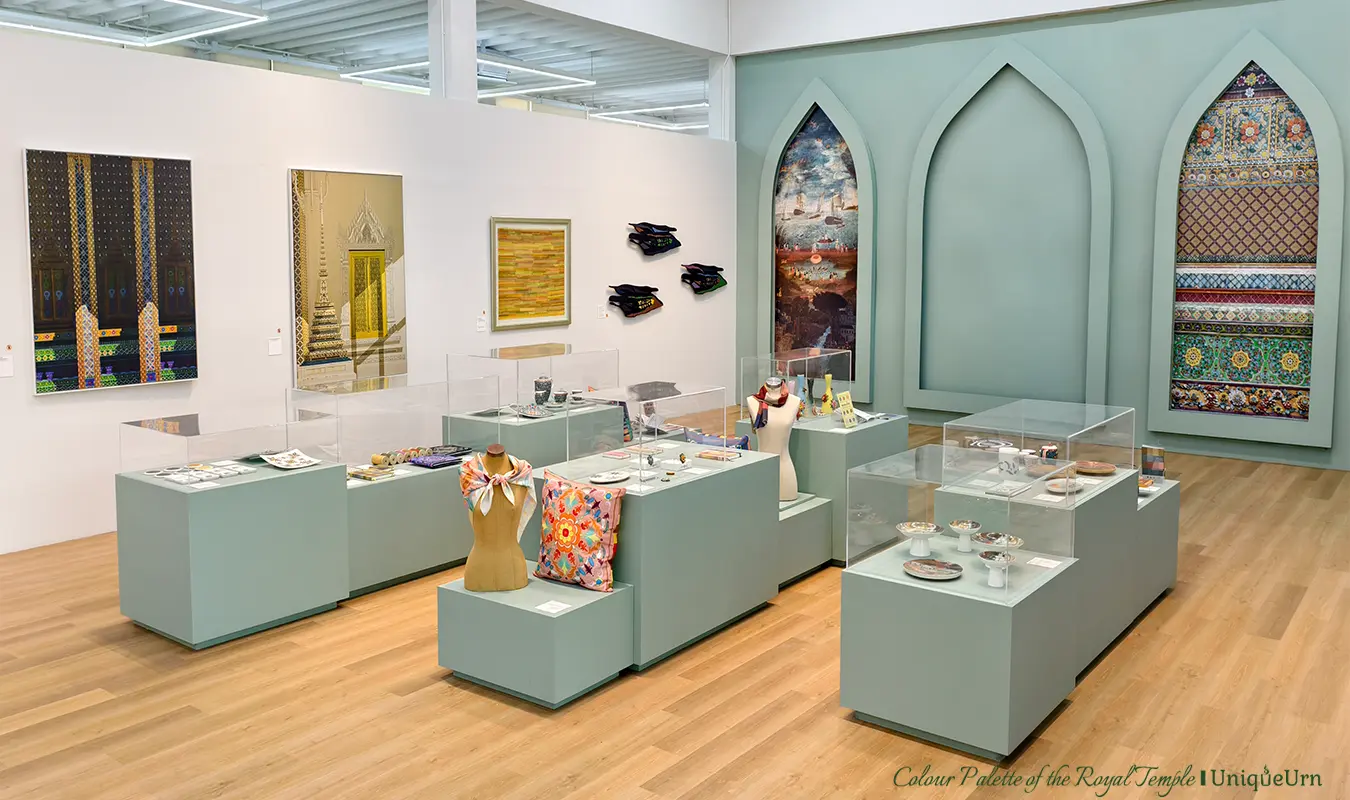
At UniqueUrn, we invite you to decode the color secrets of three magnificent Thai temples. Discover how timeless, exquisite Thai art serves as a powerful catalyst for contemporary creativity, transforming the atmosphere of loss into a beautiful sanctuary of memory.
1. Wat Ratchabophit: The Aesthetics of Fusion and Supreme Honor
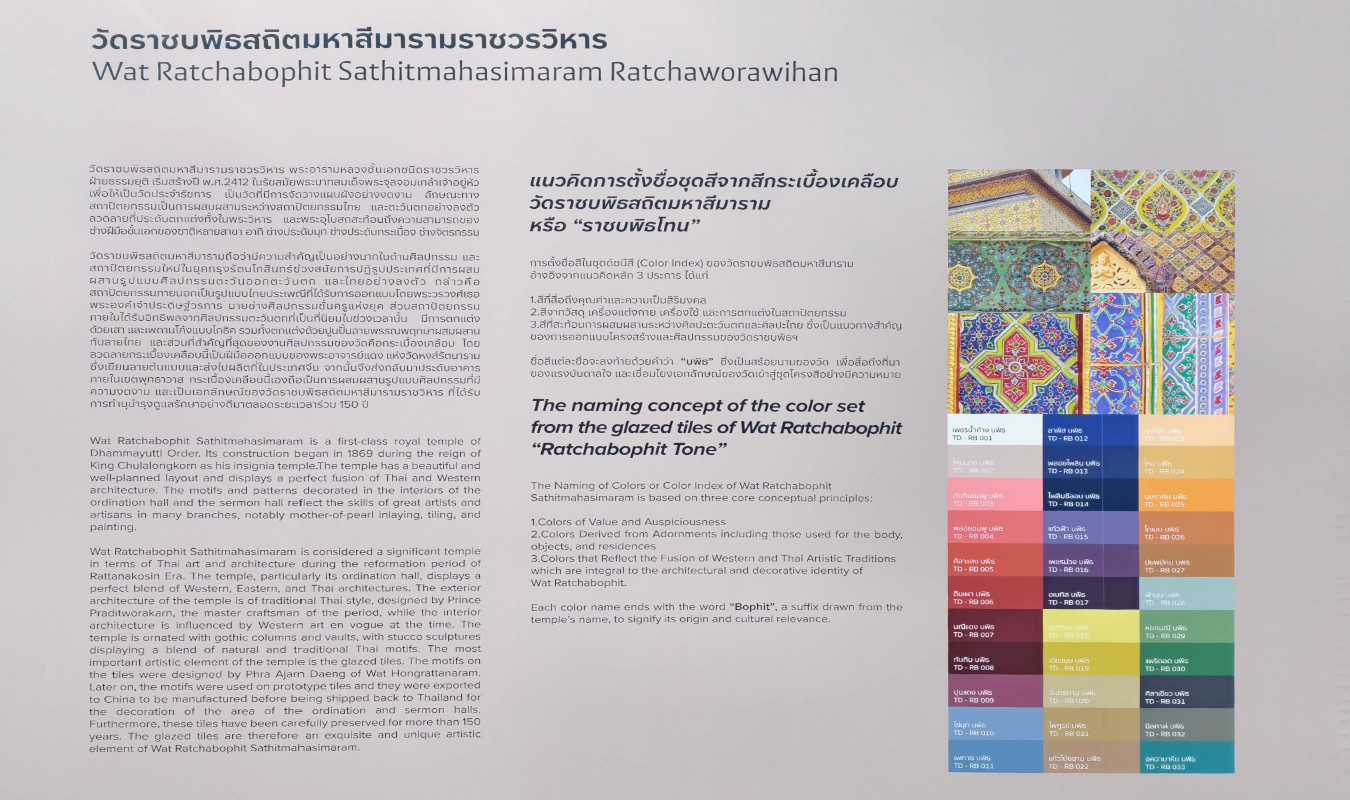
The first of our inspirations begins with the “Ratchabophit Tone.” Wat Ratchabophit (Rajabopit) Sathitmahasimaram is widely known as the “Temple of Art” for its seamless blend of traditional Thai architecture and Western influences.
The hallmark of this temple is its specially commissioned Bencharong glazed tiles. This color set radiates luxury, elegance, and auspiciousness. Through meticulous research, three naming principles were established for these colors:
- Colors of Value and Auspiciousness: Tones that evoke a sense of high status according to Thai beliefs.
- Colors Derived from Adornments: References to precious gemstones, such as Amethyst Bophit and Dewdrop Diamond Bophit.
- Colors Reflecting Cultural Fusion: Capturing the unique Thai-Western identity.
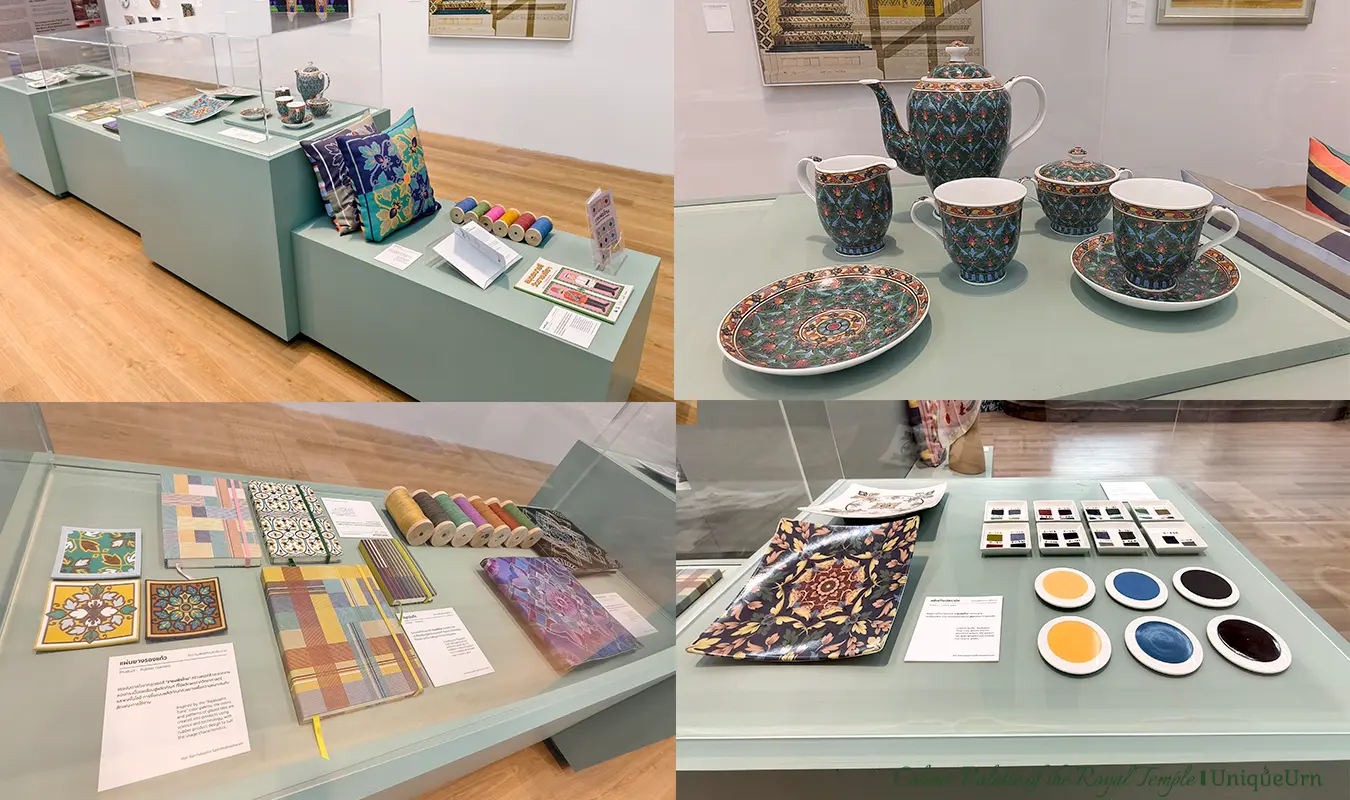
For UniqueUrn, these shades are embodied in our Handmade Bencharong Urns. We utilize the “Ratchabophit Tone” to convey supreme honor, ensuring that the beloved one is remembered with the utmost dignity and grace.
♦ Explore the craftsmanship further » Exquisite Bencharong Tiles At Wat Rajabopit.
2. Wat Pho: The Palette of Wisdom and the Power of Healing
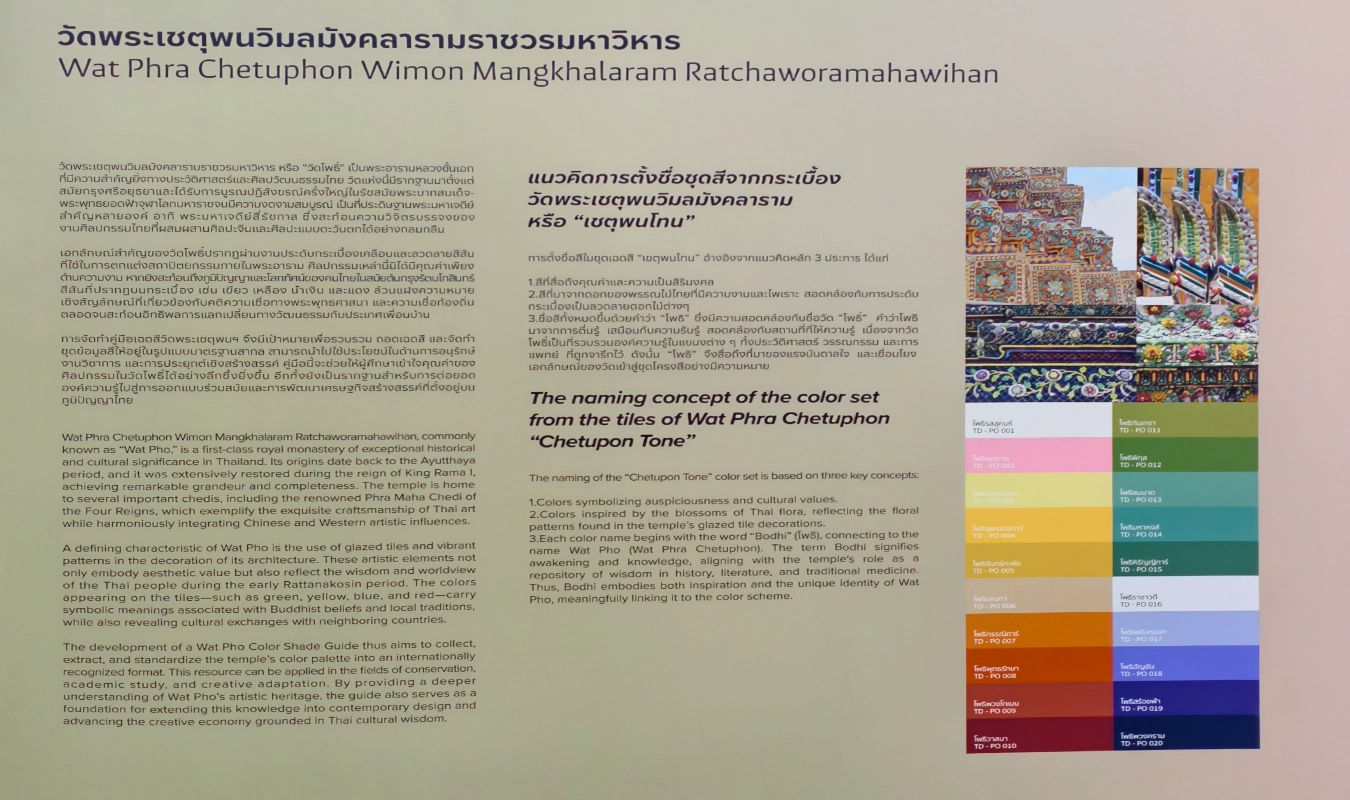
As we transition to the “Chetupon Tone,” the atmosphere shifts toward profound tranquility. Wat Phra Chetupon (Wat Pho) is renowned as the historic center of Thai traditional medicine and universal knowledge.
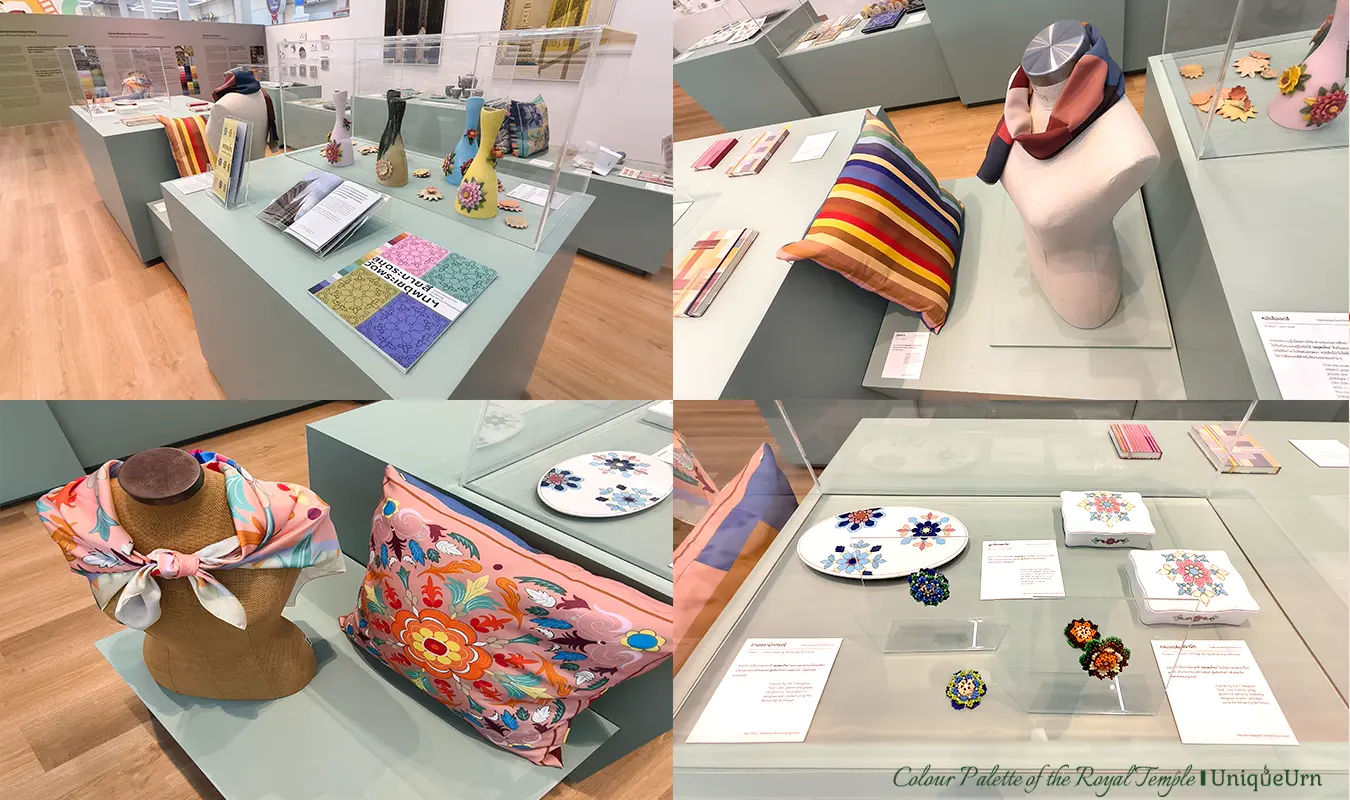
Inspired by the temple’s flora and the intricate porcelain mosaics of its Great Stupas, these colors bear the prefix “Bodhi” (Enlightenment)—such as Bodhi Phuttharaksa and Bodhi Noppadon. These soft, pastel tones provide a sense of protection and emotional balance.
At UniqueUrn, we translate this inspiration into our Keepsake Urns and accessories. We focus on soothing the mind and maintaining Continuing Bonds with those who have passed. By choosing these gentle hues, art serves as a tangible bridge of love, comforting the living.
♦ Deep dive into symbolism » The Language Of Color In Thai Culture.
3. Wat Boromniwas: Dhamma Enigmas in Muted Tones
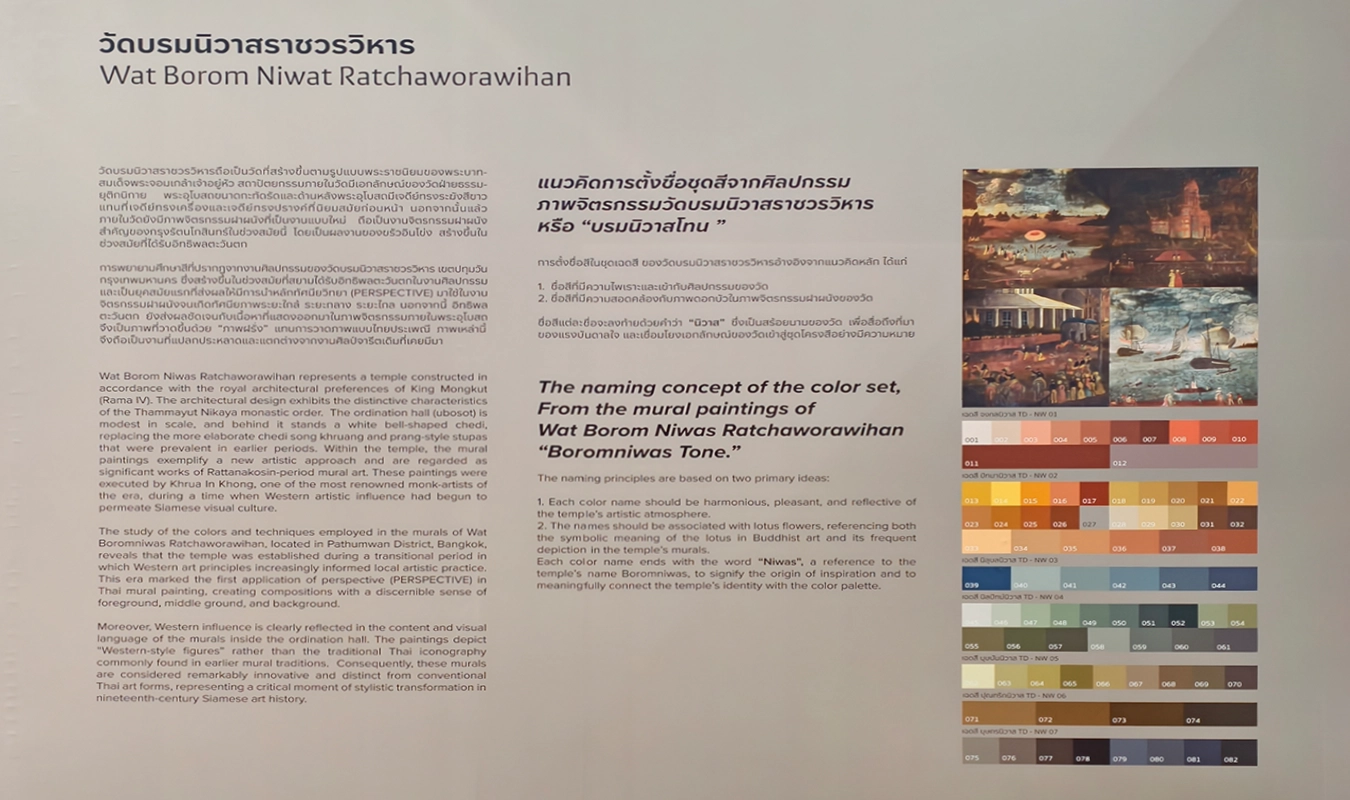
For art connoisseurs, the “Boromniwas Tone” offers a fascinating perspective. This temple is home to the murals of Khrua In Khong, the pioneering artist who introduced Western perspective into Thai painting.
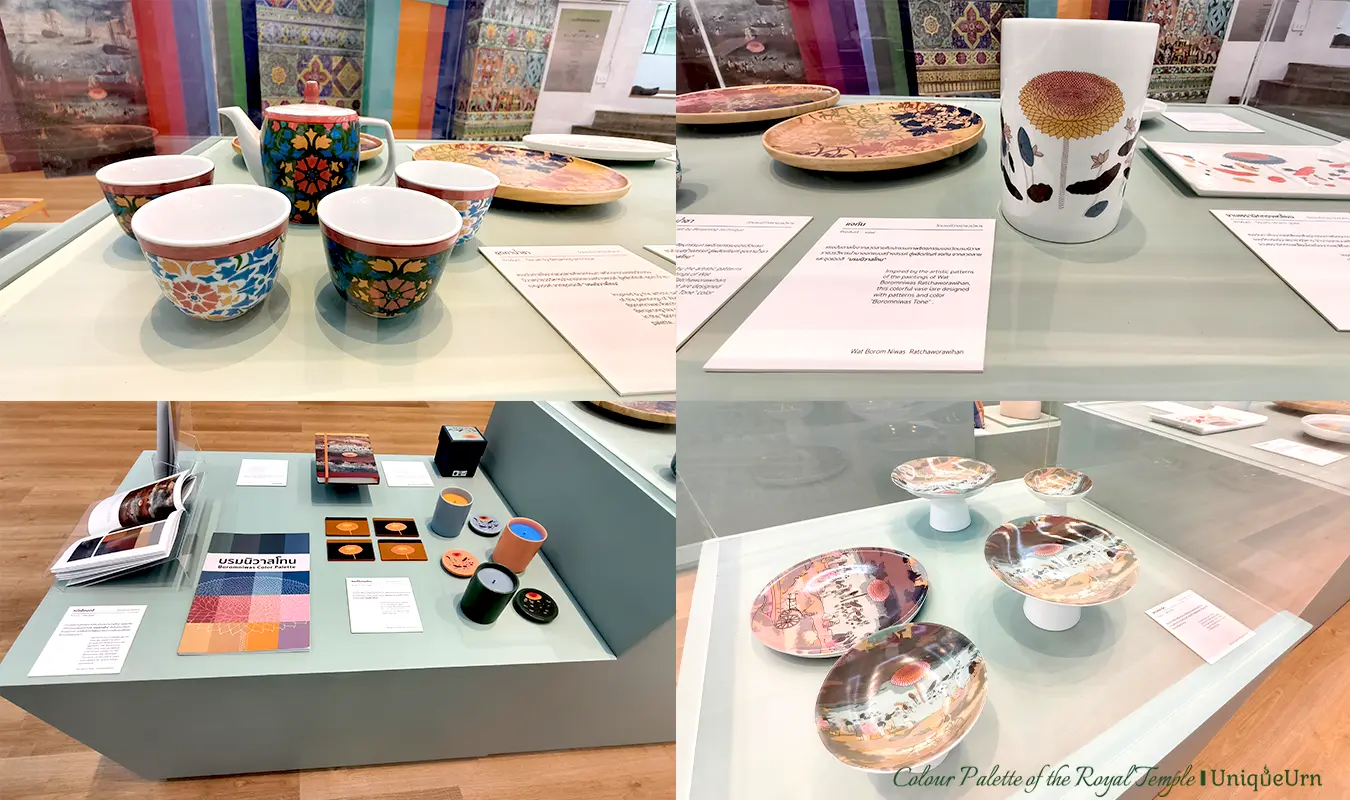
This set features Muted Colors that evoke a sense of calm and the “truth of life“. The names end with “Niwas”, meaning “Home” or “Abode”.
- Deep Blue (Niwas): Evokes the stillness of the ocean and the art of letting go.
- Muted Green (Niwas): Symbolizes healing and the cycle of rebirth.
- Shadow Gray (Niwas): Reflects the profound truth of impermanence with classic elegance.
UniqueUrn draws from these tones to create Adult Urns and Companion Urns with a Minimalist aesthetic. These muted palettes create a “safe space for the mind” within the home, reflecting a state of serene awareness.
♦ Find peace through wisdom » Awakening to Death: Embracing Impermanence.
The UniqueUrn Realization: Art as Soul Medicine
Through our in-depth study of these royal temple palettes, we have transformed research into Memorial Art of profound value.
- Creating Safe Spaces: Utilizing Chetupon tones to soothe the heart.
- Establishing Honor: Applying Ratchabophit tones for supreme legacies.
- Embracing Truth: Using Boromniwas tones to facilitate equanimity.
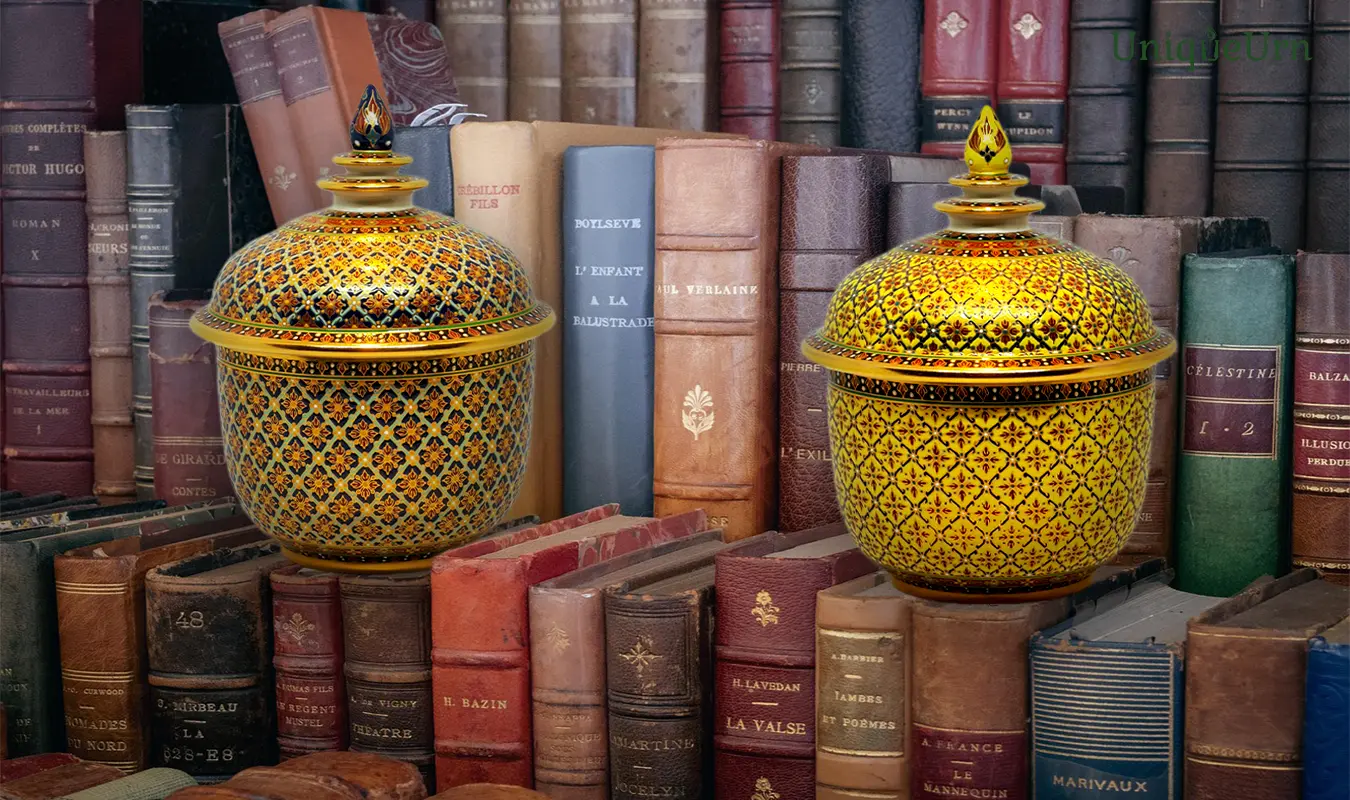
The aesthetics of the Royal Temples are not merely relics of the past; they are tools that help us navigate grief with beauty and grace. At UniqueUrn, we believe that “Exquisite art is a remedy for the soul.”
♦ Learn more about the psychology of memorial art » Healing Through Beauty: The Psychology Of Aesthetics.
Frequently Asked Questions
What is the “Secret Palette of Kings” in Thai memorial architecture?
The Secret Palette of Kings refers to the historic chromatic systems created for Bangkok’s royal temples, including Wat Ratchabophit, Wat Pho, and Wat Boromniwas. Rooted in Siamese court tradition, these mineral pigments balance amber golds, deep cobalt blues, and contemplative earth tones to celebrate spiritual transition and eternal honor.
How can viewing specific royal color harmonies soothe personal grief and loss?
Exposure to curated, balanced color harmonies noticeably regulates an overstimulated nervous system during bereavement. By guiding attention away from distressing rumination toward stable visual beauty, sacred aesthetics facilitate emotional grounding, lower anxiety, and foster quiet reflection.
Does honoring a loved one with vibrant temple colors conflict with Western mourning customs?
Not at all. Contemporary grief psychology and the Continuing Bonds theory affirm that memorials should celebrate a loved one’s vibrant life value rather than symbolize permanent sorrow. Incorporating radiant temple tones and genuine gold elevates bereavement into an enduring tribute of dignity and beauty.
How does UniqueUrn adapt complex royal temple aesthetics for modern minimalist home interiors?
Master artisans distill ornate historic motifs into clean, sculptural porcelain silhouettes accented with authentic gold relief. By pairing traditional mineral glazes with sleek geometric lines, each urn serves as both a museum-grade memorial and a sophisticated piece of fine art.
How does a handcrafted color palette provide emotional comfort in daily life?
A personalized art urn acts as a tangible tactile compass within our living space. Interacting with the gentle sheen of high-fired porcelain and rich gold detailing anchors our awareness in gratitude, transforming daily remembrance into a comforting practice of mindfulness.
What distinguishes UniqueUrn’s royal-inspired porcelain urns as timeless family heirlooms?
Every vessel is crafted using 18th-century Siamese ceramic methods, hand-painted with genuine gold, and fired at 1,280°C. This labor-intensive process guarantees archival permanence and structural resilience, ensuring our loved one’s place of honor endures across generations.