
UniqueUrn
Fragments Of Eternity: When Western Mosaic Meets The Porcelain Splendor Of Wat Pho
Jul
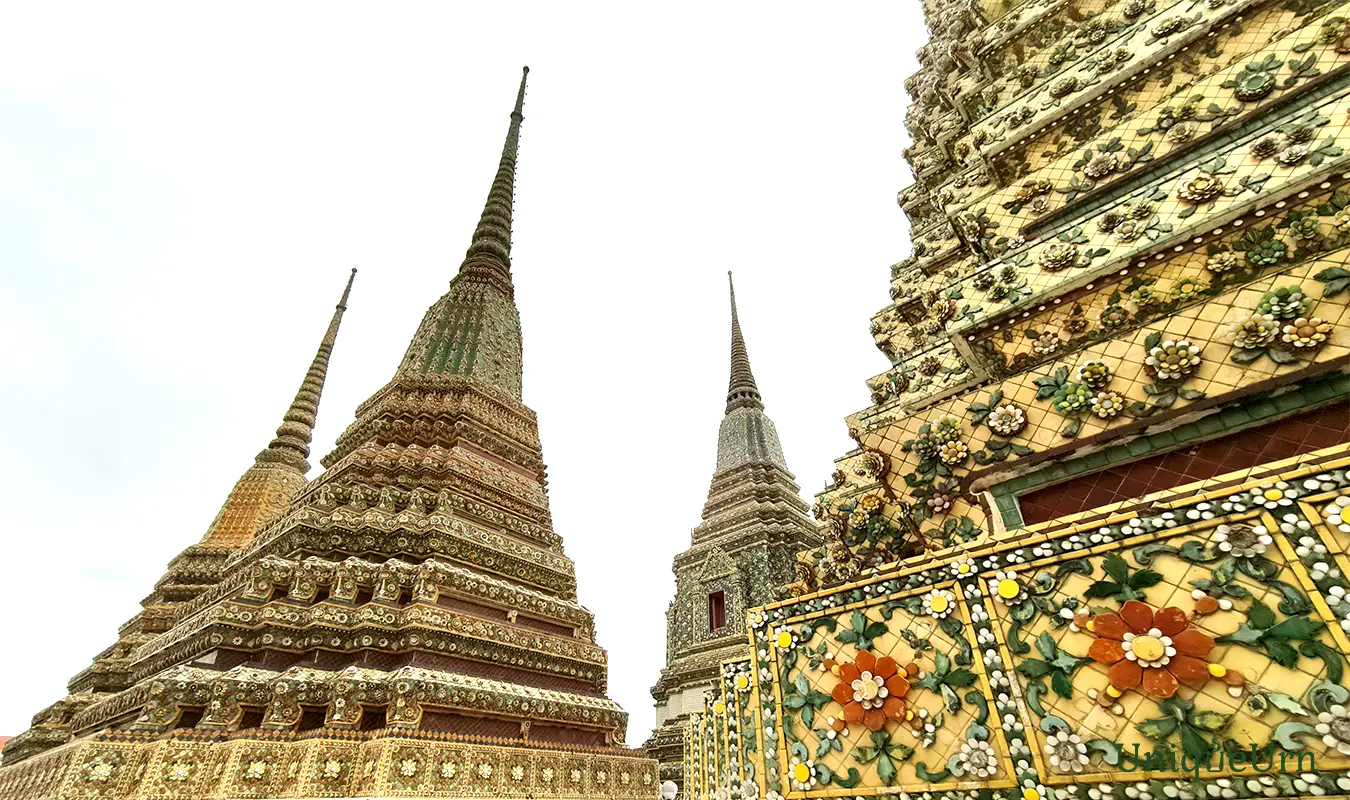
In the realm of art and emotional healing, there is a profound philosophy: “Transforming broken fragments into eternal beauty.” Whether we gaze upon the vibrant spires of the Great Stupas at Wat Pho (Phra Chetuphon Wimon Mangkhalaram Rajwaramahawihan Temple), or the ancient cathedrals of Europe, we witness the same human instinct—the meticulous assembly of tiny pieces to immortalize faith and love.
This article explores the secrets of Wat Pho’s world-renowned porcelain ornamentation, comparing it with the global mosaic tradition to reveal how ceramic art serves as a “bridge” connecting the past to the present.
1. The Golden Age of Royal Art: From Silk Road Trade to Sacred Splendor
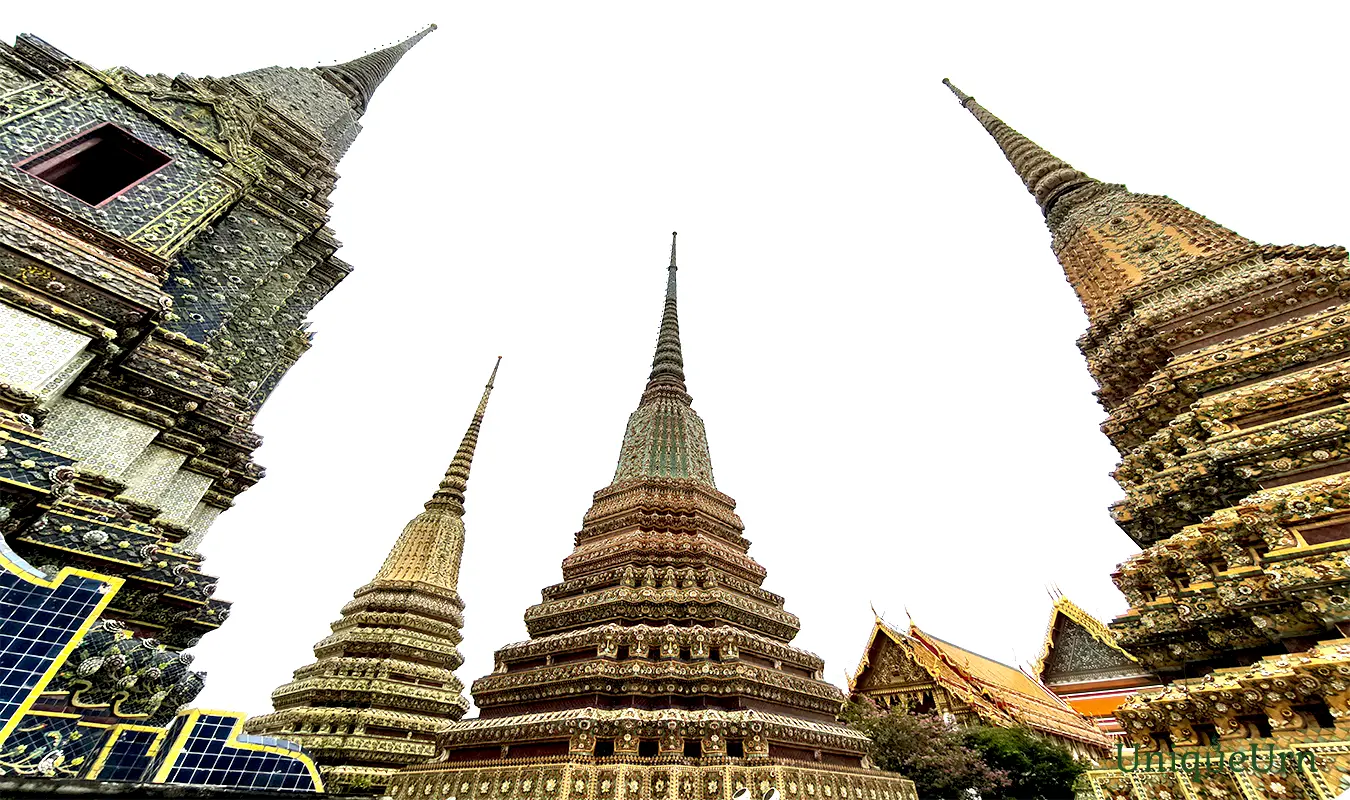
During the reign of King Rama III (1824–1851), Siam reached a peak in maritime trade with China. The junks arrived not just with goods, but with vast quantities of “Blue&White and Bencharong porcelain.” With great foresight, the King transitioned from traditional “mural paintings”—which faded and peeled—to the use of porcelain tiles and ceramic fragments for architectural decoration. The result was a radiant luster that captured the sunlight and a durability that has withstood the elements for centuries. This was the birth of Wat Pho’s unique identity, now recognized as a UNESCO Memory of the World.
2. Chromatic Secrets: The Four Great Stupas of the Kings
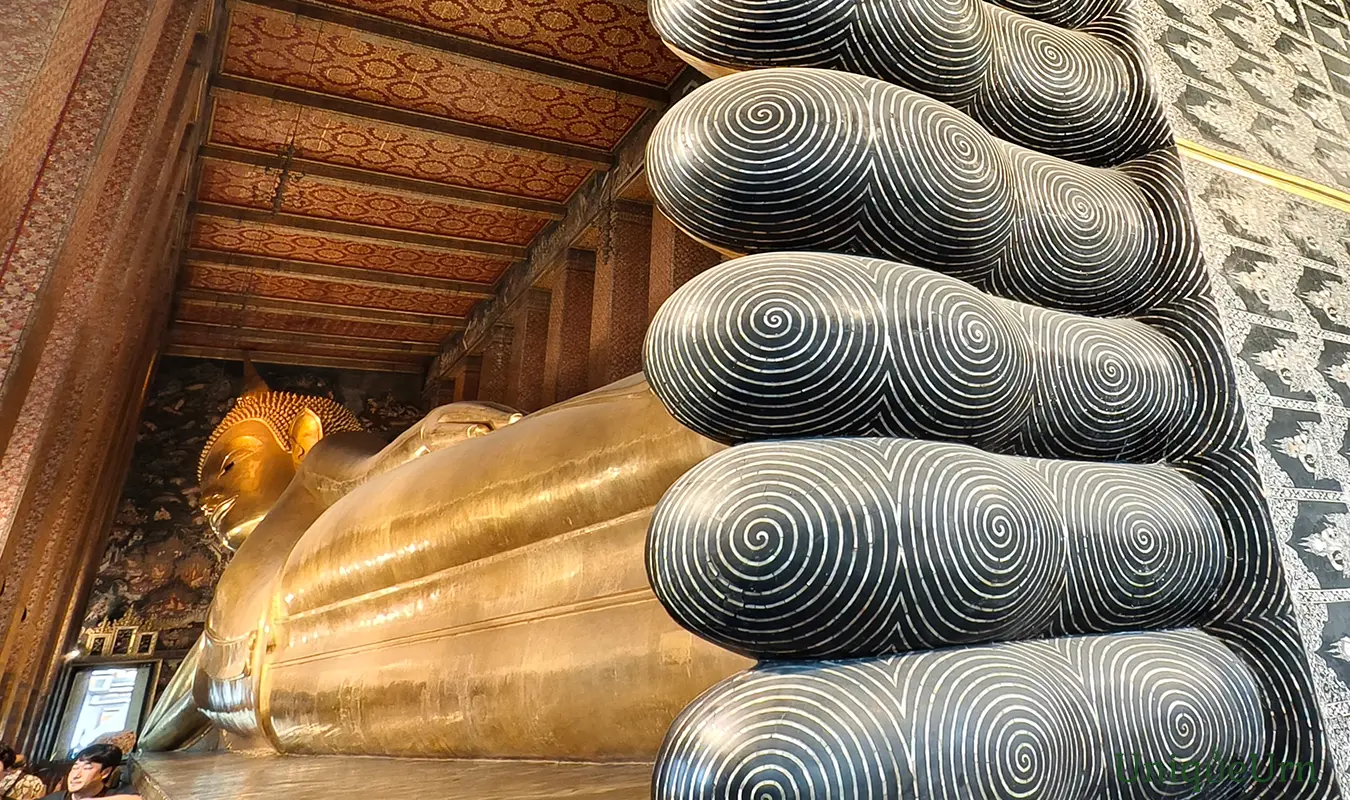
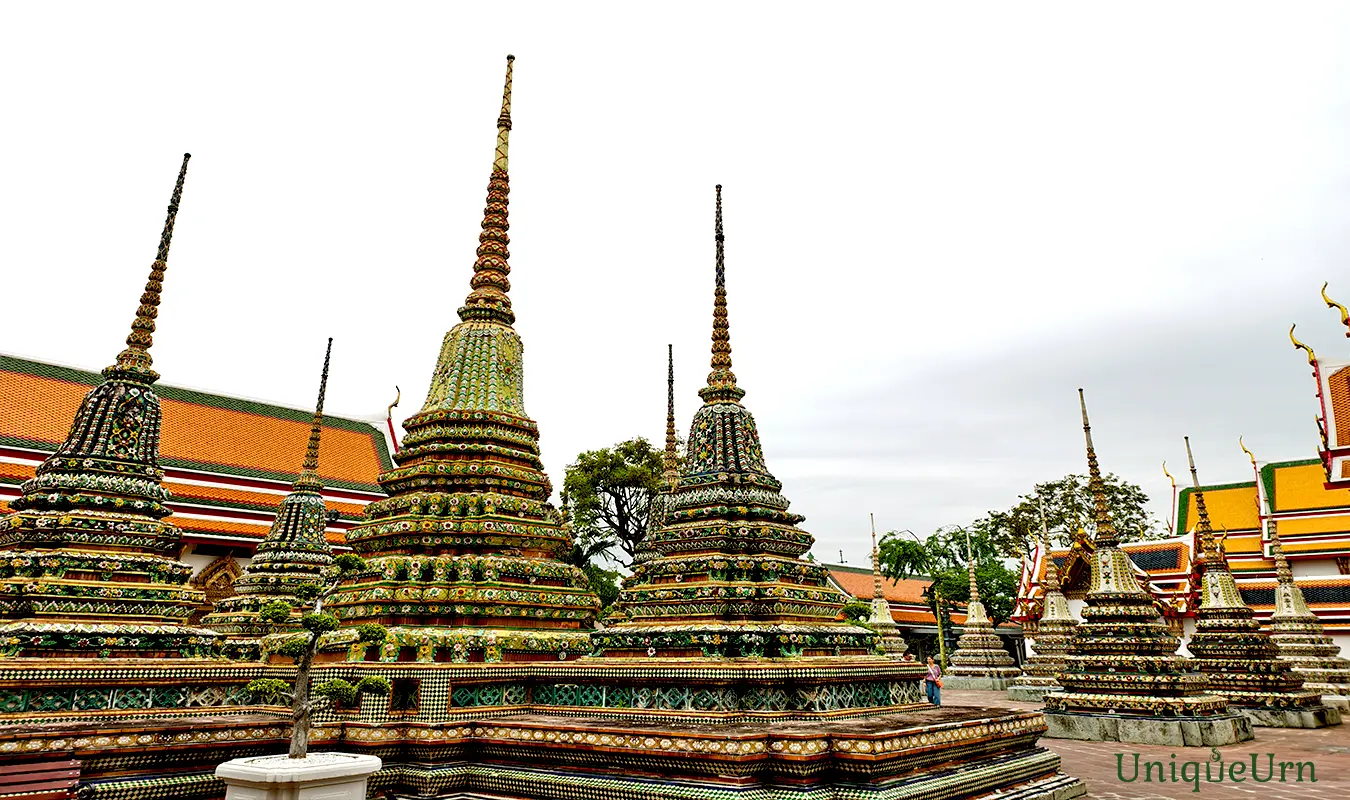
Beyond the world-renowned Reclining Buddha (the 3rd largest in Thailand at 15 m. High & 46 m. long), visitors are mesmerized by the Phra Maha Chedi Memorials—four main massive stupas adorned in porcelain colors that symbolize the spirit of each reign:
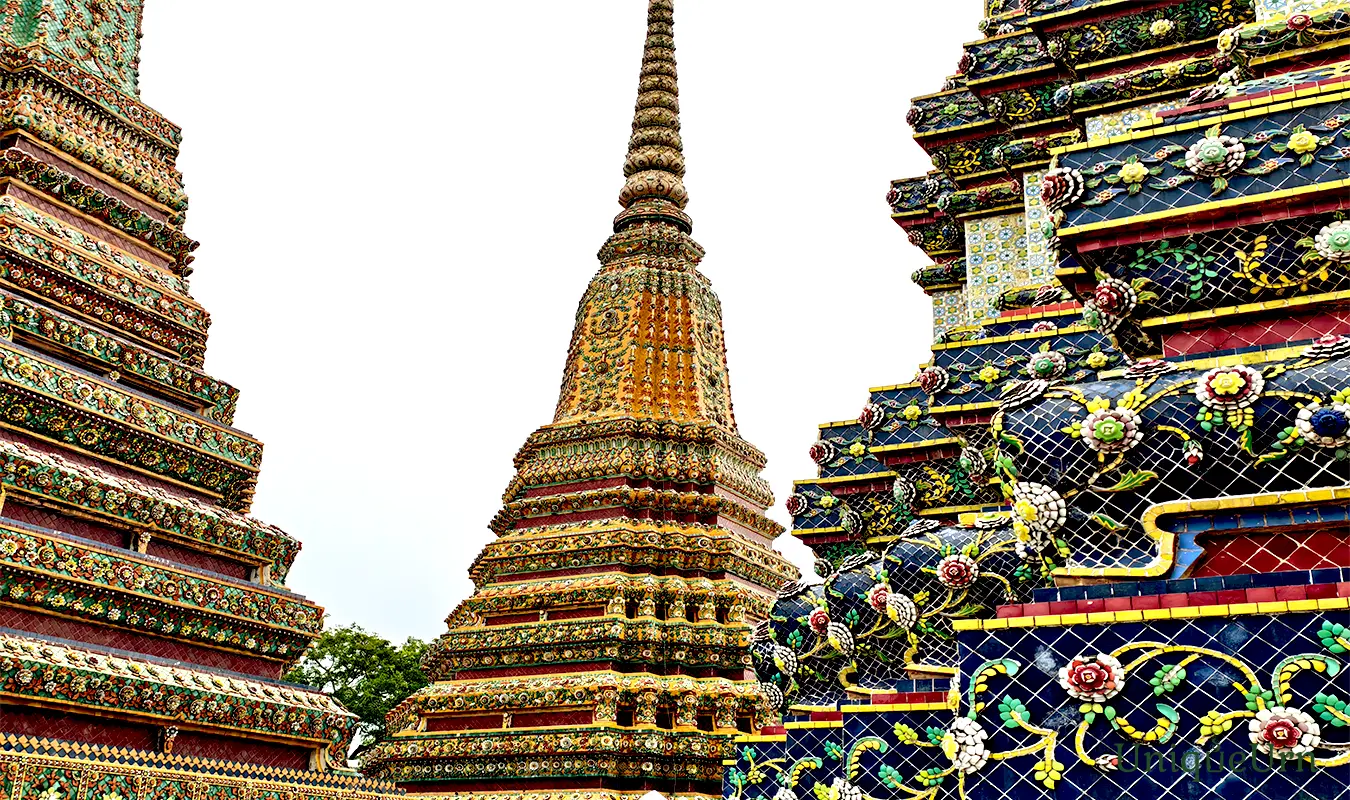
- Emerald Green (Rama I): Phra Maha Chedi Sri Sanpetchdayarn symbolizes serenity and the birth of the Chakri Dynasty.
- Pure White (Rama II): Phra Maha Chedi Dilok Thammakornkanit reflects purity and the King’s artistic genius.
- Golden Yellow (Rama III): Phra Maha Chedi Muni Battaborikarn represents the saffron robes of the monkhood and a deep devotion to Buddhism.
- Navy Blue (Rama IV): Phra Maha Chedi Song Phra Srisuriyothai symbolizes strength, modernization, and a global outlook.
3. Craftsmanship That Wowed the World: The Art of Plucking Broken Porcelain
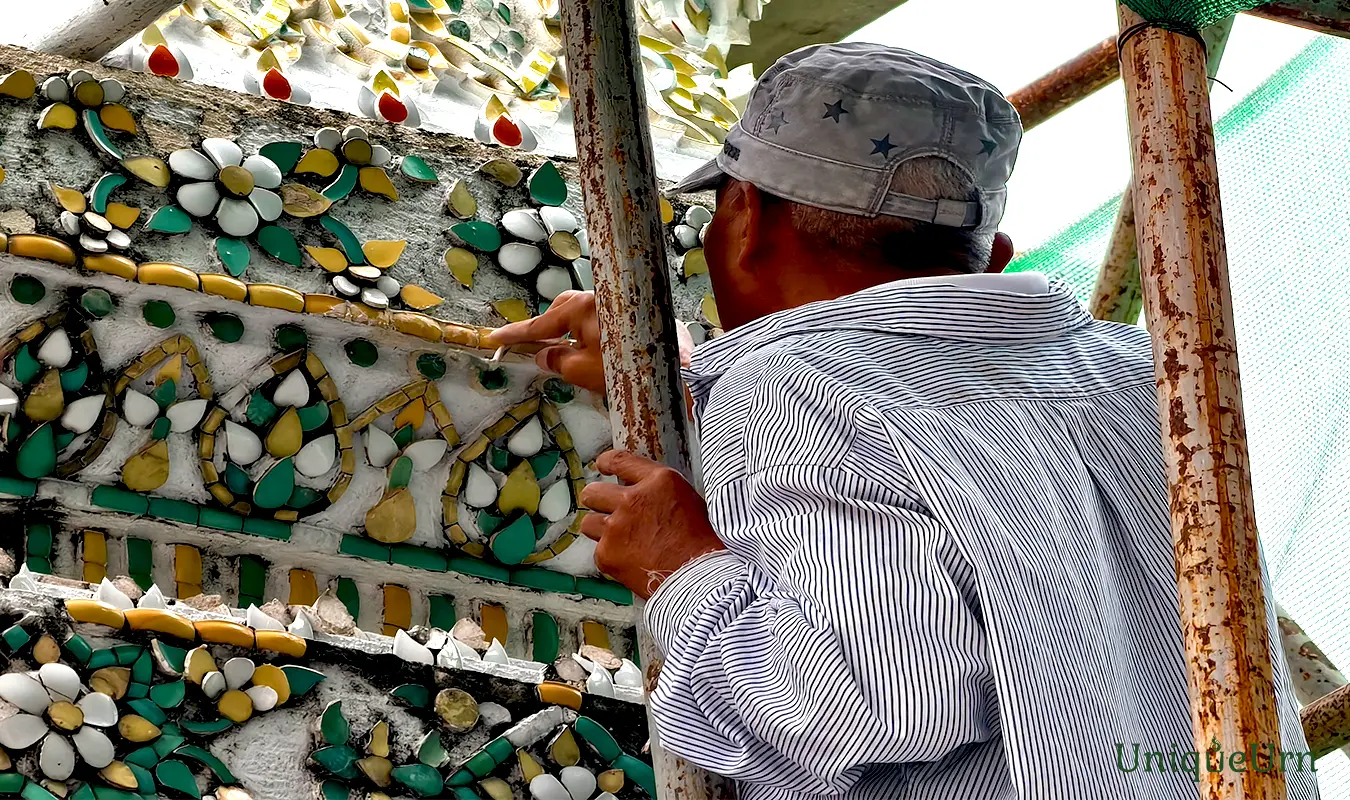
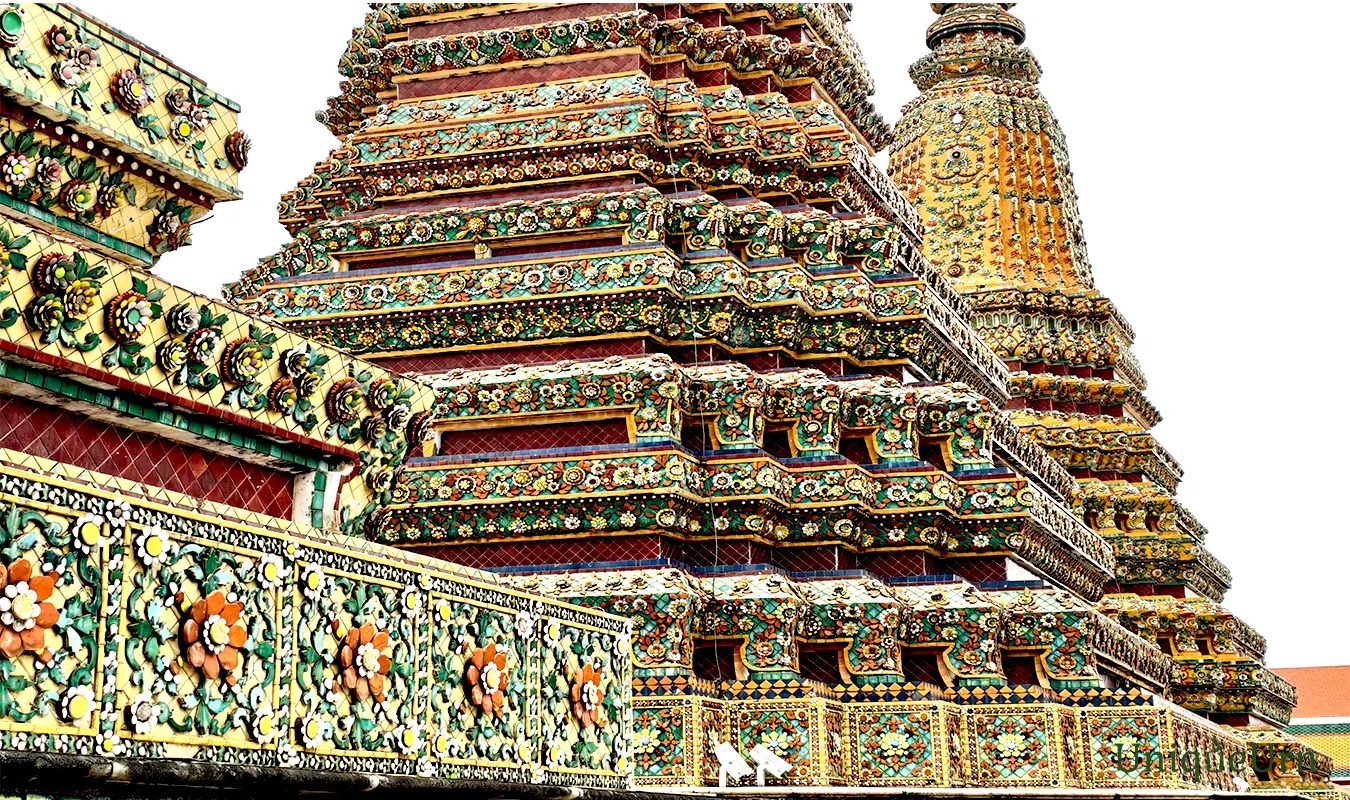
While the West mastered the smooth surface of the Mosaic, ancient Thai artisans created a 3D Relief masterpiece that added a tactile dimension to architecture:
- The Secret Mortar: Artisans used a special recipe called Pun Tum—a mixture of lime, sand, hide glue, and boiled sugar—to create a mortar so sticky and durable it remains rock-solid after 200 years.
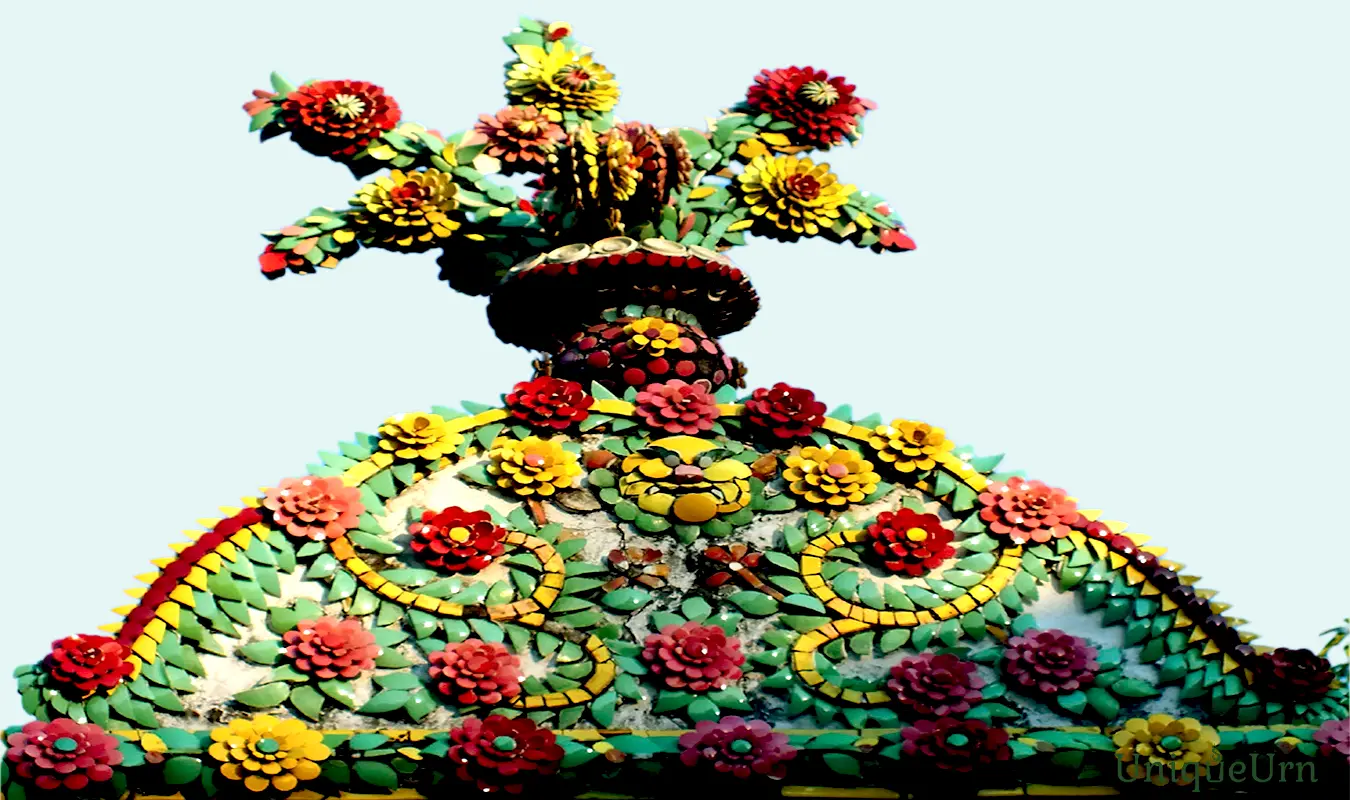
- Plucking the Petals: Instead of laying flat tiles, craftsmen meticulously hand-cut porcelain pieces into the shapes of petals and leaves. They “plucked” these into the wet mortar one by one, creating intricate floral patterns, such as the “Hibiscus Mutabilis” (Phut-tan flower) and Karnkhod, which appears to bloom eternally in 3D.
- Baroque Influence: Above the gateways, you will find decoration that looks like porcelain flower vases inspired by the “Baroque Trophy” style of the West, showcasing a sophisticated fusion of Eastern and Western aesthetics.
4. When Mosaic Meets Porcelain: A Global Dialogue on Immortality
When we compare Thai porcelain art to Western mosaics made of marble or Smalti glass (Tesserae), we see a shared quest for “Immortality.”
Comparison Table: Two Worlds, One Vision
|
Feature |
Western Mosaic |
Wat Pho Porcelain Ornament |
|
Primary Material |
Marble, Smalti Glass, Gold Leaf |
Bencharong and Blue&White Porcelain |
|
Shape of Pieces |
Geometric squares (Tesserae) |
Organic shapes (Petals and Leaves) |
|
Visual Dimension |
Smooth, flat surface (2D) |
High-relief, textured surface (3D) |
|
Light Play |
Reflection from glass/gold angles |
Luster from porcelain glaze |
|
Philosophy |
Order, power, and permanence |
Natural beauty and spiritual devotion |
5. UniqueUrn: Bringing Heritage Craft to Modern Healing
At UniqueUrn, we draw inspiration from the resilience and delicacy of Wat Pho’s porcelain decoration. We utilize these ancient techniques to create Memorial Art—vessels that serve as a testament to enduring love.
- Restoring Broken Memories: Just as broken porcelain is reassembled into beautiful flowers, we believe that the brokenness of grief can be “transfigured” into a beautiful art tribute.
- A Masterpiece of Precision: Every UniqueUrn piece is handcrafted with the same meticulous respect as the ancient masters, providing a “safe sanctuary” for your most precious bonds.
Conclusion: Growing Through the Cracks of Memory
The porcelain art of Wat Pho and the world’s mosaics teach us that true beauty can arise from fragments. When reassembled with intention, they become a history that never dies.
If you are looking for a way to preserve a bond that lasts forever, let fine ceramic art be your bridge. Every time you see it, may you feel a love that is still “blooming”—resilient, vibrant, and eternally beautiful within your home.
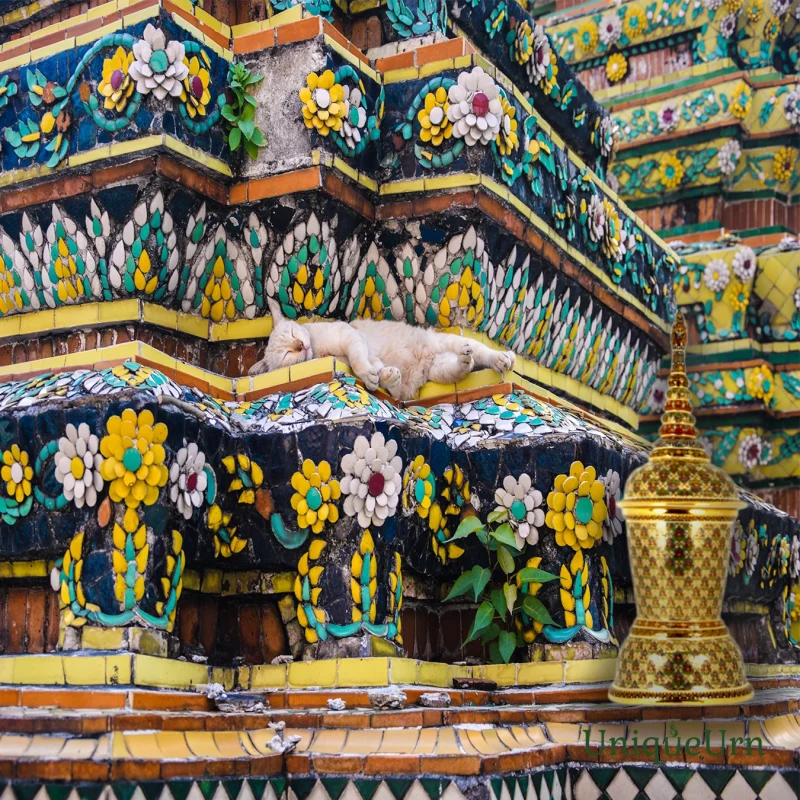
“Art always inspires devotion. We invite you to witness the breathtaking splendor of another Bencharong tile masterpiece at Wat Ratchabophit.”